How to write about a bakery the name of which has already achieved cult status – but where the proprietors have no desire whatsoever for any kind of personality cult? You approach the whole thing in terms of company culture.
At the Kult bakery, this approach works exceptionally well. It is one of the most recently established but also most successful bakeries in Basel. The enterprise started out in the Riehentorstrasse in 2016 but expanded very soon after: Just a year later the second site was opened in the St. Johann quarter, and at the end of 2024 this part of the bakery moved to a larger and brighter location at the Voltaplatz.
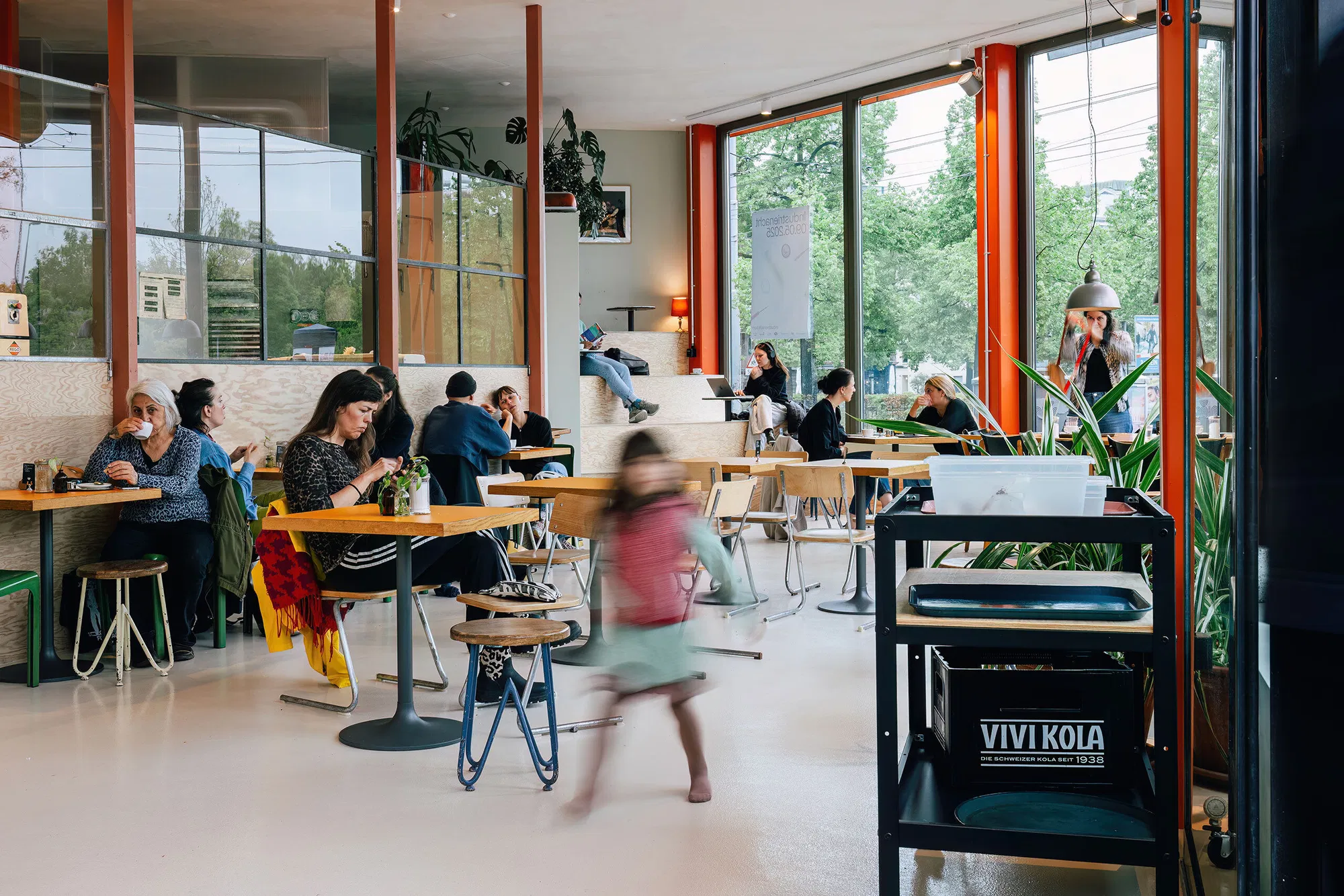
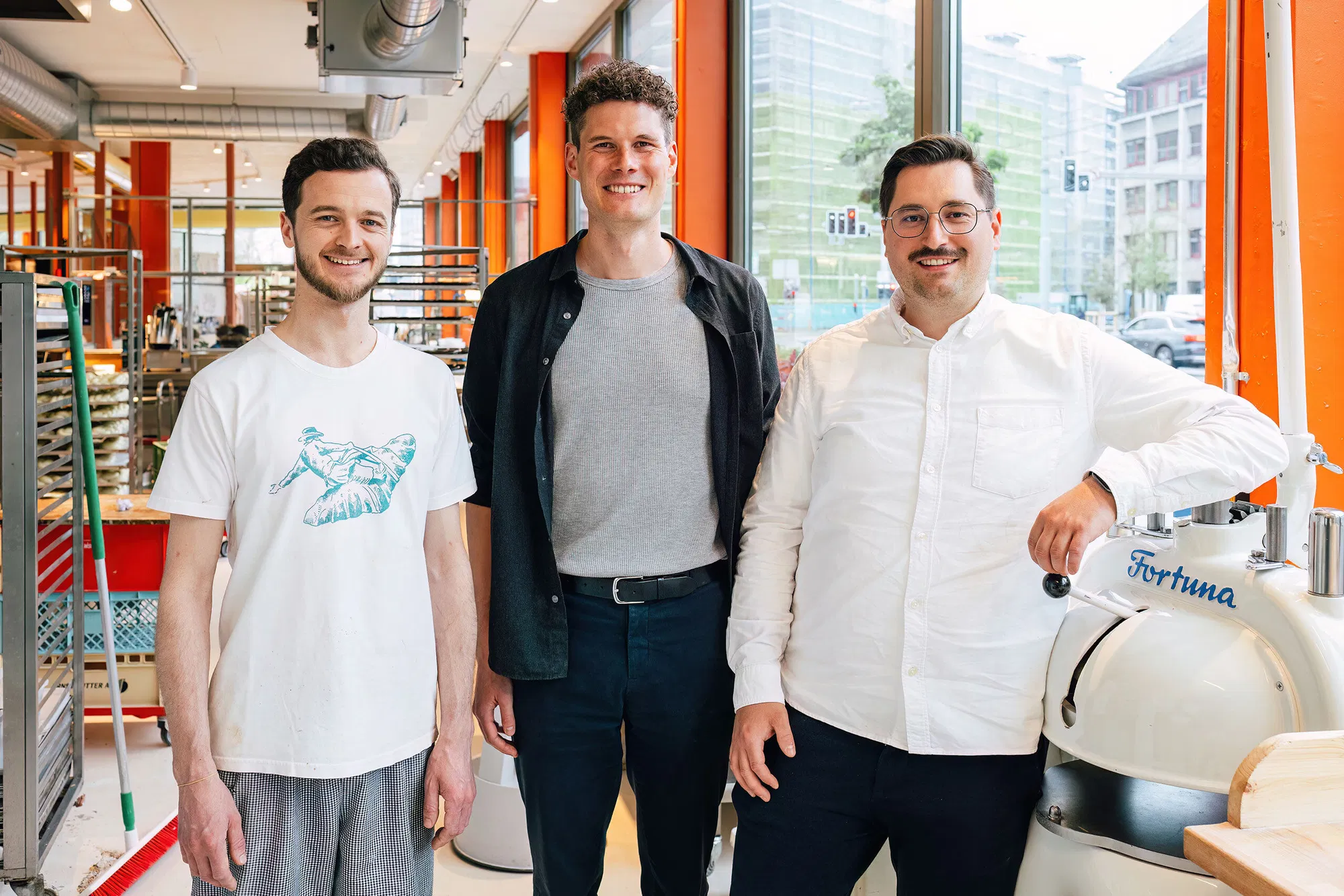
It is there that Lukas Schertenleib now sits down with me for a chat; he is tall, friendly, and alert. He is the most recent co-owner of the Kult bakery, all of whom are less than 40 years old. Schertenleib – or rather Lukas, because calling everyone by their first names is how things are done here – is happy to provide us with information, but when it comes to taking photos, he points us towards the bakehouse. A portrait of him alone would be untoward.
The bakehouse is the heart of the company, and not just in terms of the production process – at the Voltaplatz with its glass walls, it is deliberately transparent – it also embodies the entire identity of the enterprise. Or as Lukas puts it: “We are all individual elements in the whole here.” This is not the sort of branding talk from an employer, so popular in large enterprises nowadays, intended to talk up a semantic group identity. In this bakery, the statement is the product of a flourishing company culture and not simply a wish for one.
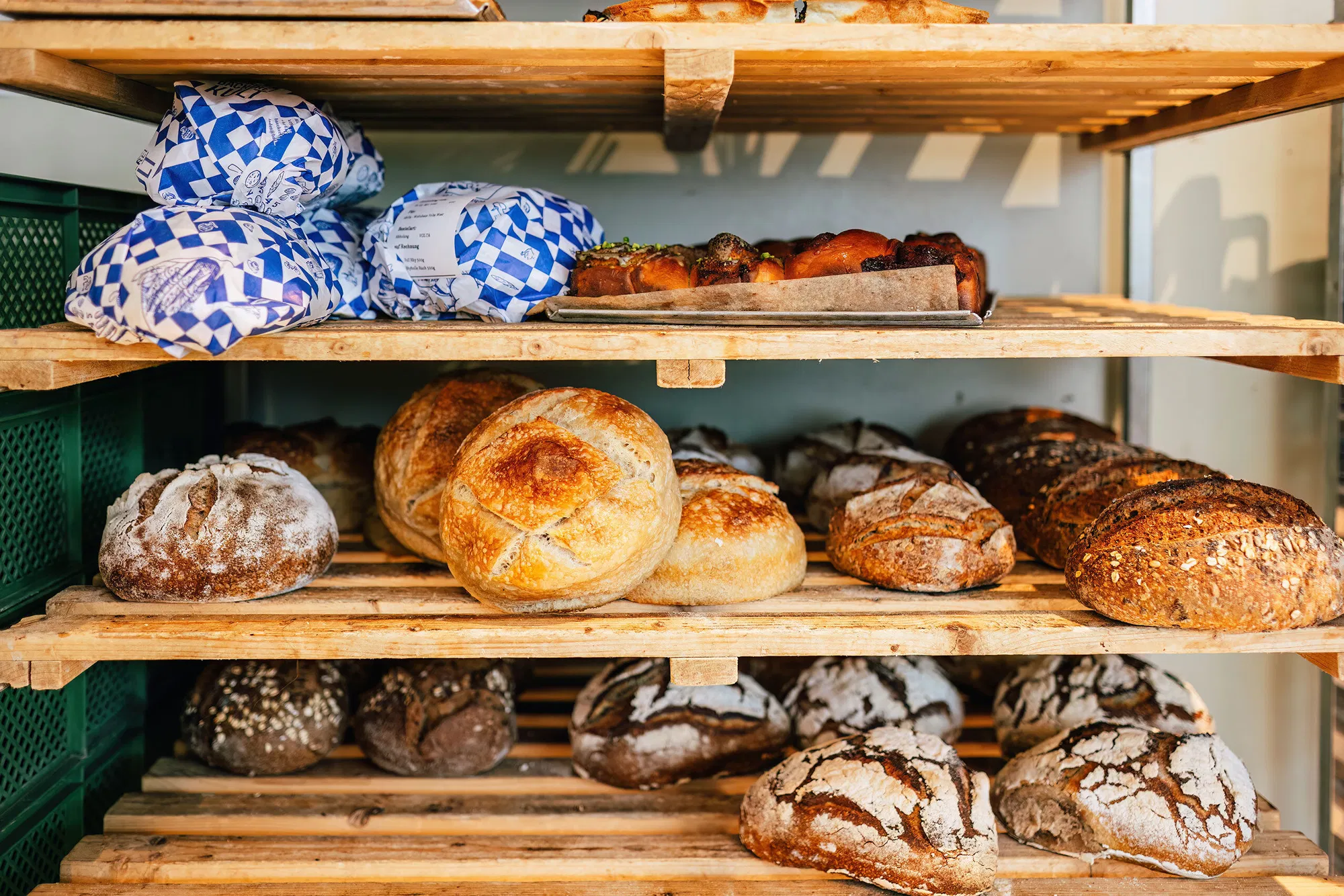
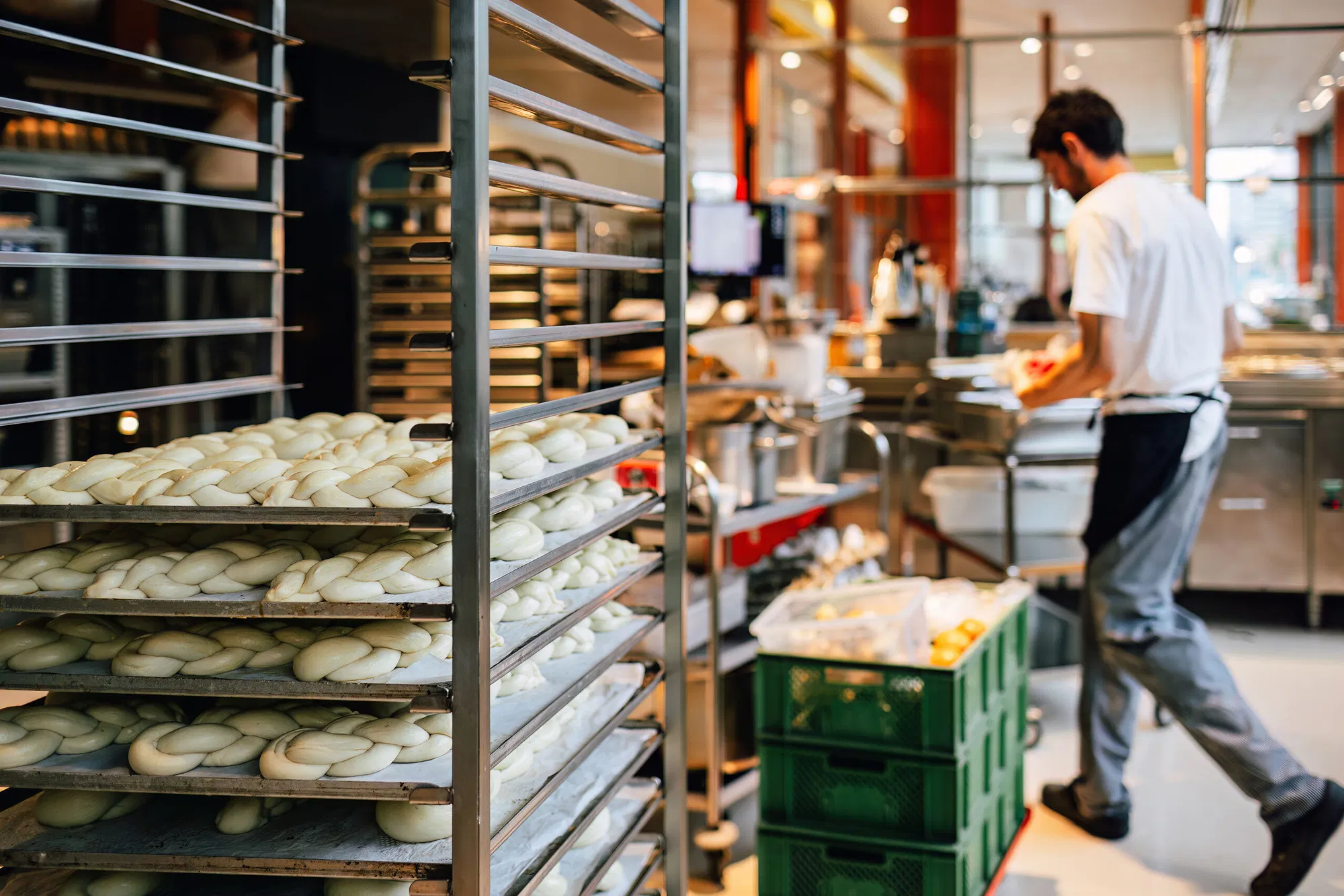
But let’s start where all the best stories begin: with food, or in this case, bread. The Kult bakery did not reinvent bread per se, when they took over the oldest, still-operating bakehouse in the north west of Switzerland. But the original team did first take it back to its roots and then developed things from there. The ingredients are local; the methods are traditional and executed with care. The dough alone is a slow process: once it has been prepared it is left to rest. Only later is it baked.
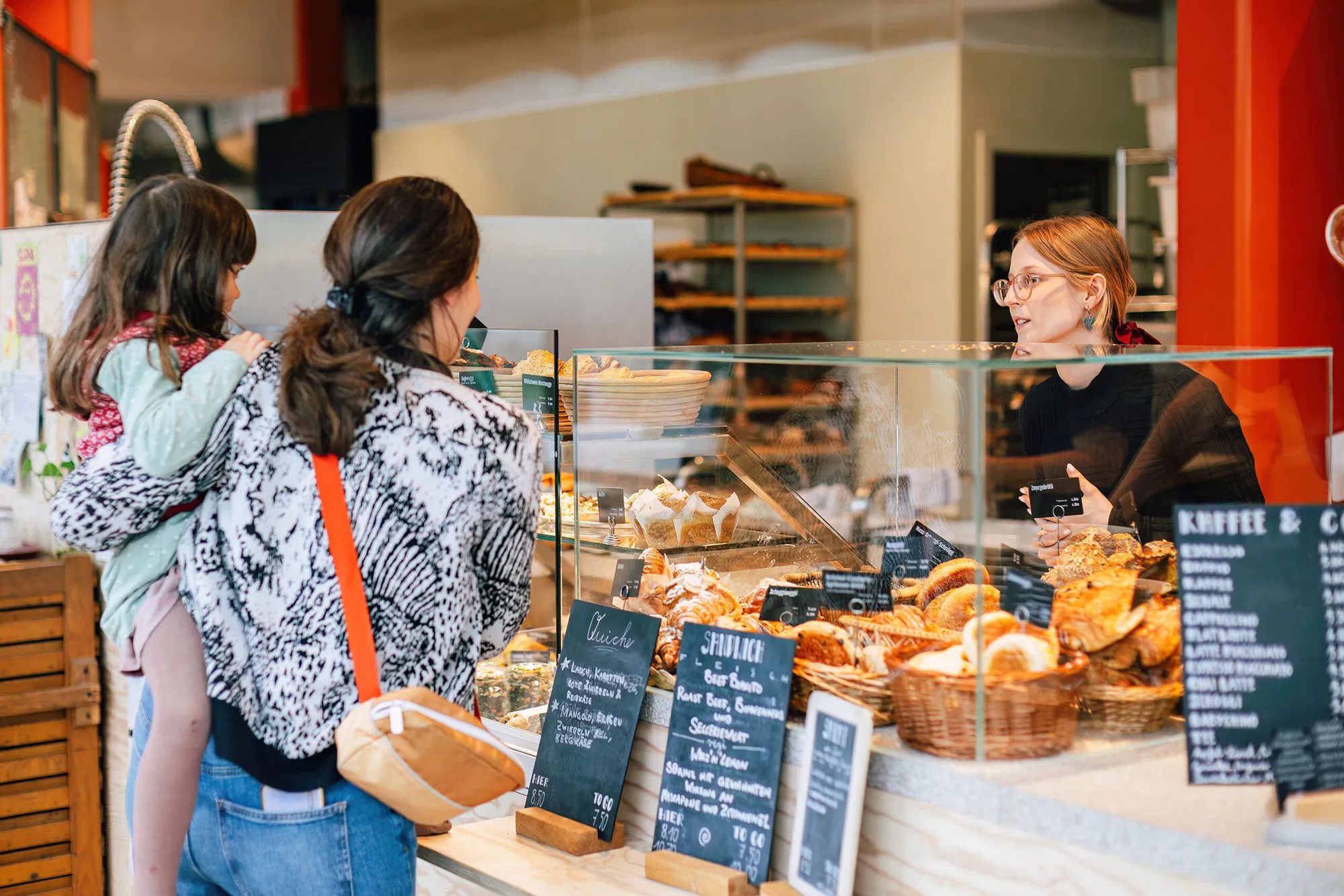
This laborious procedure may sound almost counterproductive in an economy that focusses on growth, but it is actually an essential element of the enterprise’s success. Expansion per se is anyway not one of the bakery’s aims. “We grow naturally,” says Lukas. “Or to put it another way: we bake as much as is needed, without whipping up demand. Our customers like it like that: the bakery makes most of its turnover from the sales on its own premises. Deliveries to hotels and restaurants represent a far smaller segment.
A neighbourhood bakery of city stature
The Kult bakery is not aiming to establish an extensive network of subsidiaries; that would be too overblown. The principle is: the dough has to rest until it is just right. And the same applies to how the enterprise develops. This was what made it possible to open the pop-up bakery currently running in the Bruderholz district, as Lukas explains: the opportunity arose, they were ready and could take advantage of the moment. But it will not develop into a forced expansion.
In effect, the Kult bakery is more of an old-fashioned Basel neighbourhood bakery, simply suited to the city, than a large-scale bakery capable of supplying a large network of outlets. The Kult team has hit the proverbial “sweet spot” where they can produce at a high level of craftsmanship, but also function as a small-mid-size enterprise with around 50 employees.
For example? Their new wholemeal bread, which they are just in the process of developing. “Each year we set out to rework one sort of bread,” says Lukas. “And currently that is our wholemeal loaf: our sourdough expert Sebastian has tinkered around with the recipe and improved it, now we have a fluffy yet firm bread that just has to be finalised with the finishing touches.” He points out a loaf that has already been wrapped up behind the counter: “That’s it.” The coworkers are asked to taste it and give Sebastian their feedback. He will use the feedback to finalise the recipe for the bread. It should be ready by May.
The cultural asset of bread in the spotlight
What sounds like an awful lot of fiddling around to a non-professional is actually quite normal in the catering trade. A recipe is worked on until the desired result is achieved. Even with something as traditional as bread. The challenge is to roll out the new recipe in the whole enterprise while ensuring it is produced regularly, consistently, and in the quantities required. To achieve this, the process has to be right, but the team’s know-how is also crucial. Which is also vital to the company’s spirit: the co-workers function in harmony. One advantage they have here is that a lot of them are the same age. The team at work is young but experienced.
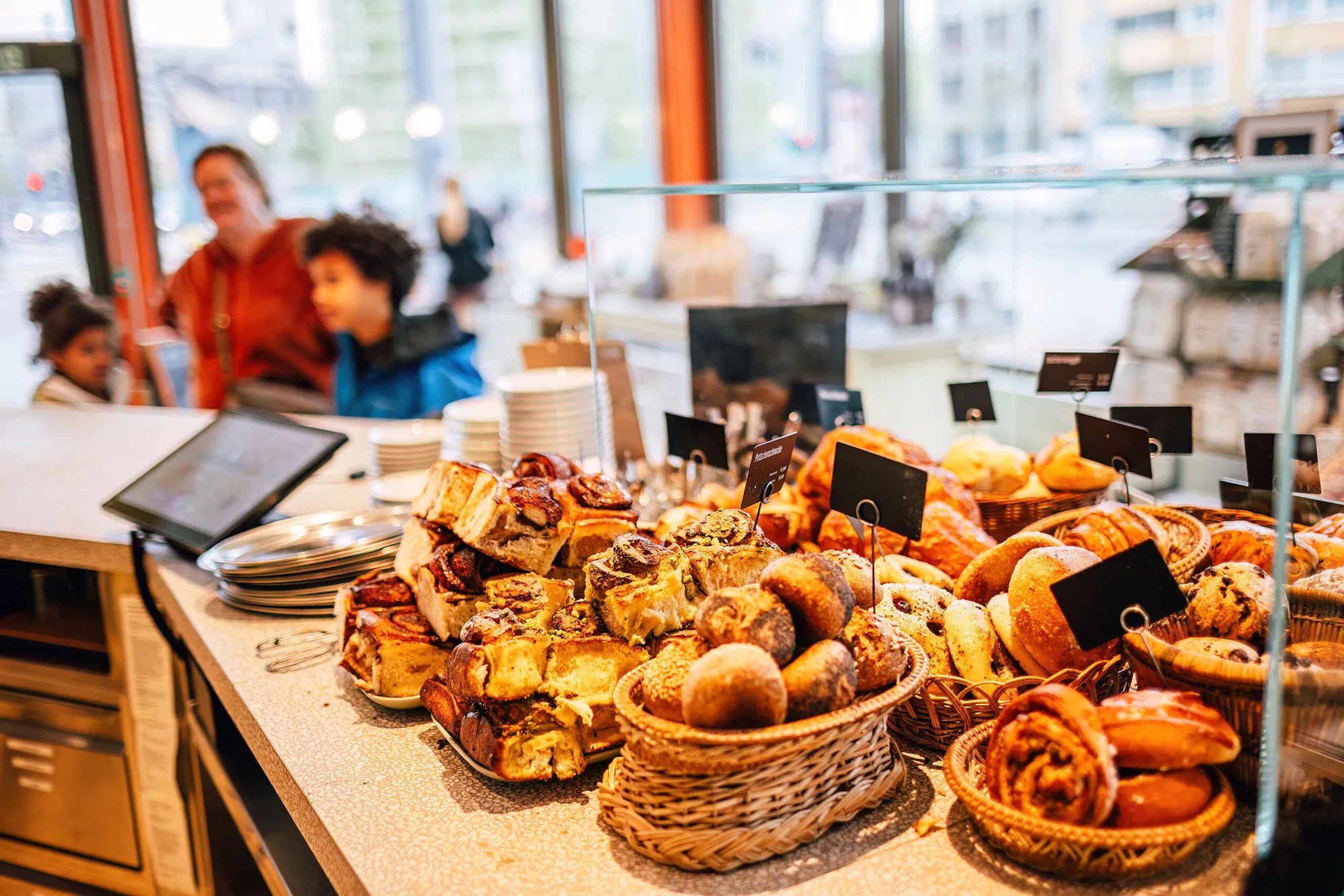
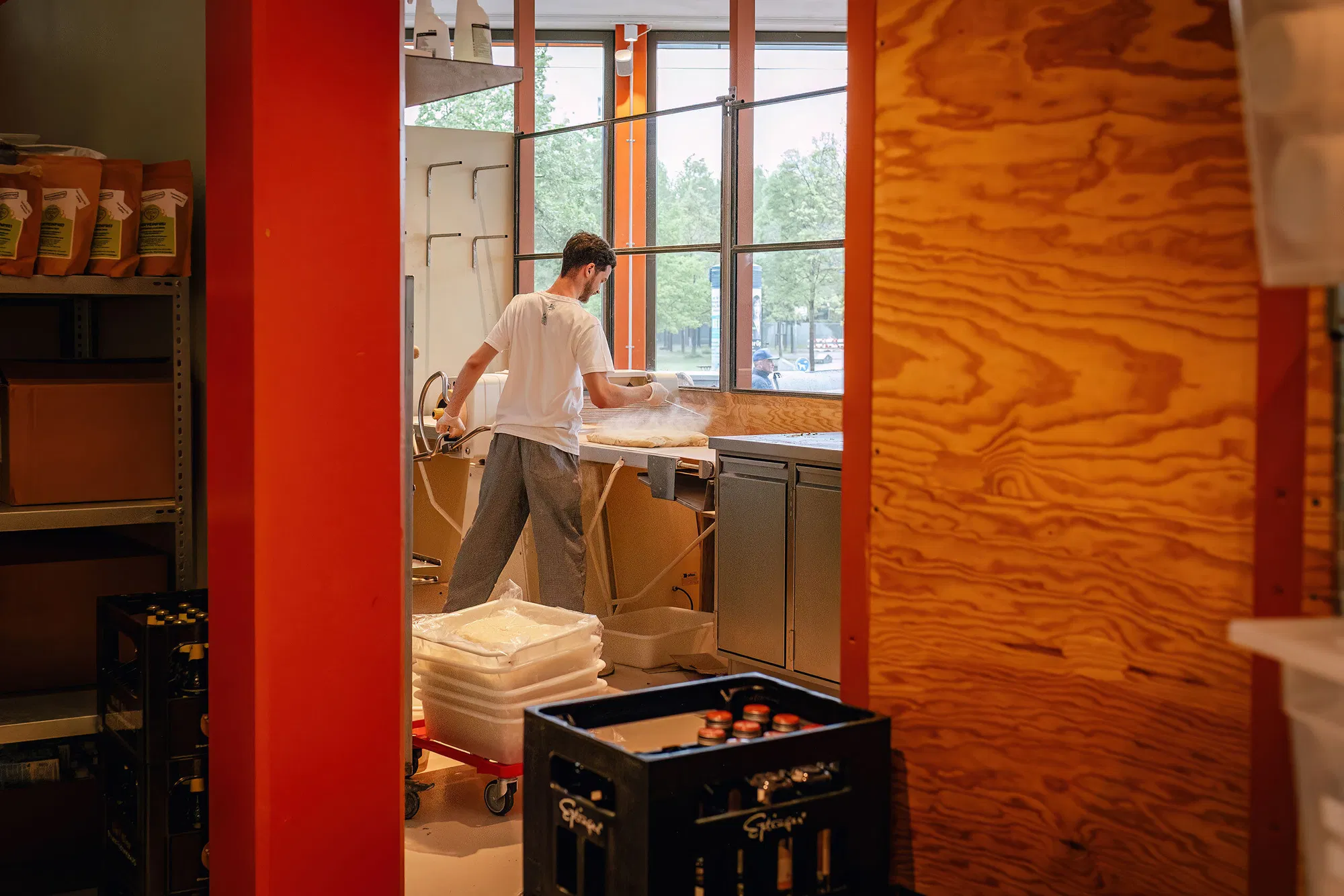
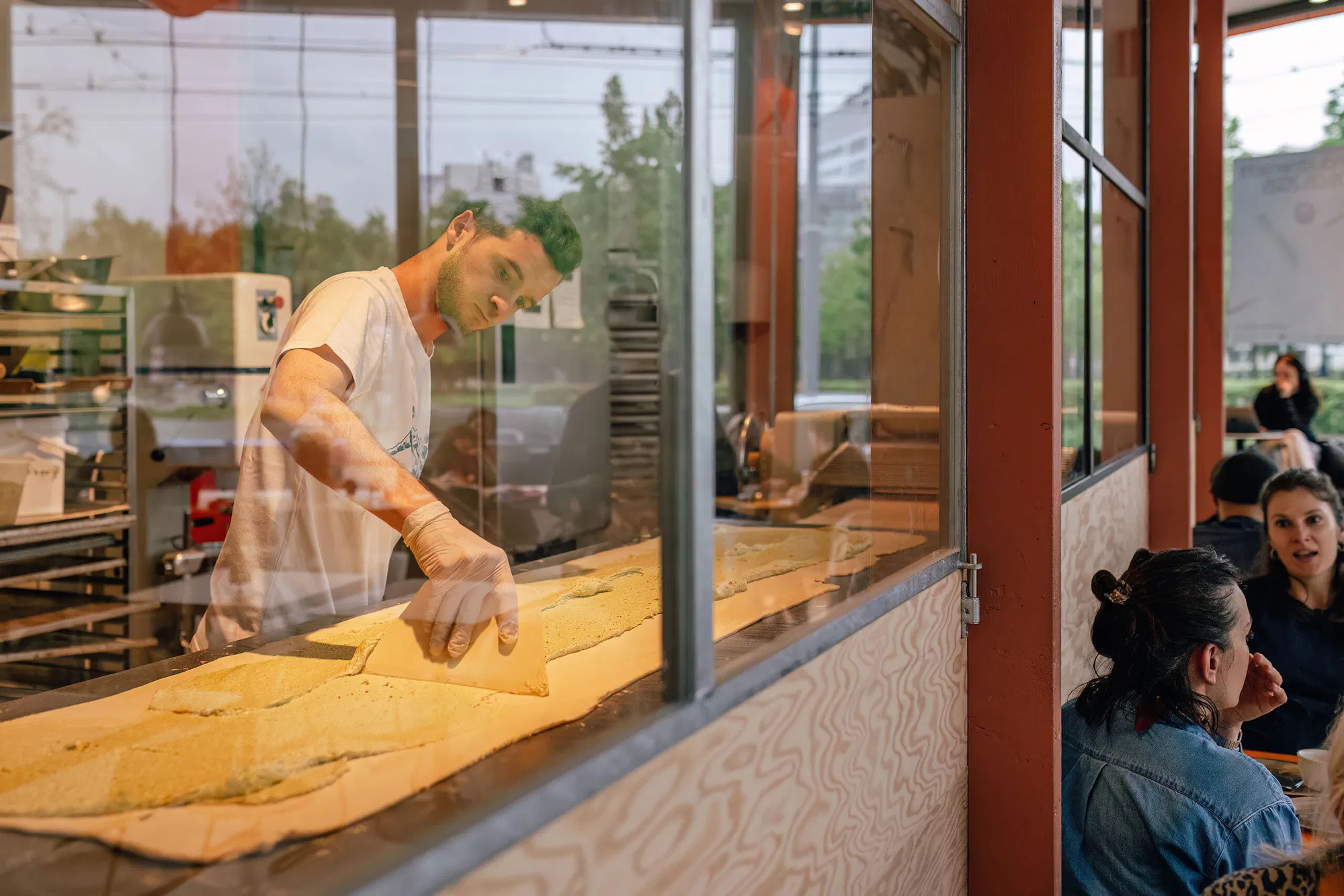
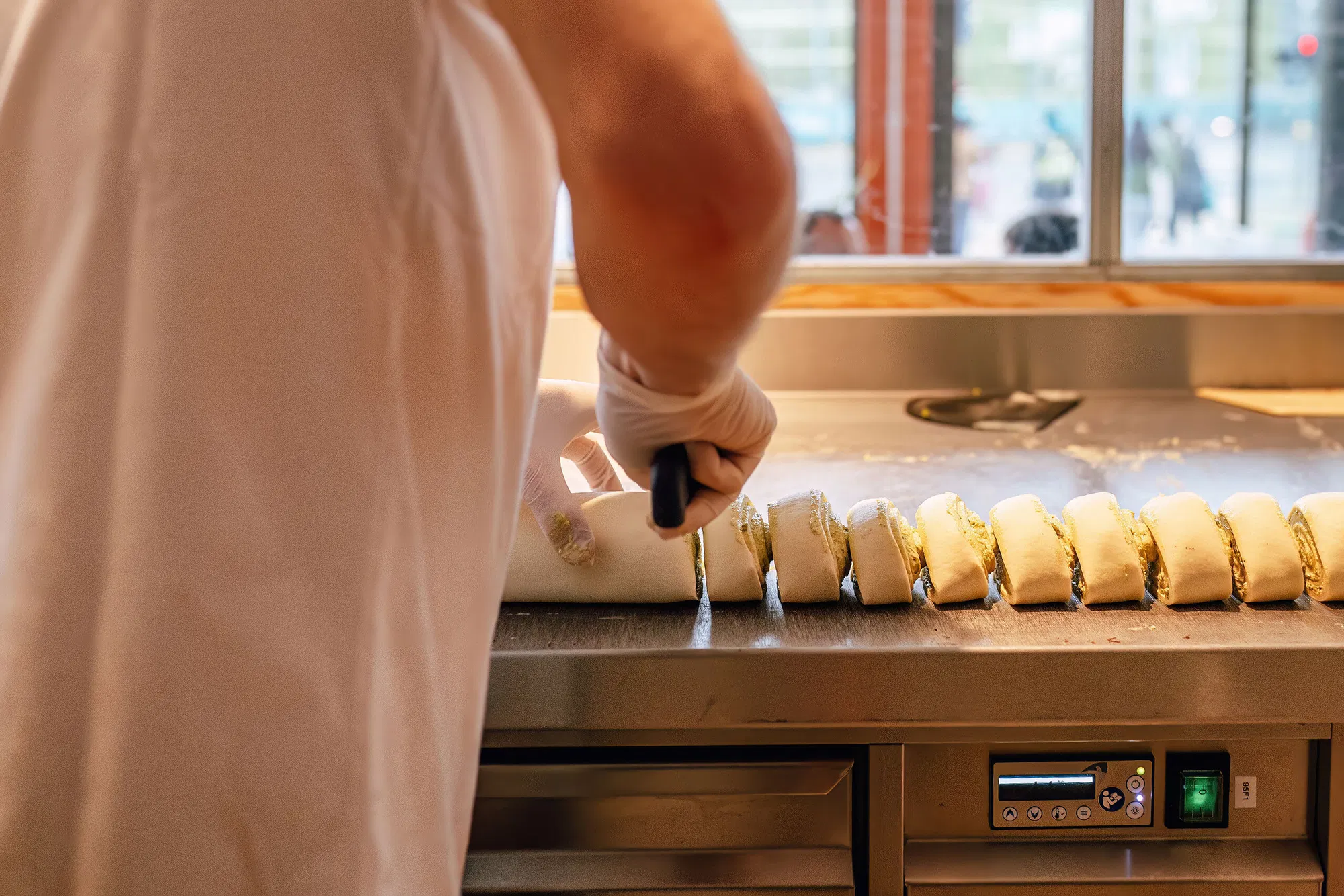
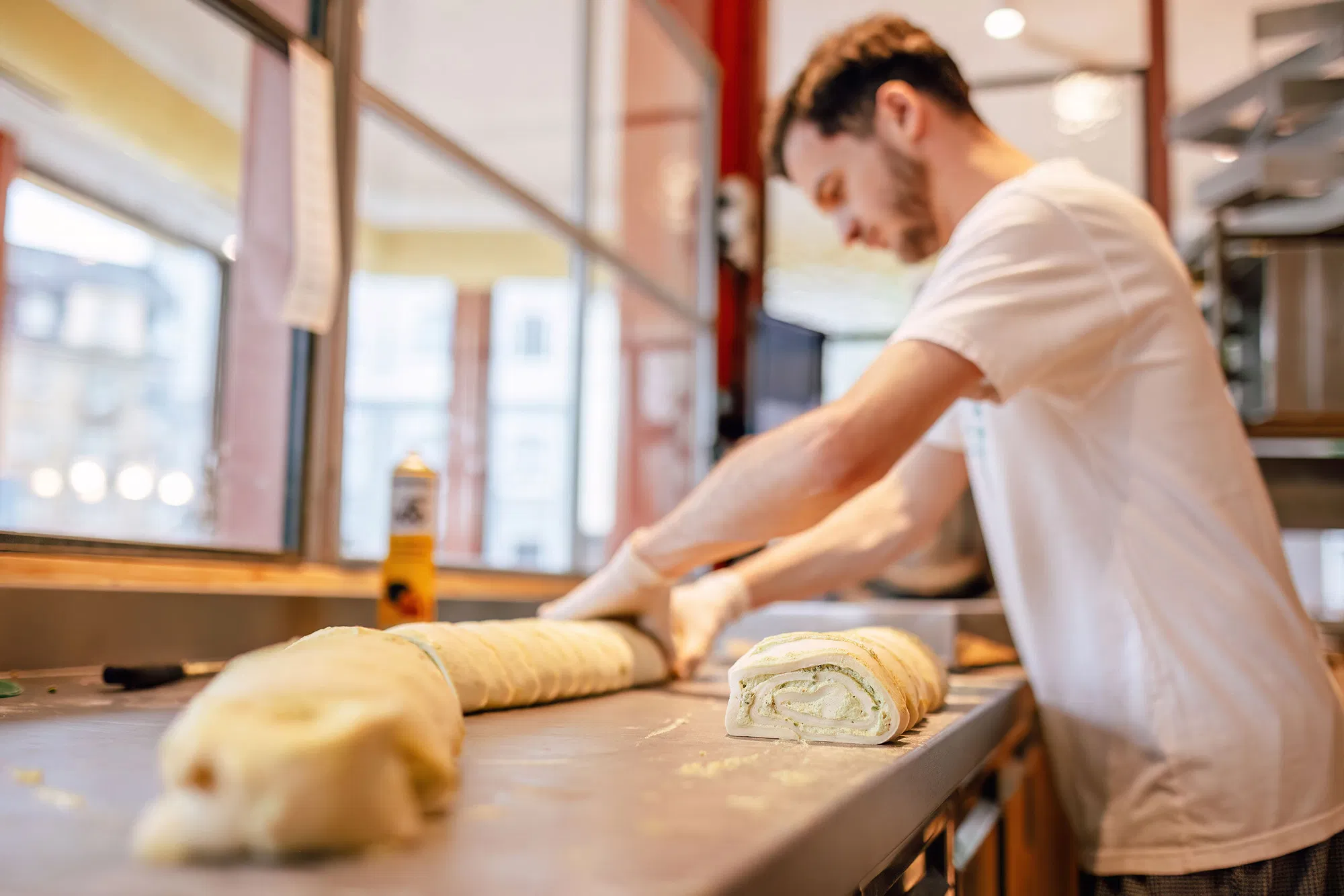
For example, Guillaume. On this particular Friday he is busy making twisted buns. His workspace is situated well away from the area where the oven is located – this was a particular advantage offered by the Voltaplatz location, just begging to be taken advantage of, as Lukas points out: “It means we can ensure the optimal temperatures for the dough as well as for the butter. If there was an oven too close the quality would probably suffer.”
The outer wall is fully glazed, so every now and then Guillaume has an audience as he pulls the pastry out of the rolling machine, swiftly spreads the in-house pistachio paste, rolls out the pastry, cuts it into portions and lays them out on the baking tray; again and again. The glass front was chosen deliberately for two reasons: For one, the customers and passers-by should be able to watch: “That is kind of our educational duty.” is how Lukas puts it. But it also means the bakers have as much daylight as possible to work by. The bystanders enjoy the view. And the children in the daycare centre next door were so inspired that they made drawings of the bakery that are now on display in the café area.
So what’s next? First come the celebrations. In 2026 the Kult bakery will be celebrating its 10th anniversary, but also the 300th anniversary of the original bakehouse in Klein-Basel. This will all take some preparation, especially in an establishment that pays such attention to detail. In the meanwhile, they are whiling their time with the newly improved wholemeal bread. And of course, its dough will be allowed all the time it requires before it is baked.