The first time I met George Steiner was while writing a reportage about the Basel Children’s Theatre. For 50 years now young people have been on stage there, enacting stories. Rumpelstiltskin for example. Or Alice in Wonderland, or Beauty and the Beast. The backdrops against which these young actors move are a wonder to behold. Never before have I seen such loving, elaborate stage sets and masks on an amateur stage. George Steiner has been responsible for this magic for 20 years now.
Who is this person, who works as professionally and passionately for a local children’s theatre as he does when he is producing props for a Hollywood film? To find out, I visited him at his studio in the old brickworks in Oberwil. I didn’t really find out who he is there, but I did realise, once again, what power lies in silence. And that talent is more than just a gift. But let’s start at the beginning.
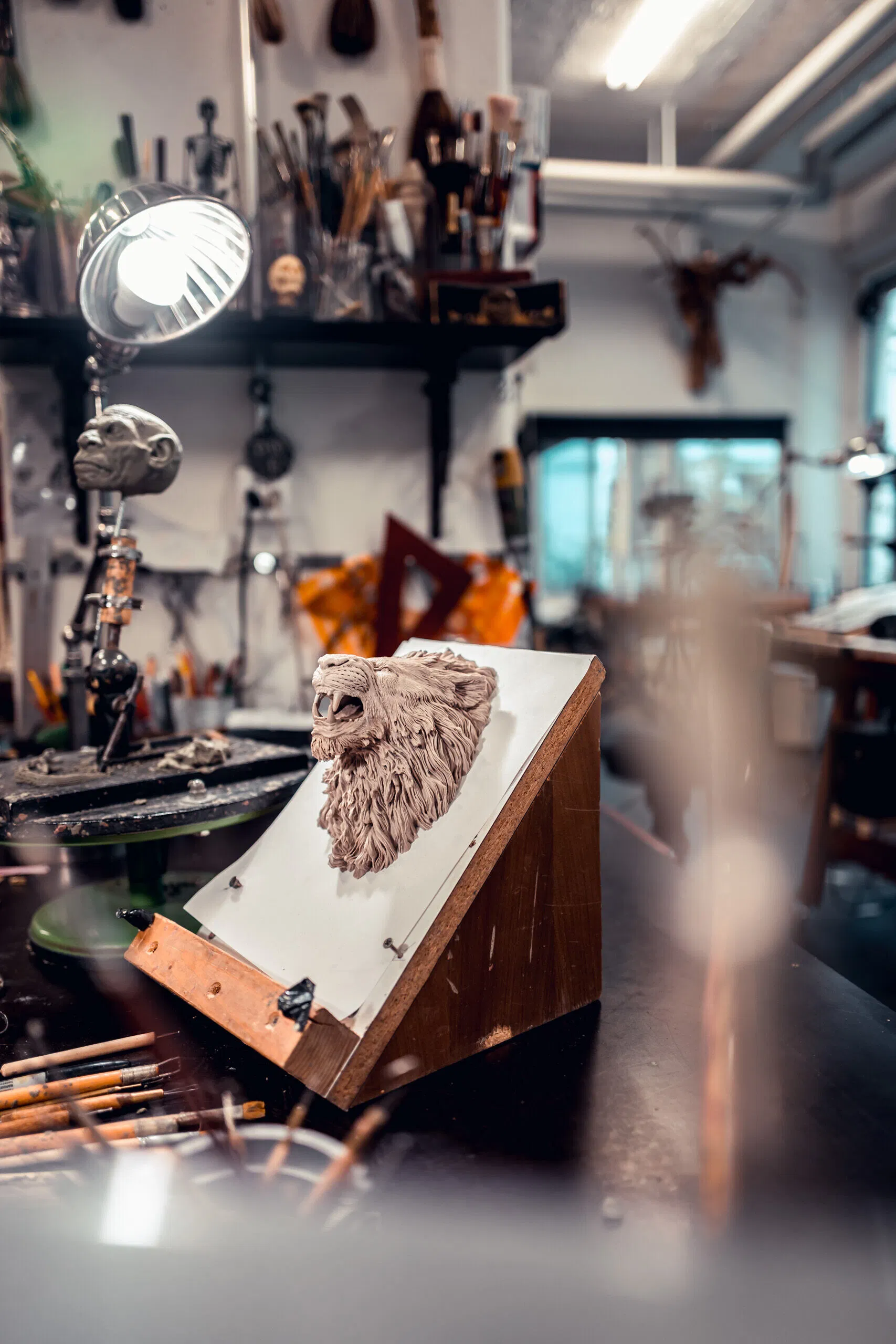
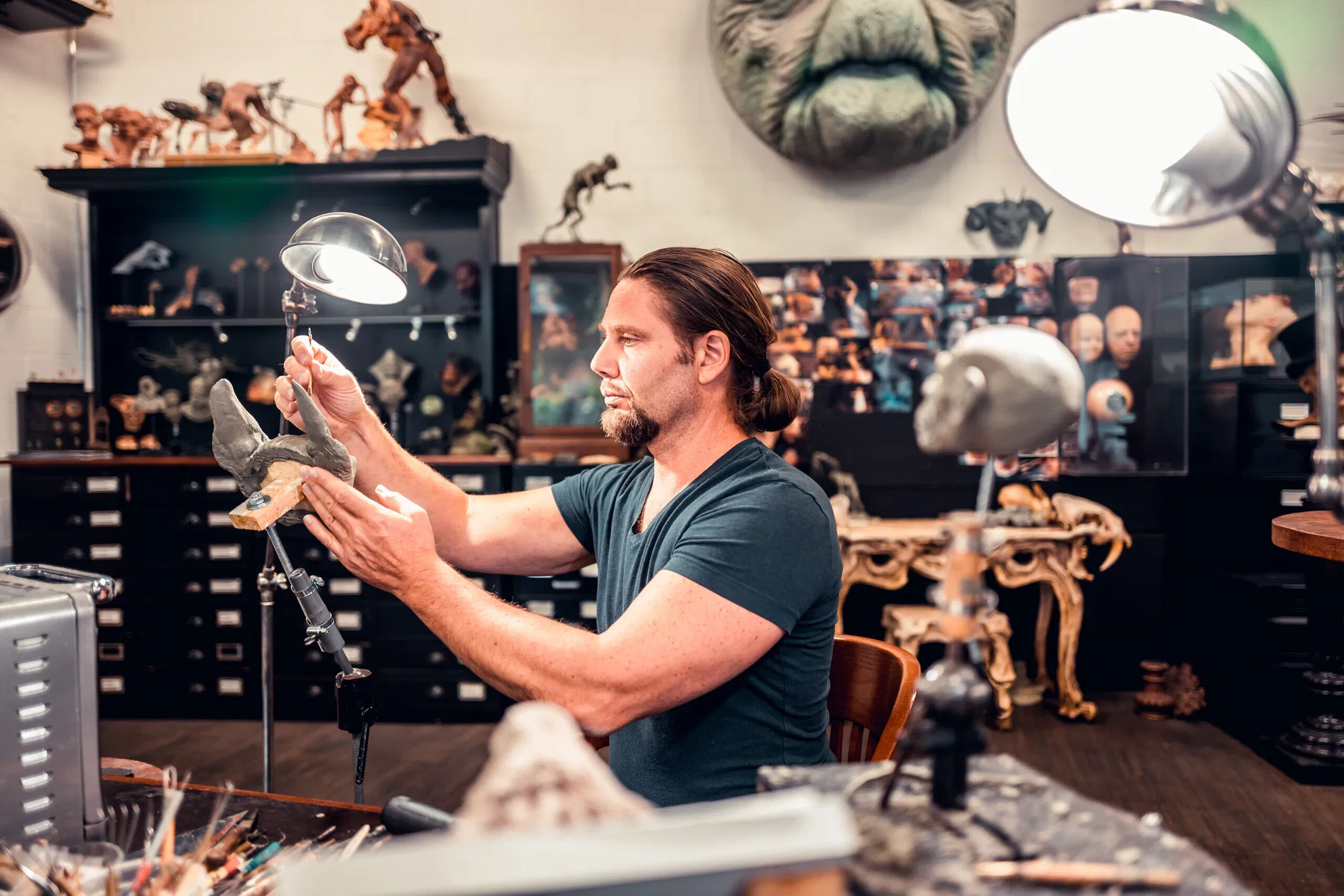
It was very quiet when I entered George Steiner’s studio. Peaceful, tidy, spick and span. No radio droning, no dust, no smell of varnish or paint. The large, bright room felt like a museum, a treasure trove and a workshop all rolled into one. There were heads, figurines, idiosyncratic creatures all over the place - in old, black, lacquered showcases, on shelves and in cupboards. The walls were hung with masks and photos depicting faces, sculptures, horrible wounds and backdrops. I made out antlers, feathers, s shark’s jaw. High up a huge moon face. And a leg.
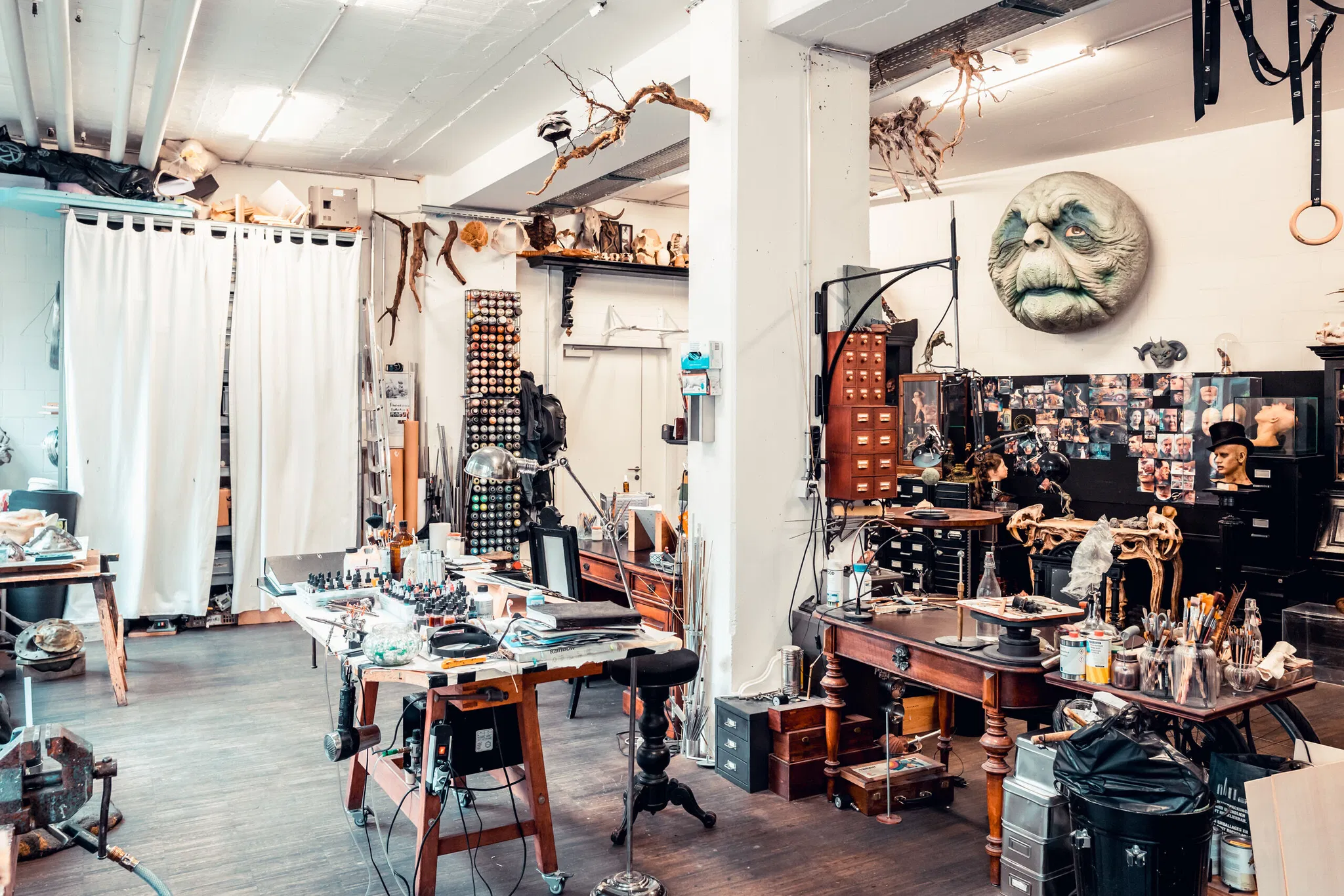

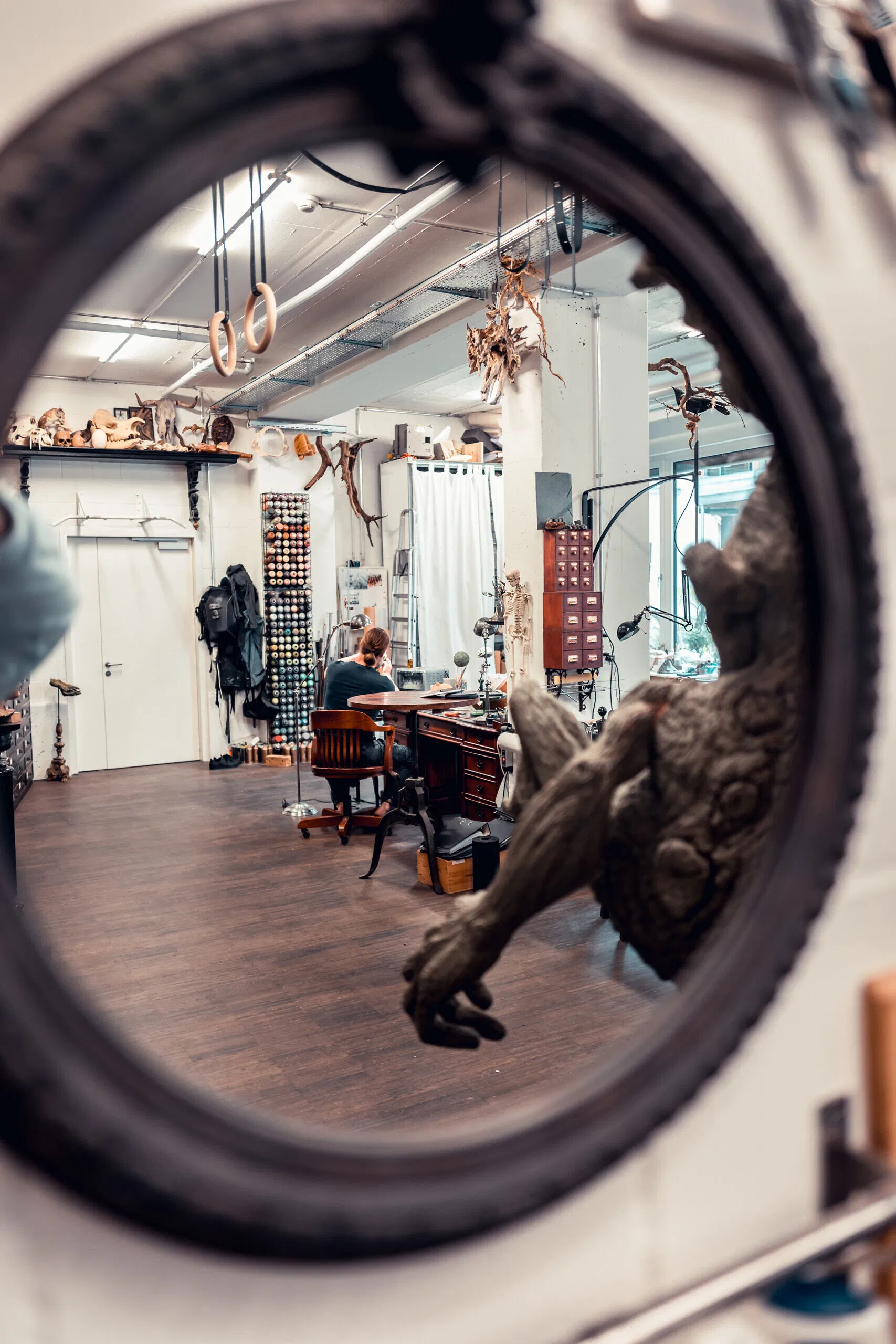
George Steiner asked if I would like a coffee and then politely offered me a seat at the antique desk in the middle of the room. In front of me lay a brush and carving tools, the head of a man from Papua New Guinea that George was just working on, and a small oven, to soften up the modelling material. Next to me a girl’s head on a metal stand. Her eyes closed; her skin pale; the child didn’t seem to have much life in her. Her wig was attached to her forehead with a pin. George wasn’t allowed to tell me anything about that assignment. And anyway, my hopes that he would cheerfully recount all the details of his life were dashed pretty quickly. He is more still water runs deep than an effervescent artistic diva. He doesn’t express himself in words.
And so I asked. For example: How did you get started with your art? “As a two-year old, with drawing, of course” George answers and grins mischievously: “We all started out as illustrators didn’t, we? It’s just that most of us stopped again.” George, on the other hand, has maintained his childish creativity to this day. What is more, although he has no children of his own, he finds it easy to return to his past and look at the world through the eyes of a younger version of himself. A useful quality when you work for children.
George grew up close to Basel’s cathedral in the Martinsgasse. There were no artists in his family, but he already began creating his own world at an early age, with drawings, papier-mâché figures and theatre stages in the garden. It was always clear to him that he wanted to become a stage designer one day. When he had finished school, he applied for the preliminary course at what was then the School of Arts and Crafts. And he got accepted. “Which was lucky” he said “because there was no plan B”. There followed years on the creative treadmill: the basic auxiliary class on surfaces, the basic auxiliary class on space and bodies, a graphic design class. At some point he had had enough of it and established himself as a graffiti artist. He still likes spraying today, but at the age of 48, he doesn’t want to expose himself to the toxic fumes so often anymore. In the end, George taught himself the art of stage design. “If you have a passion for something, you automatically develop the ambition and knowhow”, he comments succinctly. He also continued his training in the fields of special effects and make-up.
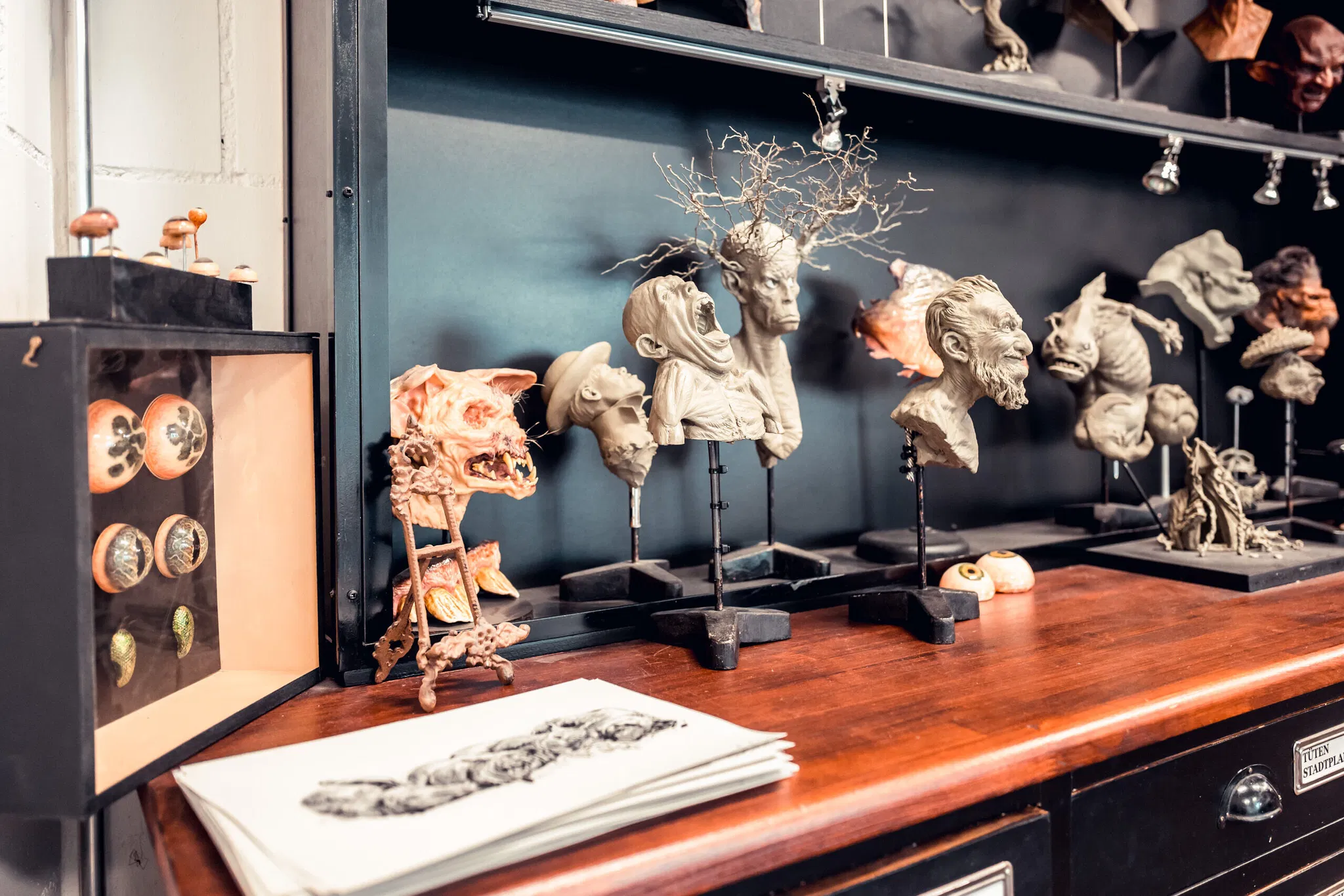
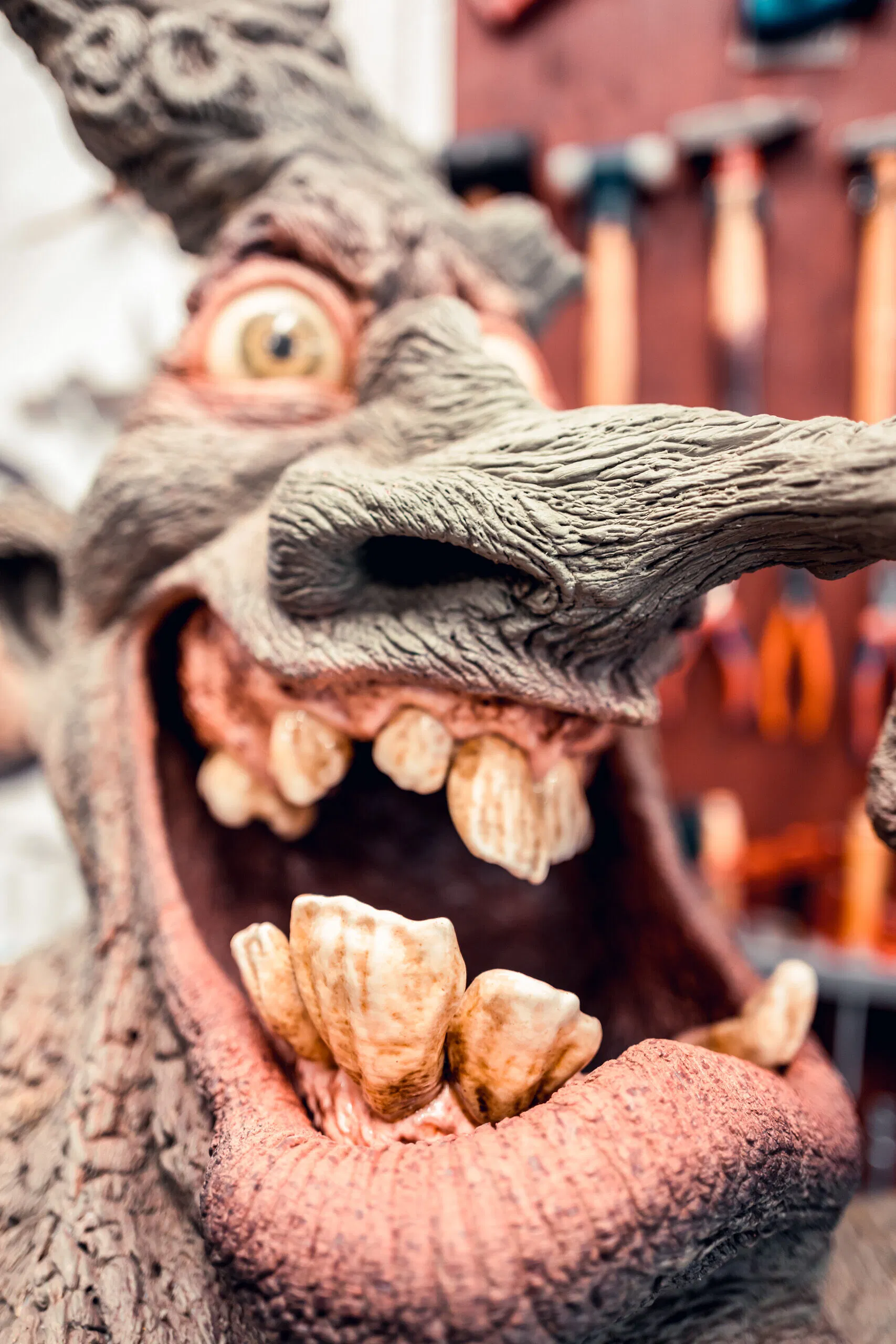
These days he gets assignments from all over the world. For example, he had the opportunity to design a feather mask for the fantasy movie the Witch Hunters. For the film The Medicus he modelled part of a rib cage for an autopsy scene. For Bruno Manser, together with some colleagues from Bern, he created a wounded leg. “For a man's leg to look real, you have to use a curling iron to make every hair curly. You prick the hairs in, one by one, by hand. A huge job. In the end, the scene with the disgusting leg wound was cut out”, laughs George. The open brains, severed limbs and numerous nasty flesh wounds which he created for various zombie movies had more luck than the leg. He is contacted by producers again and again asking him to complete this kind of work. “I love doing the work – but I never watch those films”, he grins and conjures up a small facial paralysis out of the fridge, one he has prepared for a Swiss film.
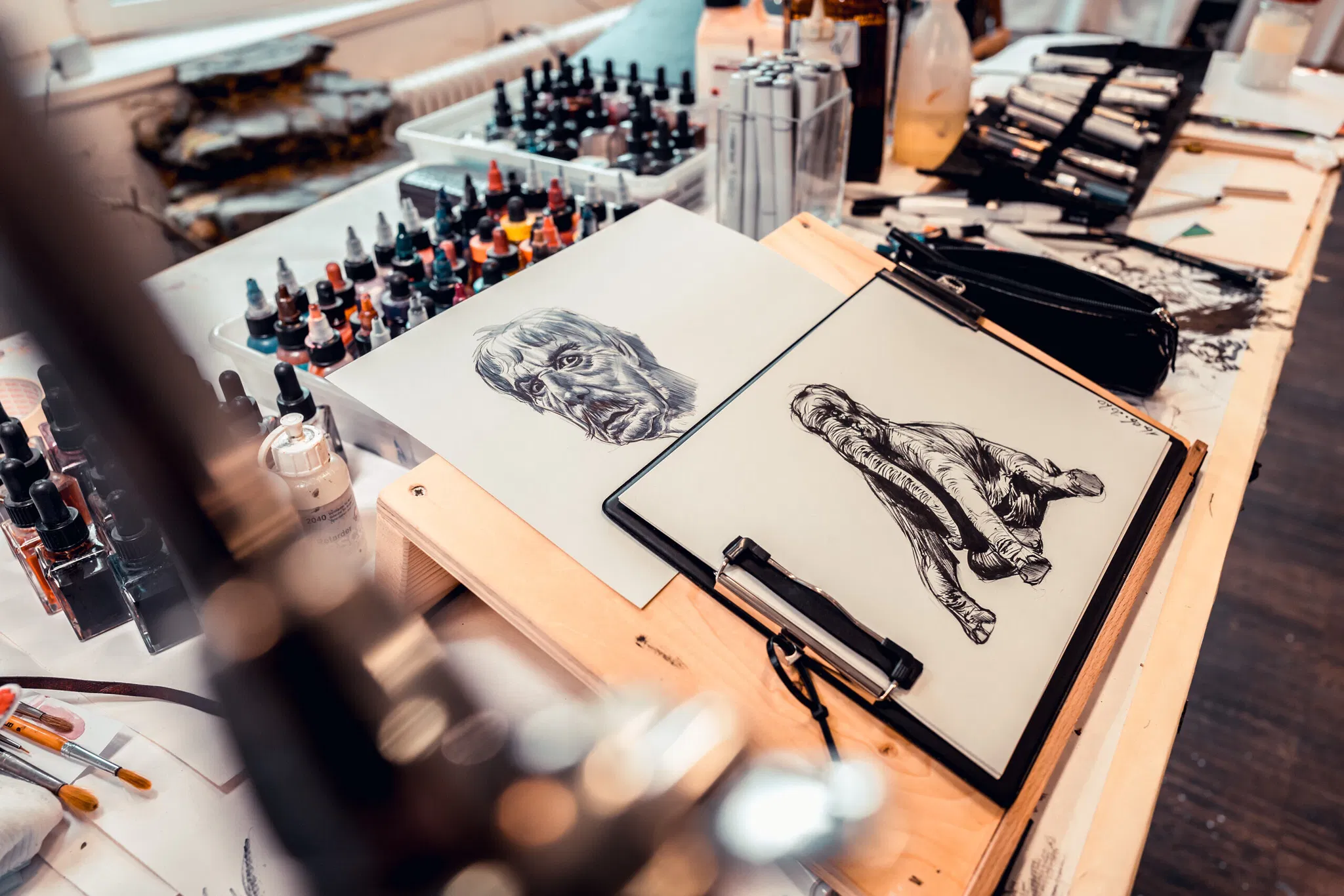
George is passionate about modelling. And since every model is based upon numerous studies, he sketches every day and spends a lot of time out in nature to capture shapes and forms. One reason for this is that he believes he practiced too little in his youth. “I forgot that you also have to unleash your talent” he mused. “You can’t draw just like that. You have to work at it. And I also think we are under an obligation to use our talents.” He still remembers today how he wanted to draw a portrait of his kindergarten teacher as a child. Without success, although he could picture her perfectly in his mind’s eye. “I was shocked, in fact completely shaken”, he continued, “and in fact I still have the same problem today. I know what an elephant looks like, but I can’t draw it exactly as I have it in my head. That really gets me down.” This is why George practices every day and can’t even remember the last time he took a week’s break from modelling. A hobby? “Well that’s something that you don’t do with your whole heart, something you don’t take very seriously” he says and gestures dismissively, “no,I don’t have anything like that.”
I left George Steiner’s enchanted world that day impressed and humbled by so much talent, diligence and creativity in one person. Actually, he has every reason to be a bit of a diva in the art world. But instead he works diligently on, with a steady hand and a clear mind. Ever improving. And to bring to fruition at least some of the ideas that spring from his vivid imagination.