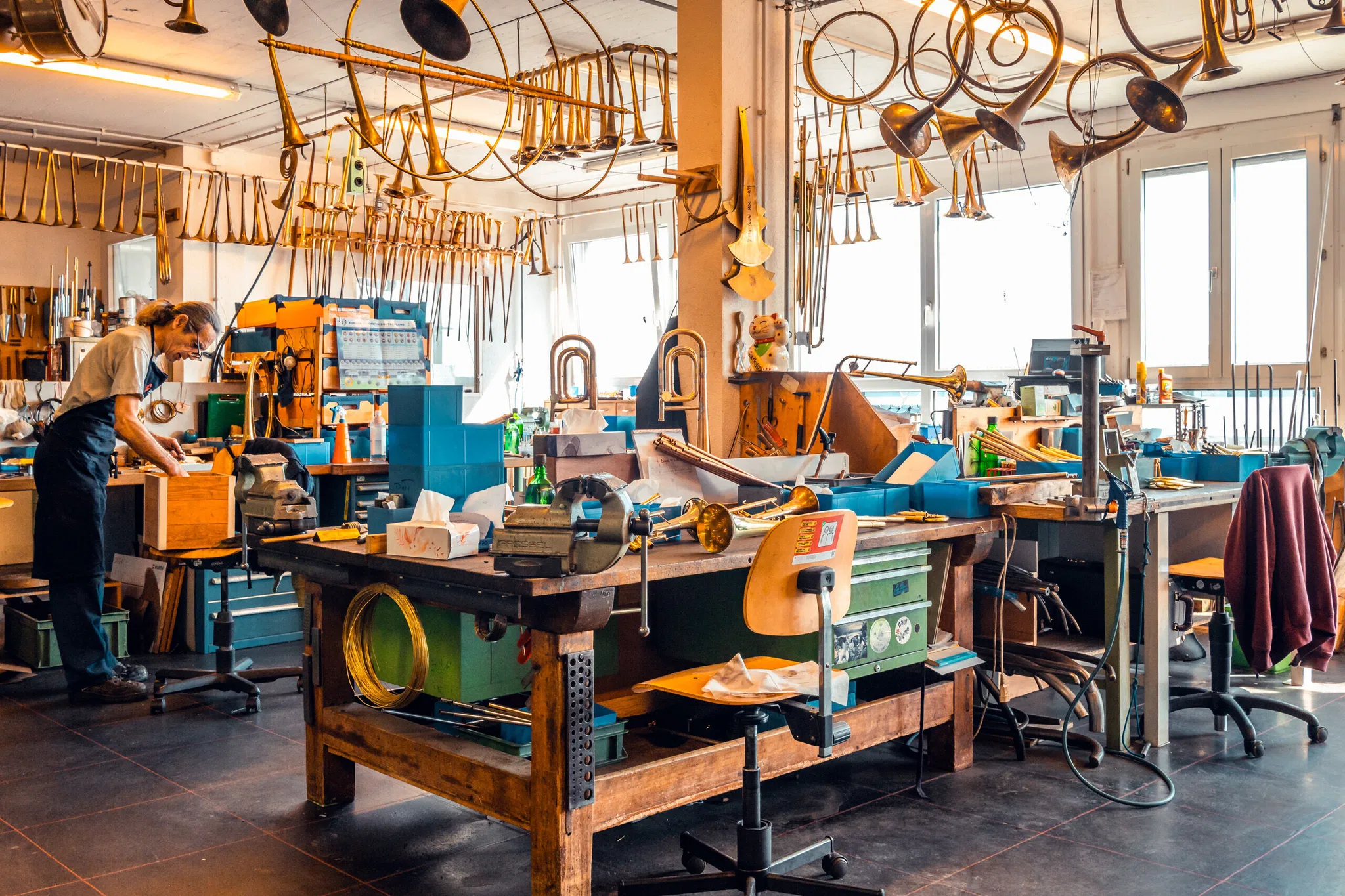
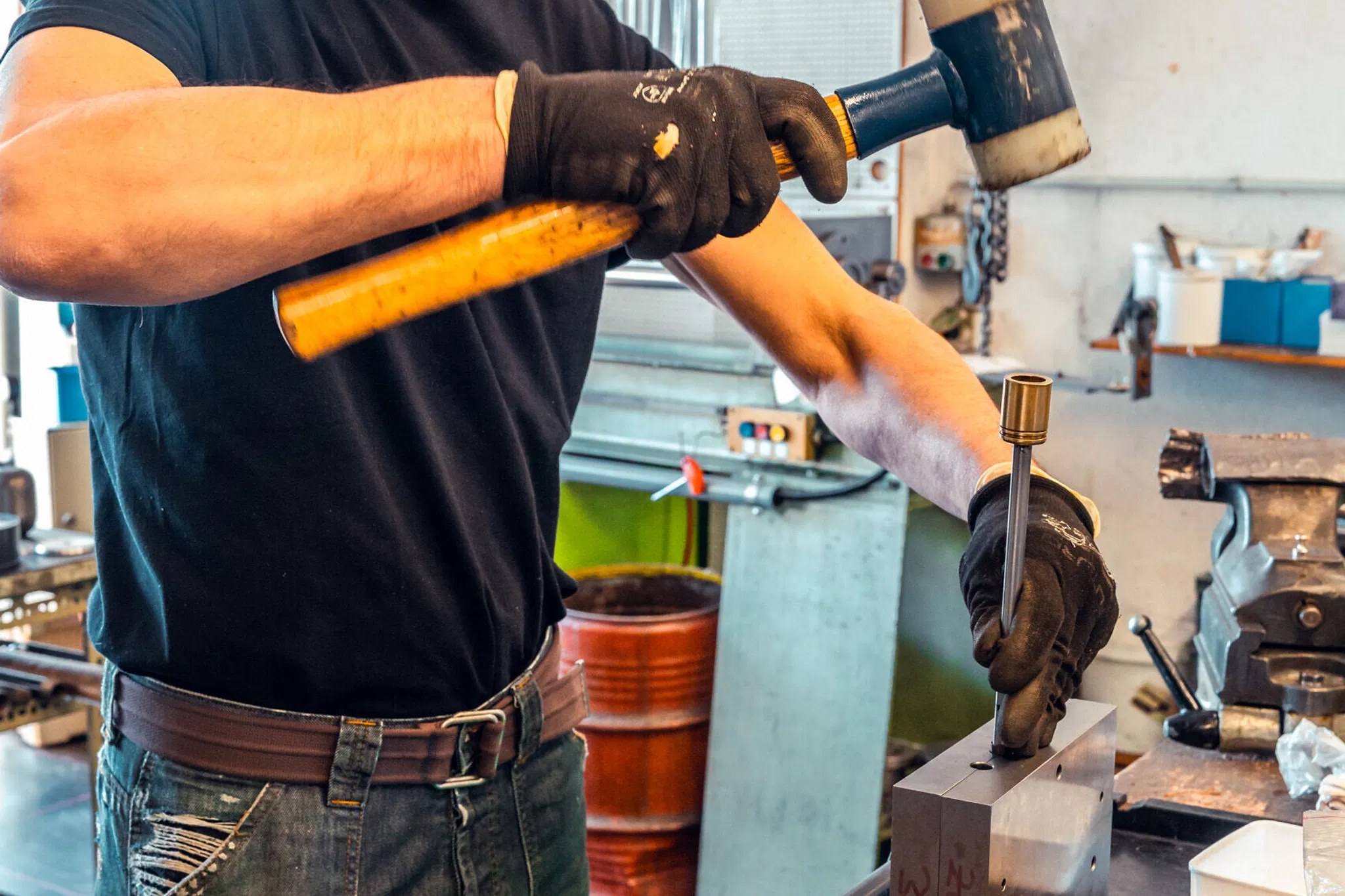
The constant “pling – pling – pling” of a hammer on metal is accompanied by Bruce Springsteen’s “Glory Days” playing on the radio. A gentleman in the corner is cheerfully whistling away to himself. Someone shouts “Buongiorno” into the workshop, and a chorus of voices call “Buongiorno” back. There is an amicable atmosphere here at Egger in the Venedigstrasse in the Dreispitz area. I had been expecting something a bit more hectic and definitely louder – after all, I am visiting the world’s largest workshop for historical brass instruments. “There is usually a lot more going on,” grins Peter Boekels, who is the head of the enterprise “but a couple of our employees are not here at the moment and our three apprentices all have classes at the technical college today…”
Are there a still a lot of young people who want to train to manufacture wind instruments these days? “We receive enquiries quite regularly,” says Peter Boekels. “We have a new apprentice starting in the summer, then we’ll have an apprentice in each of the four years of the training program.” He speaks in a particularly refined High German, so I realise immediately that he is not simply commuting to work in the Dreispitz from South Baden, the German region just over the border – it sounds as though he has journeyed from further afield: “Hamburg!,” he confirms my suspicion. He studied mechanical engineering and business sciences and officially took over the business from Rainer and Rosa Egger five years ago.
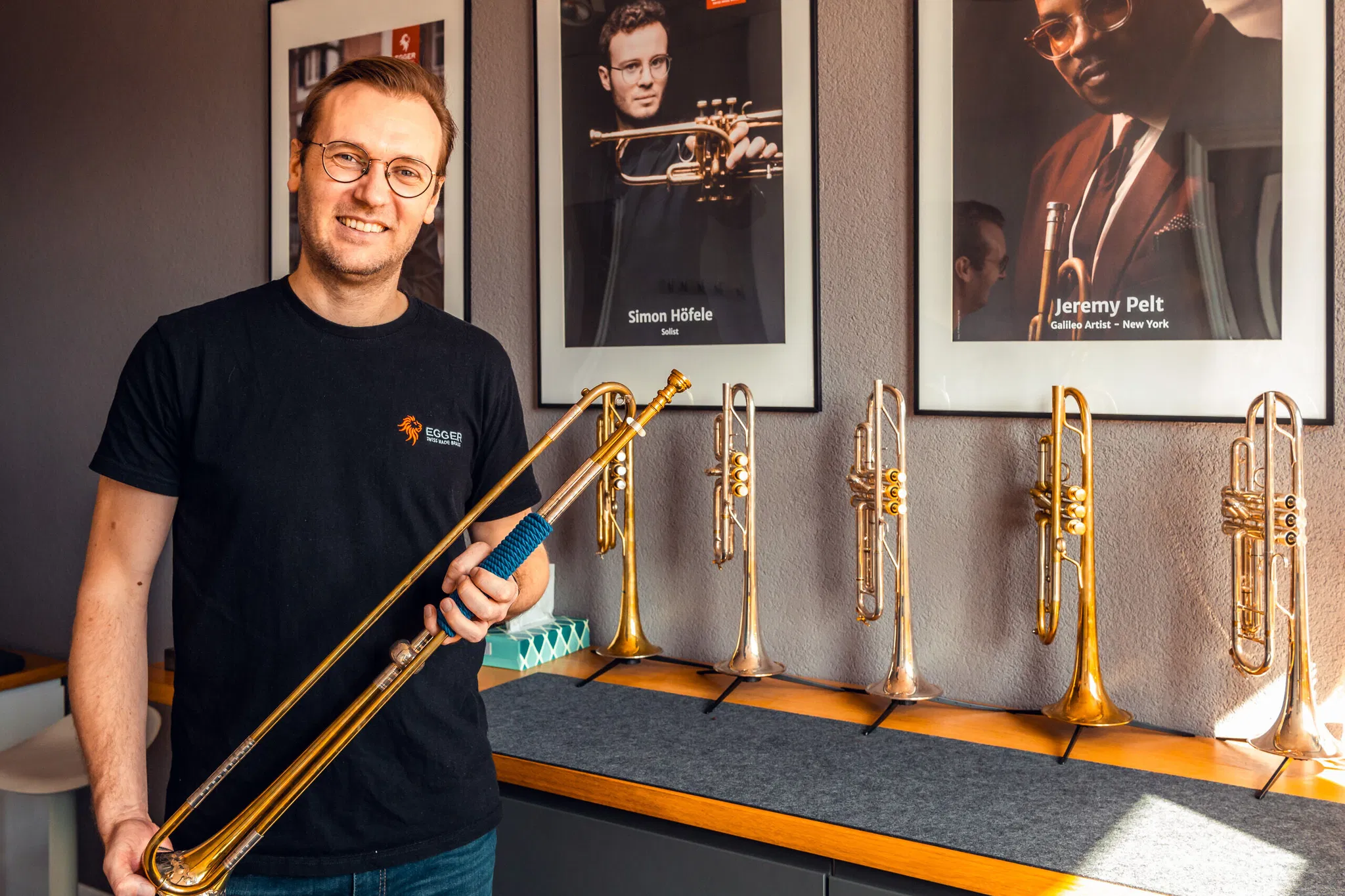
It must have taken a touch of youthful recklessness to throw away his career in metropolitan Hamburg in order to come and sell brass instruments in the small city of Basel. “More like enthusiasm really,” replies Peter Boekels. “I realised straight away that this was a special opportunity.” He himself is a keen trumpeter and plays in various orchestras. “Music has accompanied me since I was a child.” When he found out that the Eggers were looking for someone to take over their family business a few years ago, he knew immediately: “This is it; my life, my passion.” He was already playing an Egger Baroque trumpet at the time, and was thus well aware how unique this special family business really is. He came to Basel for an internship, was introduced to the craft of manufacturing historical instruments by the former head of the business, and integrated himself in the company. He took over in 2019.
Guest appearances on stages all over the world
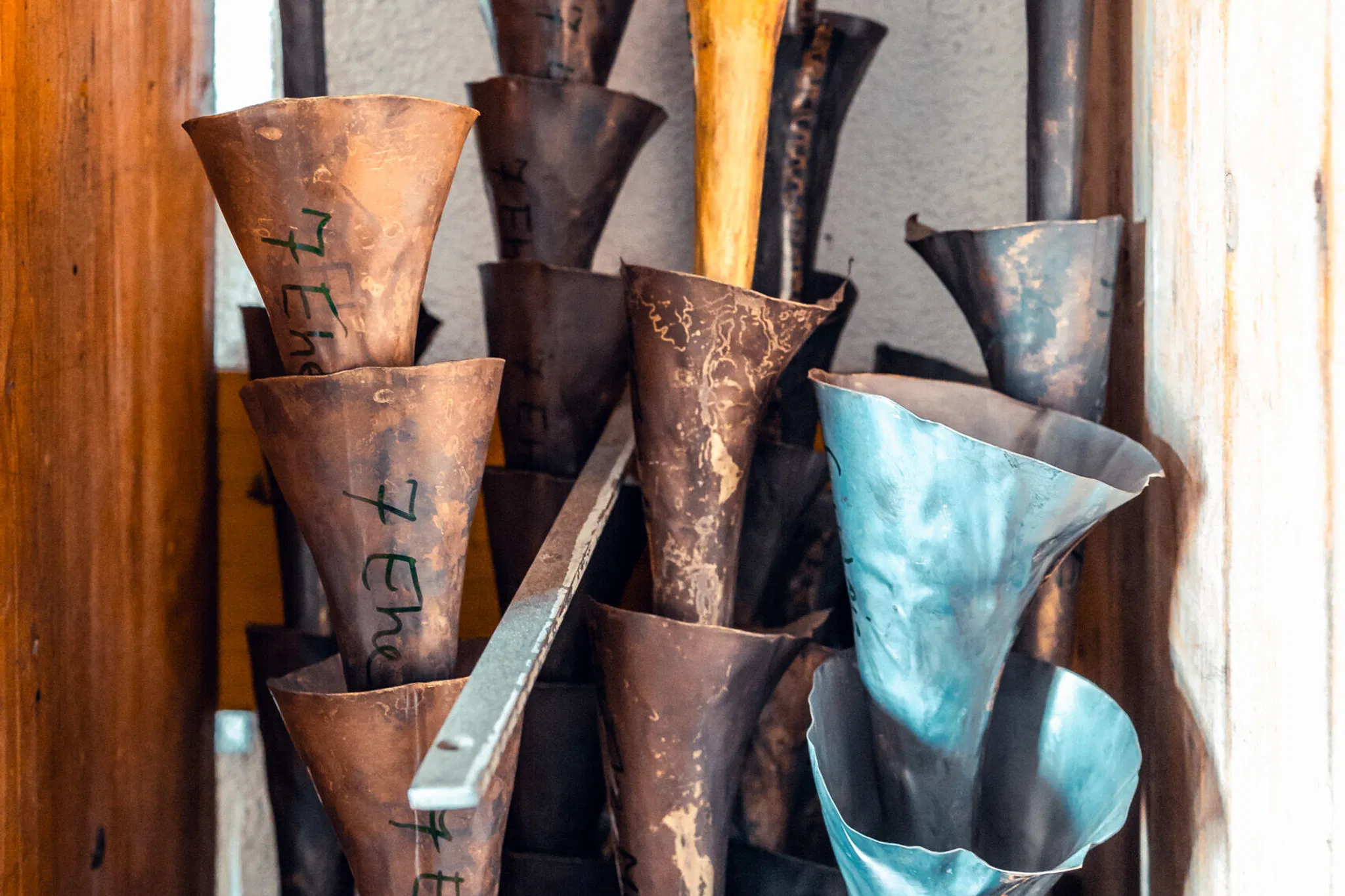
All over the world, musicians play the compositions of the old masters on Egger trumpets, trombones, and horns. These historical reproductions can be heard at the New York Met, the Scala in Milan, the State Opera in Vienna and at the Opera House in Sydney. So what makes these instruments crafted in Basel so special? The instrument makers at Egger have perfected the art of crafting historical instruments. A trumpet played in the era of Johann Sebastian Bach sounded different to those at the time of Johannes Brahms, who lived around 100 years later. Different materials, different tools, different techniques. Here at Egger, they know how an instrument would have sounded, be it around 1680, 1730 or 1850. And how to recreate each one today. “We hammer the sheet metal by hand, and stick as closely as possible to the original manufacturing methods,” explains Peter Boekels. “The magical thing about the whole process is that we recreate the tones as the composers themselves probably knew them, which means we help transport the audience back to another era.” But it is not only historical instruments that they make here at Egger; they also produce professional modern trumpets under the Galileo mark. And they too are in demand all over the world.
“The magic of it all is that we're creating the sound that the composer himself probably once heard in his mind.”
The business was established by Adolf Egger in 1940 and was originally a workshop for repairing military instruments. It must have been around 1967 that he recreated the first Baroque trumpets. “This was mainly at the instigation of Edward Tarr, the American trumpet virtuoso, who came to Basel to continue his studies at the Schola Cantorum Basiliensis, and then later to teach and research here himself,” explains Peter Boekels. In the 1970s there was an increase in demand for historical instruments and Egger began to specialise. And because Adolf Egger’s son Rainer was such a passionate and meticulous craftsman and experimenter, he drove the development of their perfectly playable and authentic-sounding instruments even further. At the same time, he optimised a head piece for the Basel piccolo and thus brought a product onto the market which is still very popular these days, mainly at the Basel carnival. “Rainer Egger is, without question, one of the foremost developers and craftsmen of instruments of our time.” Peter Boekels is absolutely convinced about this. “He is now 75 years old but he still comes to the workshop twice a week and he also plays the tuba in various bands. We keep in close contact.”
Science and craftsmanship combined
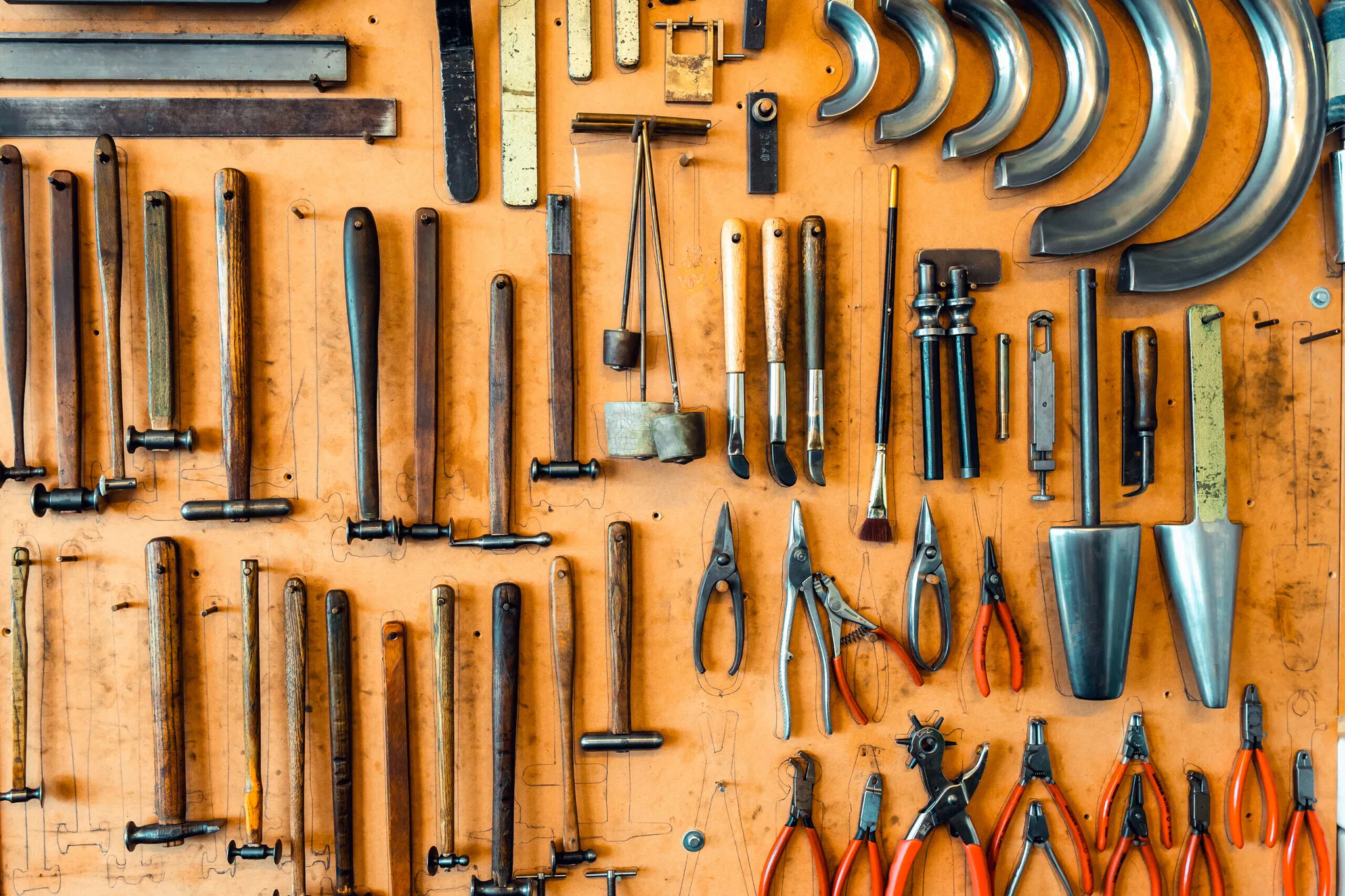
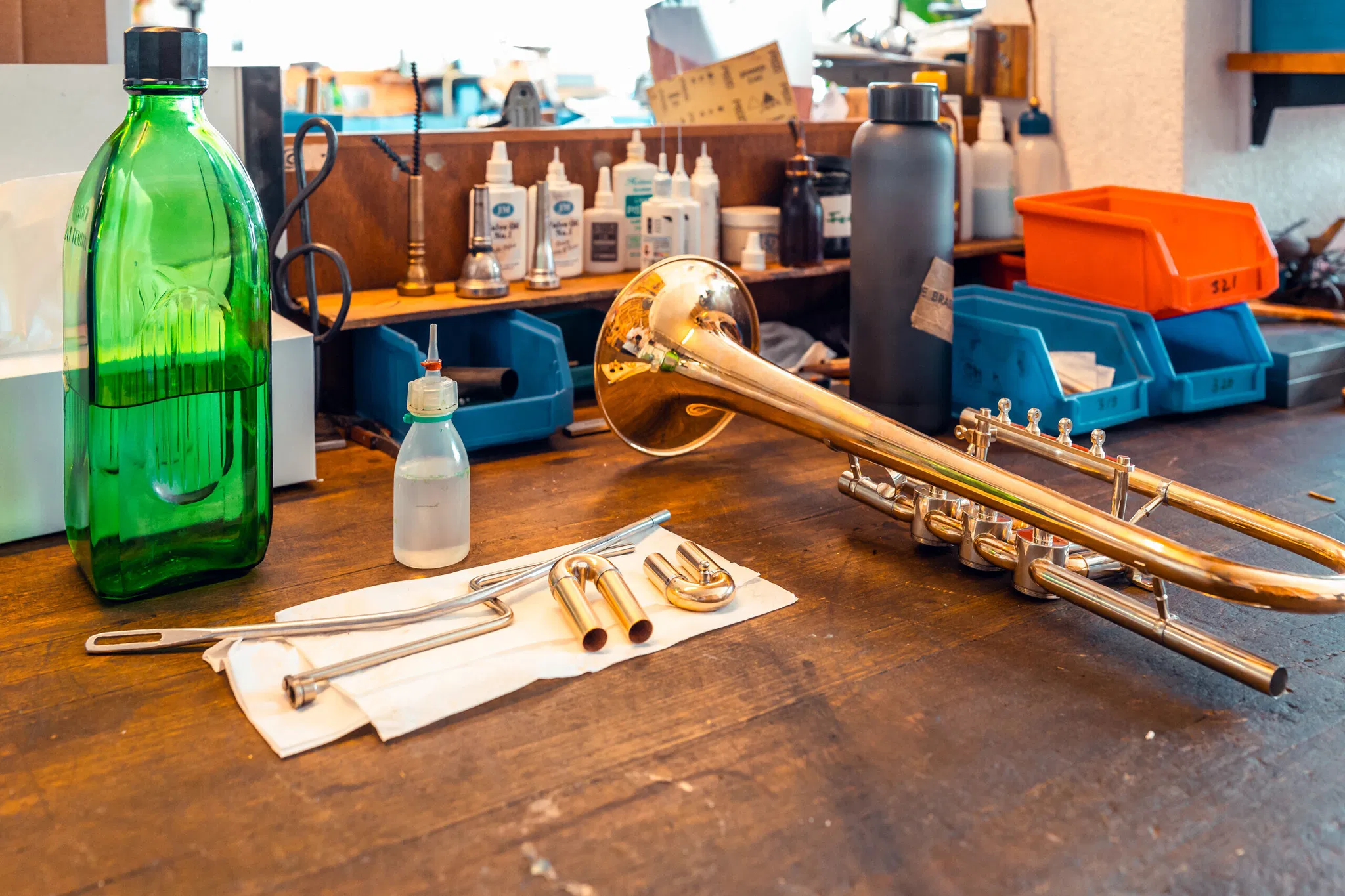
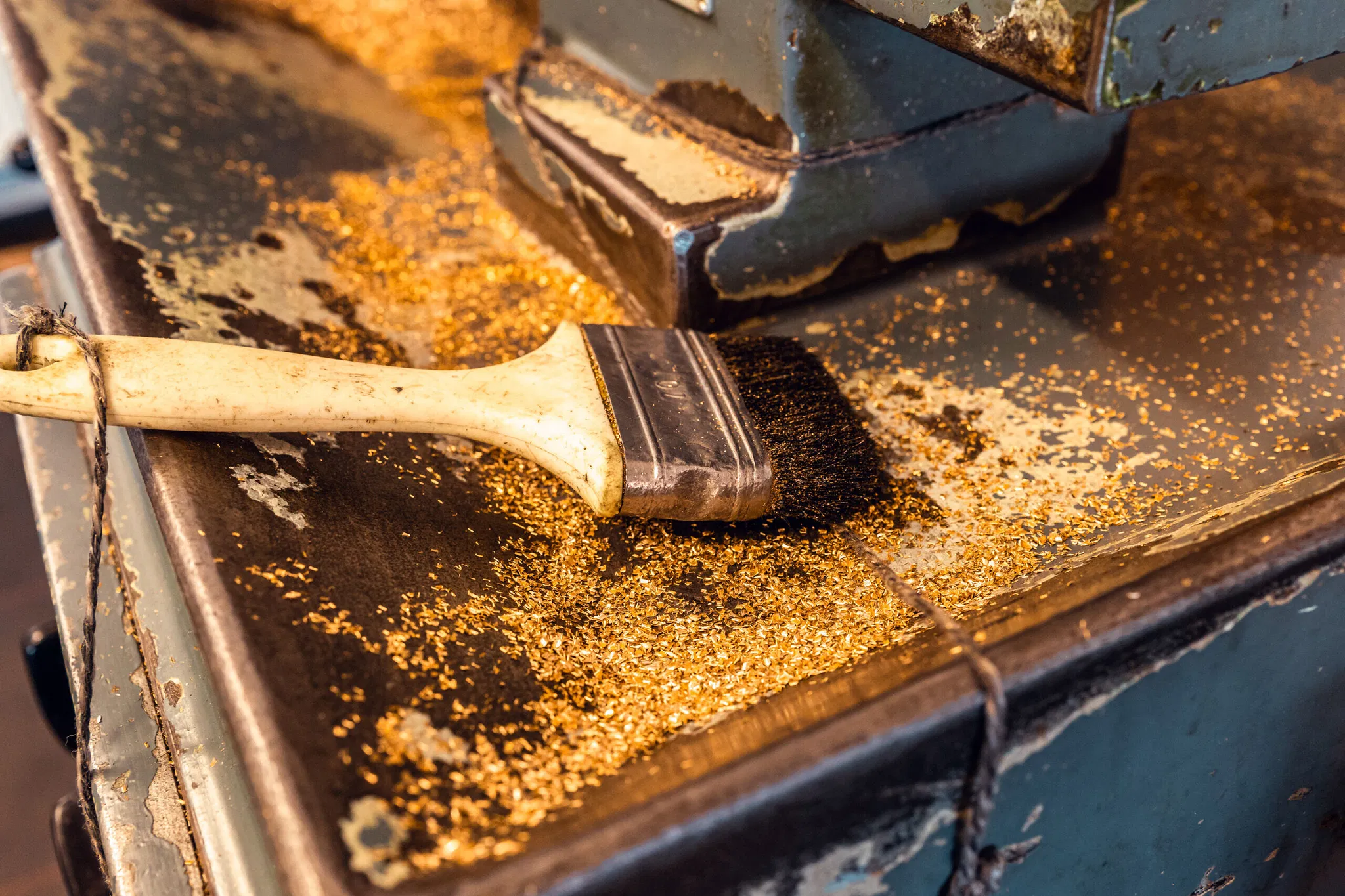
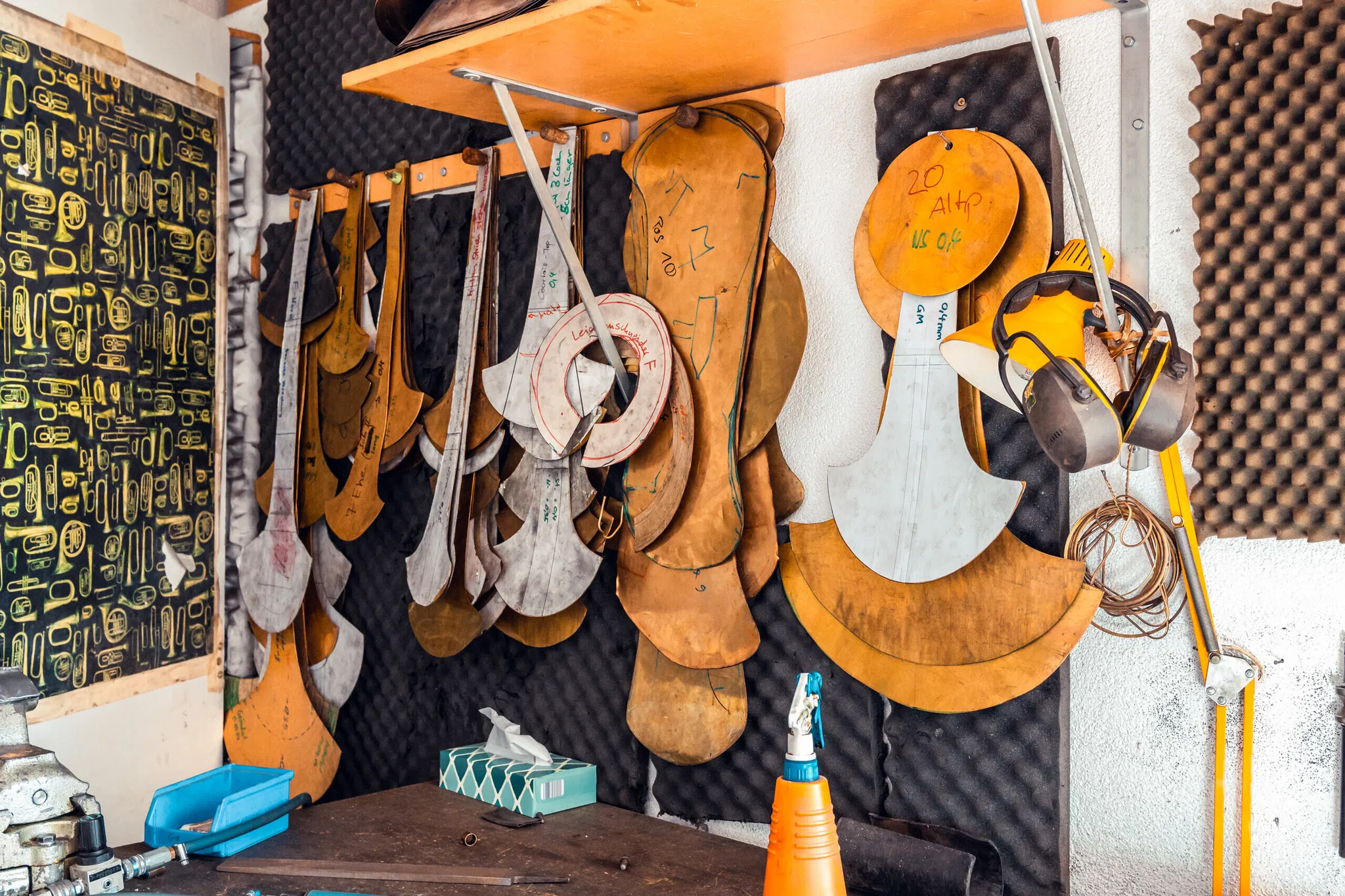
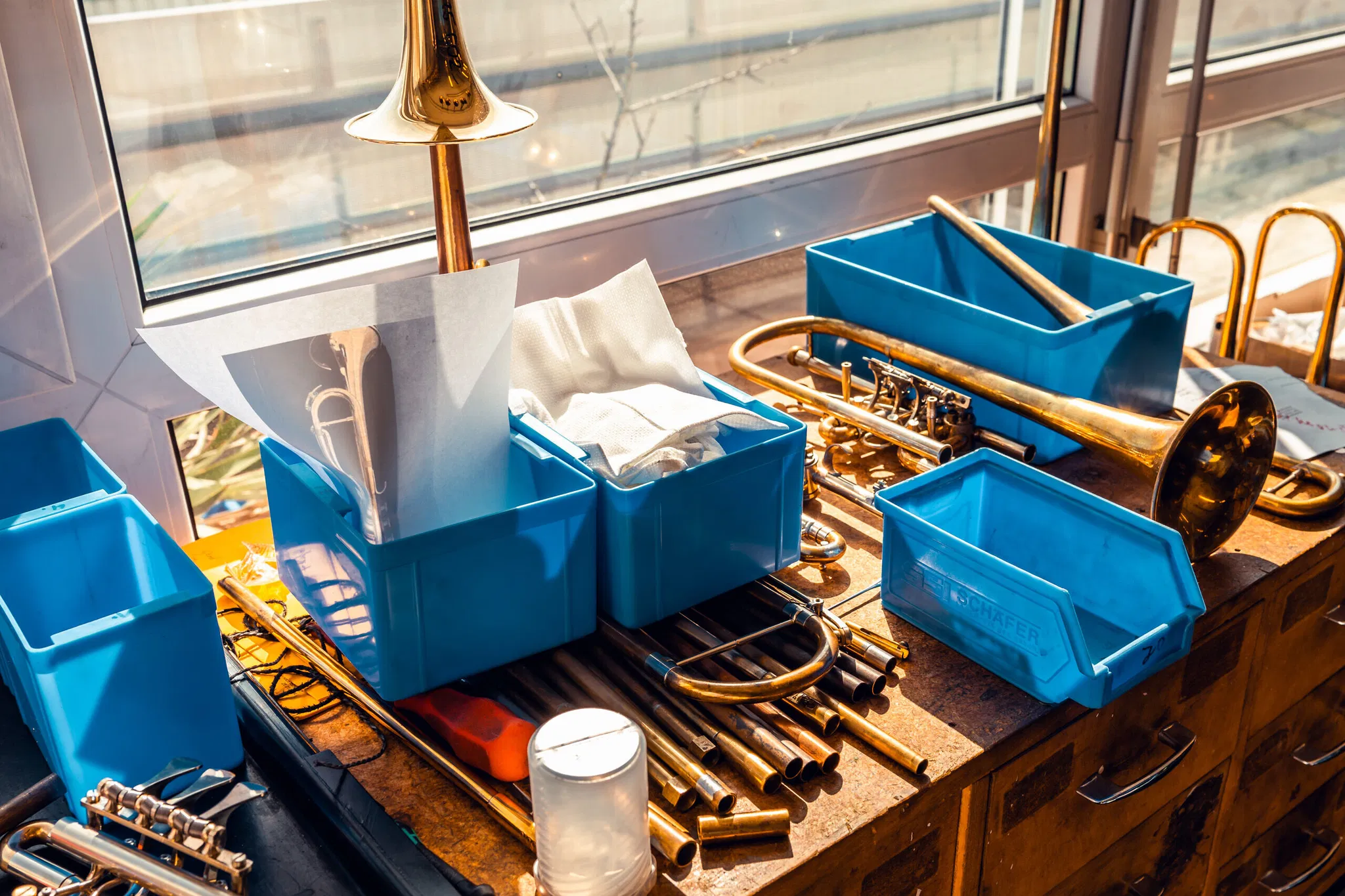
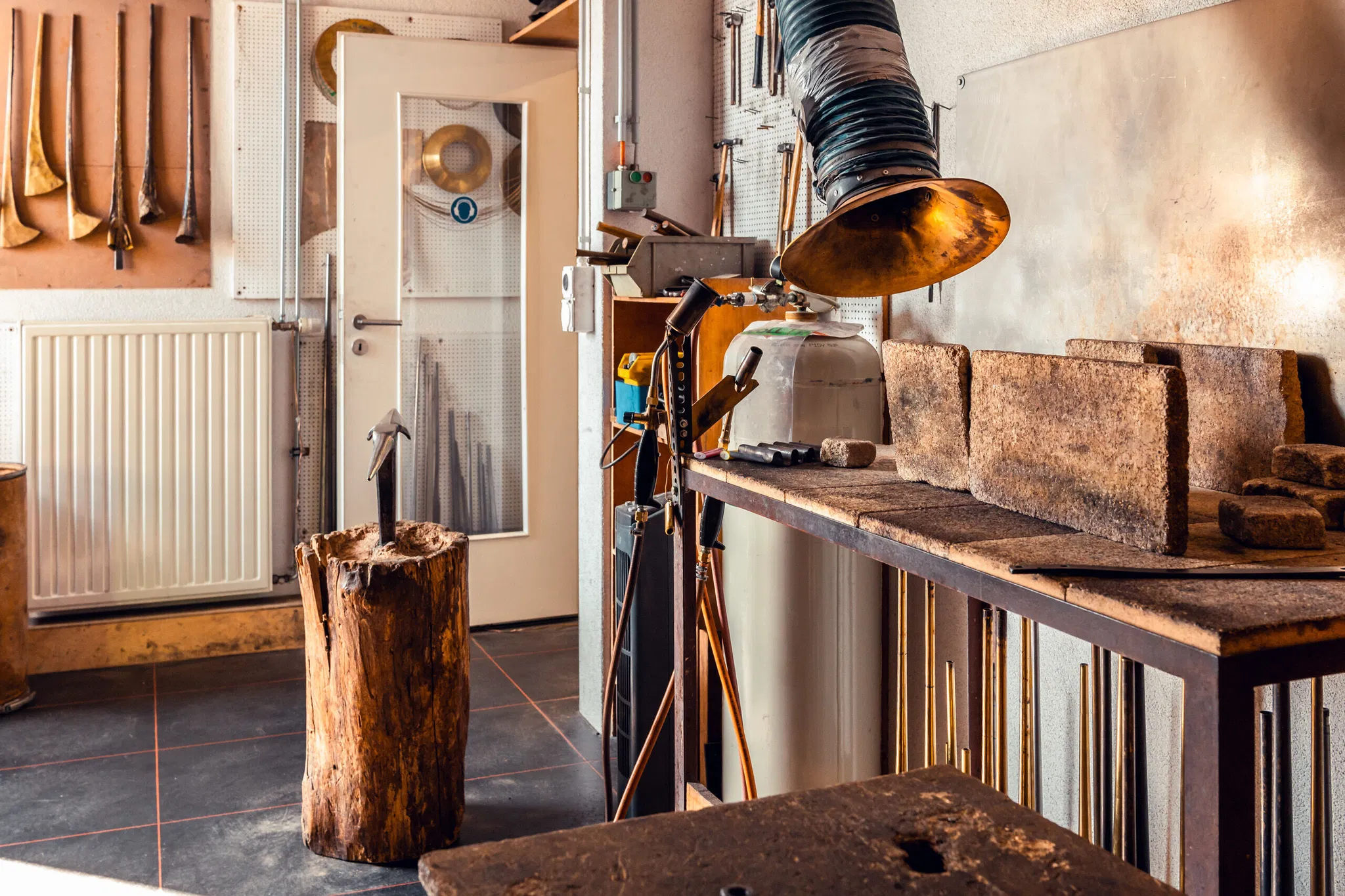
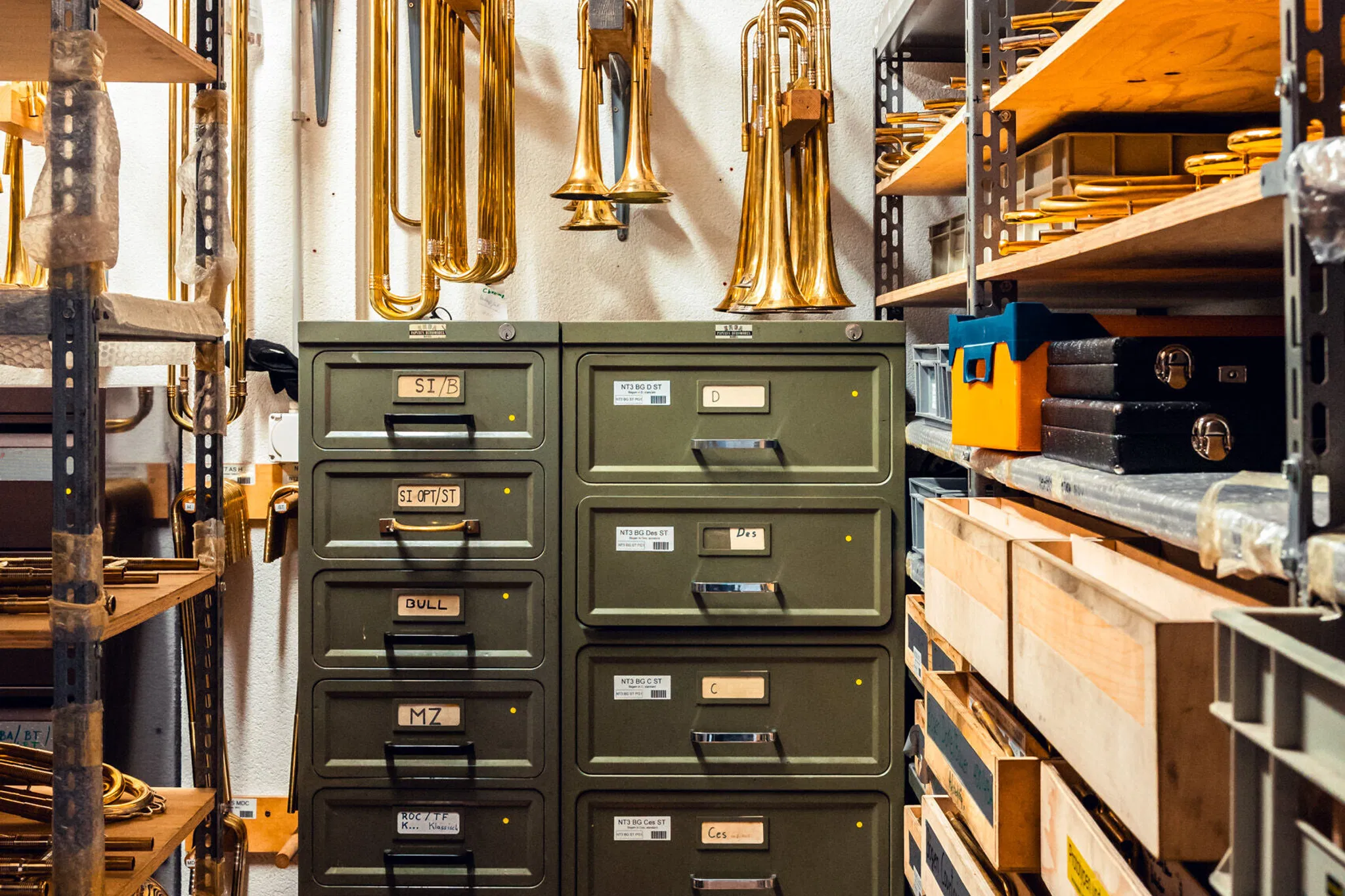
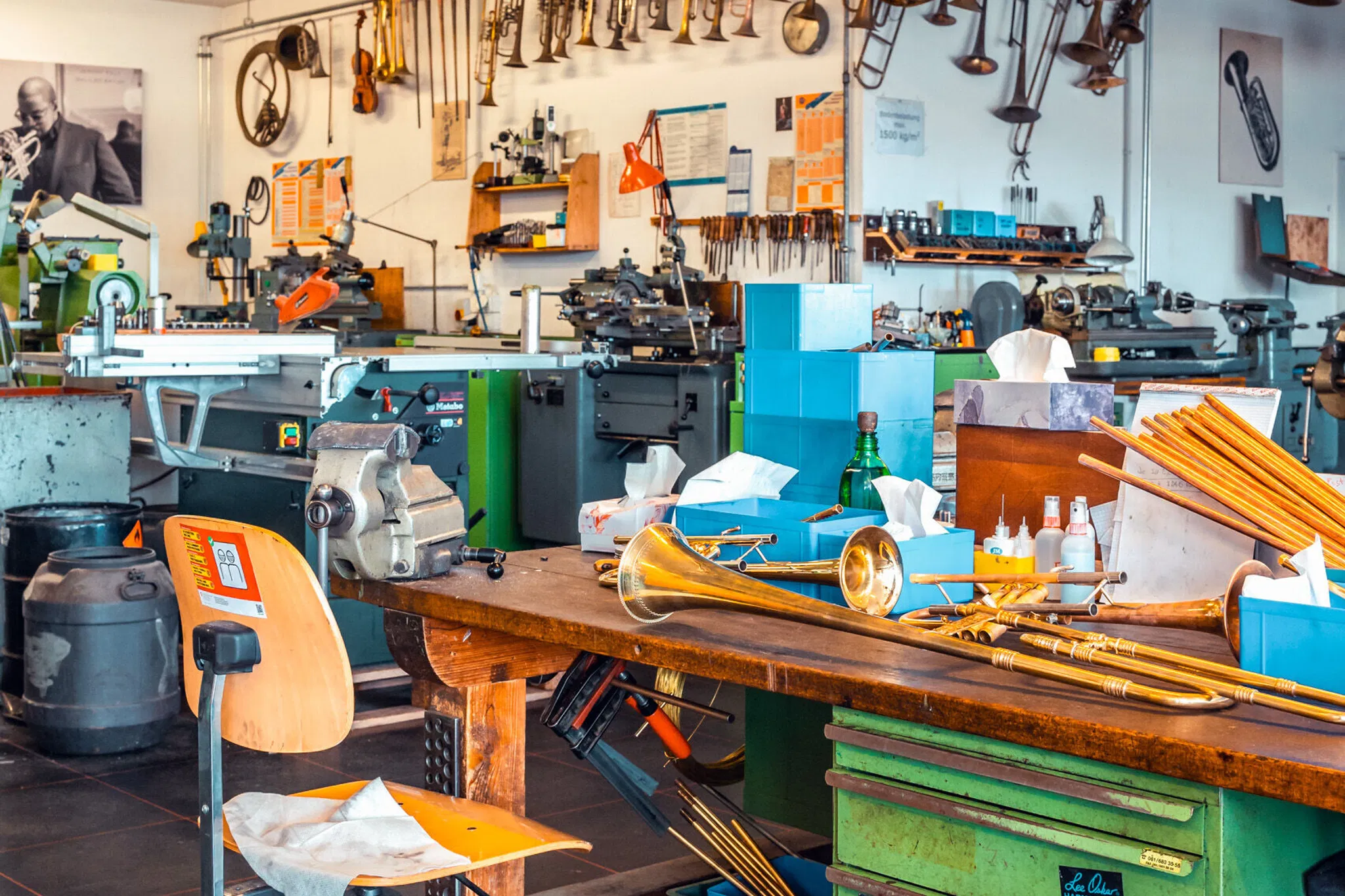
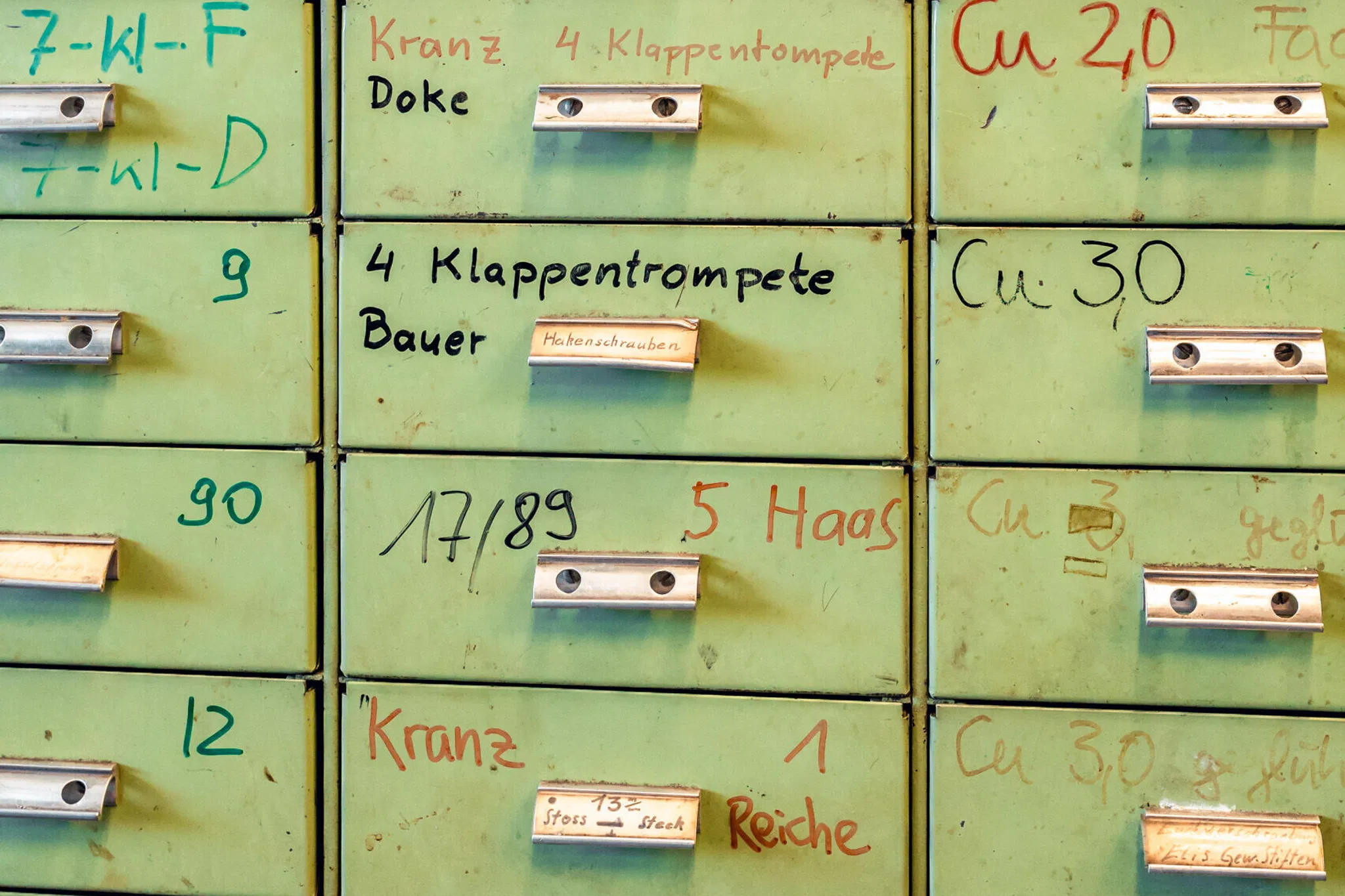
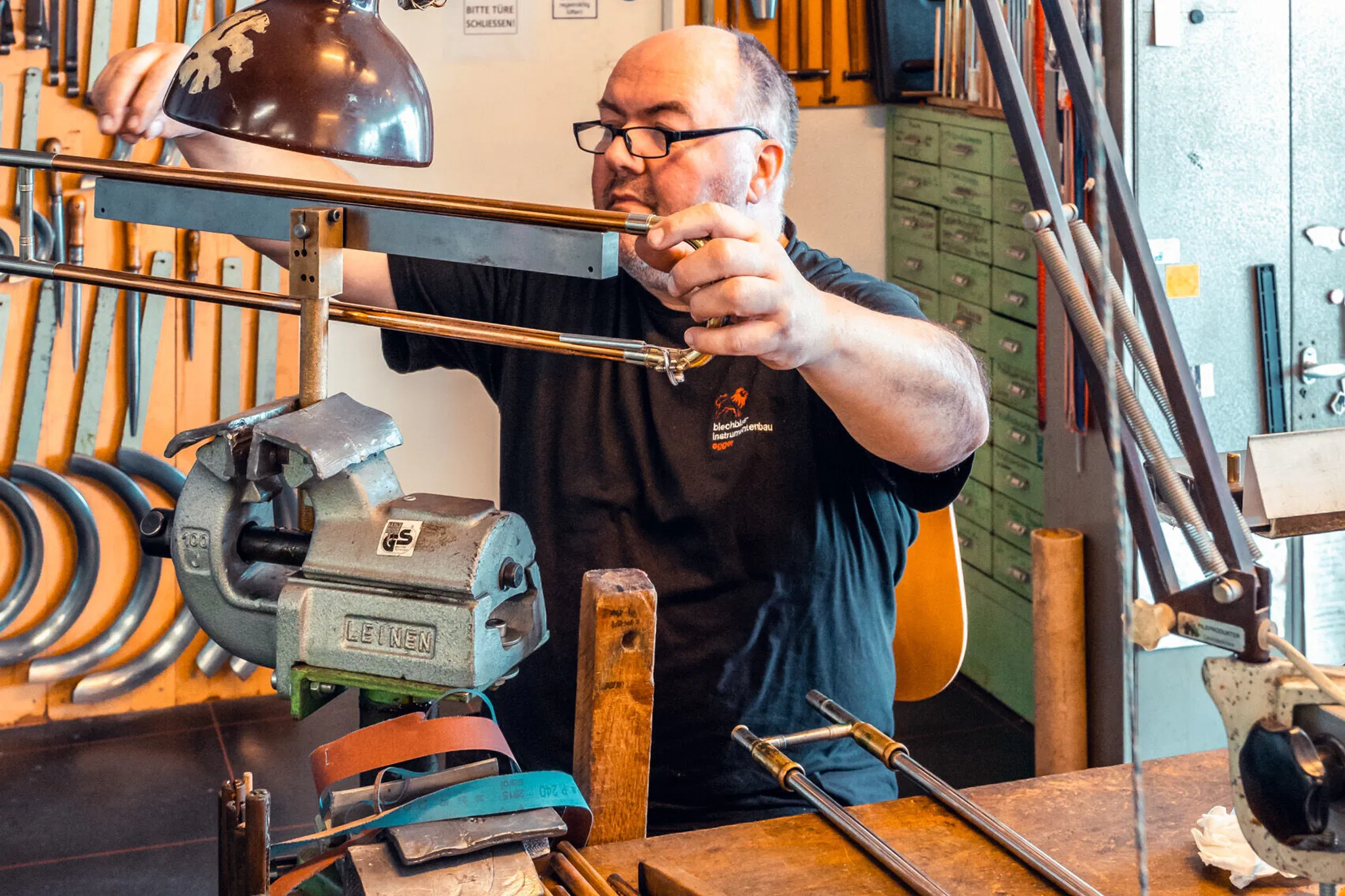
It is true that instrument makers do not necessarily have to be able to play an instrument themselves, because making the instrument is as much a specialisation as playing it. “But in reality, practically every instrument maker has a close connection to music,” explains Peter Boekels. In the workshop, meanwhile there is plenty of hammering, grinding, and whistling going on. Trombones, trumpets, horns, a tuba and even a violin are suspended from the ceiling, there are oil bottles, mouthpieces and jars of grease lined up along the workbenches, alongside vices, pliers, awls, and files. The drawers are labelled with mysterious inscriptions such as “conical bows,” “tuning slides” and “transverse brace soldering gauge”. There are antique looking machines scattered around, covered in delicate brass filings. I can’t get enough of the magical world in this workshop, in which every member of the team does exactly what they love most, with precision and flair, and where each movement is precise, to the millimetre. Calm, concentrated and clearly with pleasure, they hammer, bend, file, solder, and polish. “Things do go wrong sometimes”. One of the team members admits with a grin and then adds: “It’s great that you are writing an article about us – we are well-known all over the world, just not in Basel!”
From Minor Services to Custom-Made Instruments
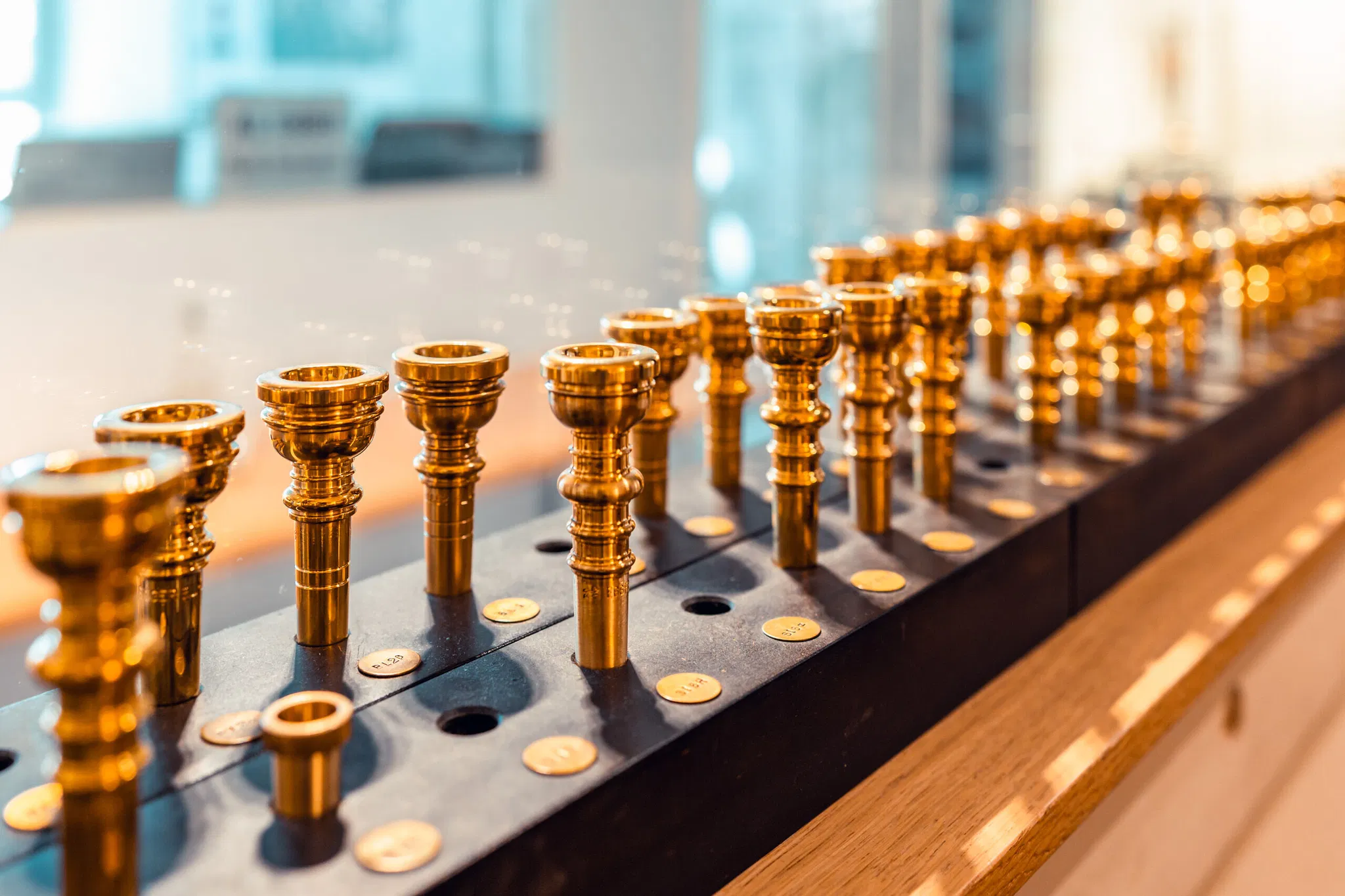
Egger Plc has been providing servicing and repairs for instruments since 1940 and has continued to do so. However, what made the company famous is its highly skilled fabrication of custom-made historical instruments, now played by musicians worldwide. These days Egger also manufactures professional modern trumpets for the Galileo make, which are in high demand in symphony orchestras all over the world as well as in popular music. The manufactory also offers a wide range of mouthpieces, produces the headpieces for Basel piccolos and designs, makes and engraves bespoke instruments. Egger also has a range of historical and modern trumpets, trombones, and horns for hire.
Blechblas-Instrumentenbau Egger GmbH
Venedigstrasse 31, Münchenstein
eggerinstruments.ch