No rush!
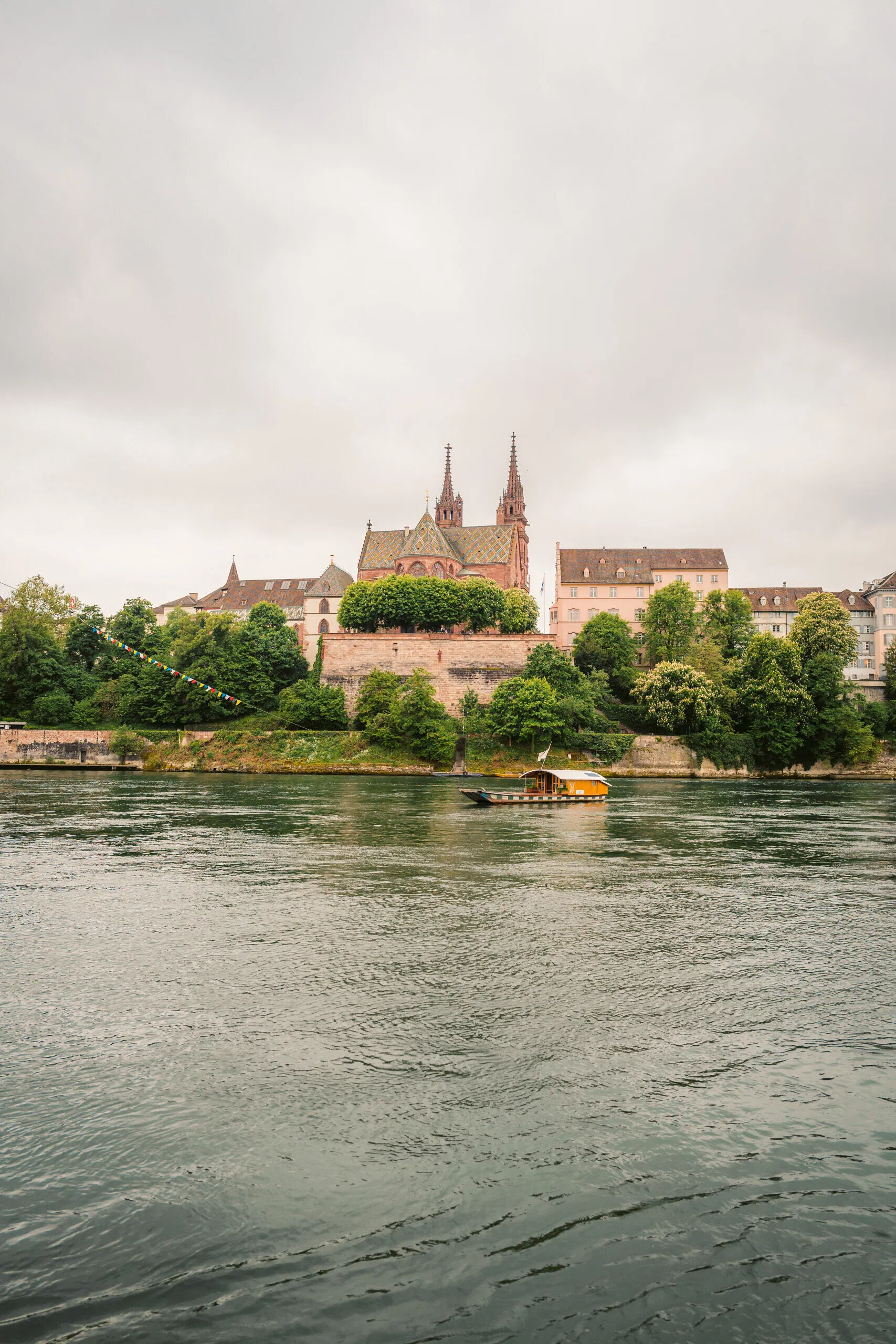
Nowadays, anyone who wants to cross the Rhine quickly will almost certainly not take one of the four ferries. It’s quicker to cross the bridge. On foot, by tram, bus or bike. No, the people who rock gently to-and-fro between Kleinbasel and Grossbasel on the ferry, have decided to do so quite deliberately. They have chosen to slow down and peacefully escape the hectic of everyday life. When you take that step from the safety of the wooden pier onto the ferry, exposed to the vagaries of the flowing river, you are setting off on a little adventure. One that only lasts a few minutes, it's true, but you do experience the city and its history in a truly unique manner in those brief moments. And the ferries themselves have played an important role in the city’s history. Once known as the “flying bridges”, they made up for the lack of actual bridges in Basel. Because for a long time, the Mittlere Brücke was the only bridge in the city.
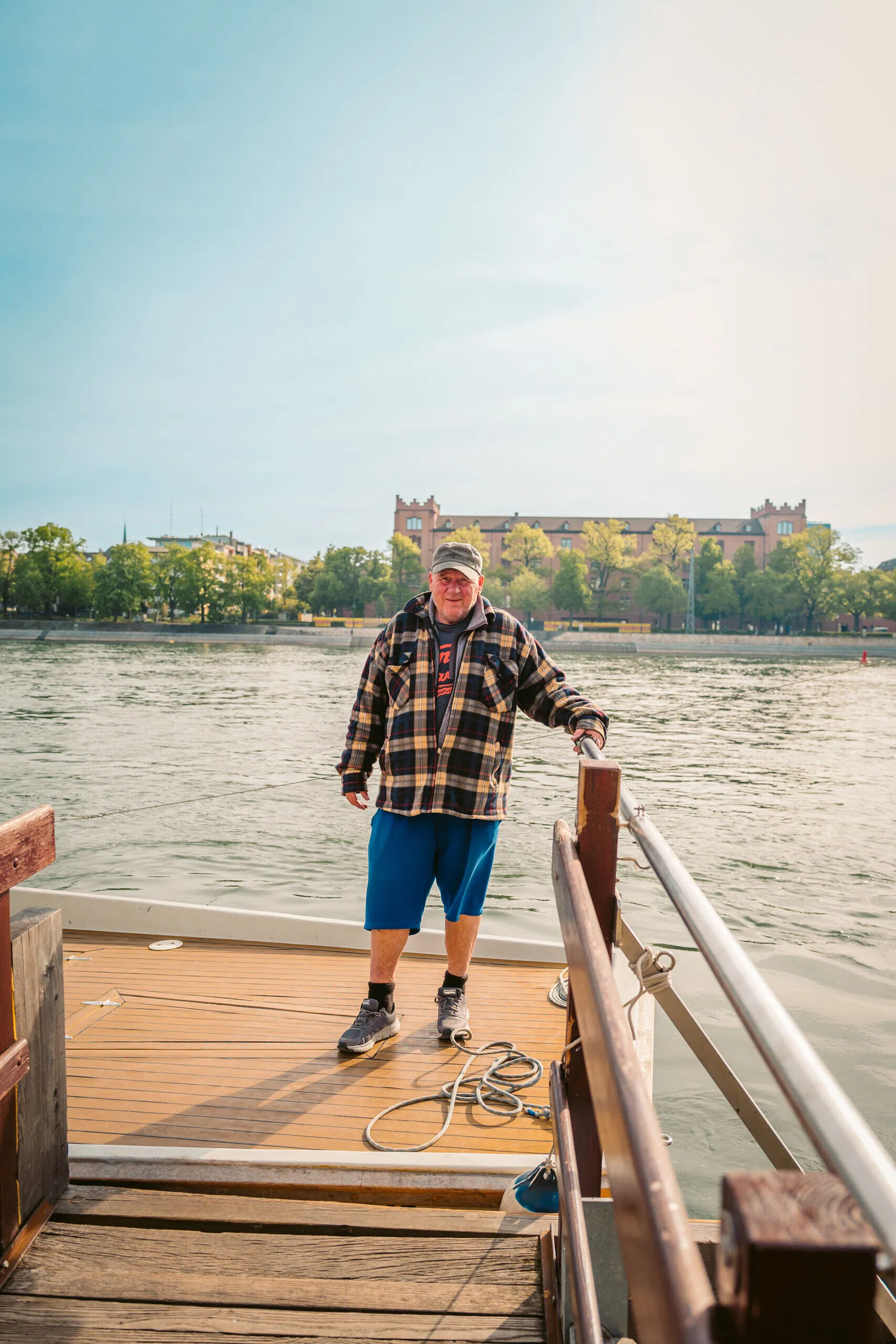
St. Johann Ferry (Ueli) - Rémy Wirz
What does it take to be a good ferryman?
Rémy: Love. Because it doesn’t matter what you do: if you want to do it well, you have to do it with love.
Why do you like being on this ferry more than any of the others?
Rémy: I am the link here between two great neighbourhoods with great people. Each summer up there on the Dreirosen bridge there is a traditional water fight between the two sides. Postcode 4056 against 4057 – that is always quite a spectacle.
What’s the best thing that has ever happened to you on the ferry?
Rémy: At the beginning of the 1980s, in the middle of winter, I rescued an old lady out of the Rhine. My clearest memory is of how very awake I was at that moment. On the one hand so full of energy, and on the other so calm and relaxed. It was a feeling of being connected with the whole universe and in fact with the whole of existence – and knowing exactly what I had to do.
Complete the following sentence: The view of Basel from my ferry is particularly beautiful ...
Rémy: … because you’re not in the middle of town but you have a wonderful view of the city. Apart from the new Baloise tower block … dear urban planning commission!
What time of day do you most like being on the ferry?
Rémy: I like being out there in the evening, especially in summer. I like the people who are out at night. Sometimes there are even small, spontaneous concerts on the ferry. That makes a summer evening on the ferry very special.
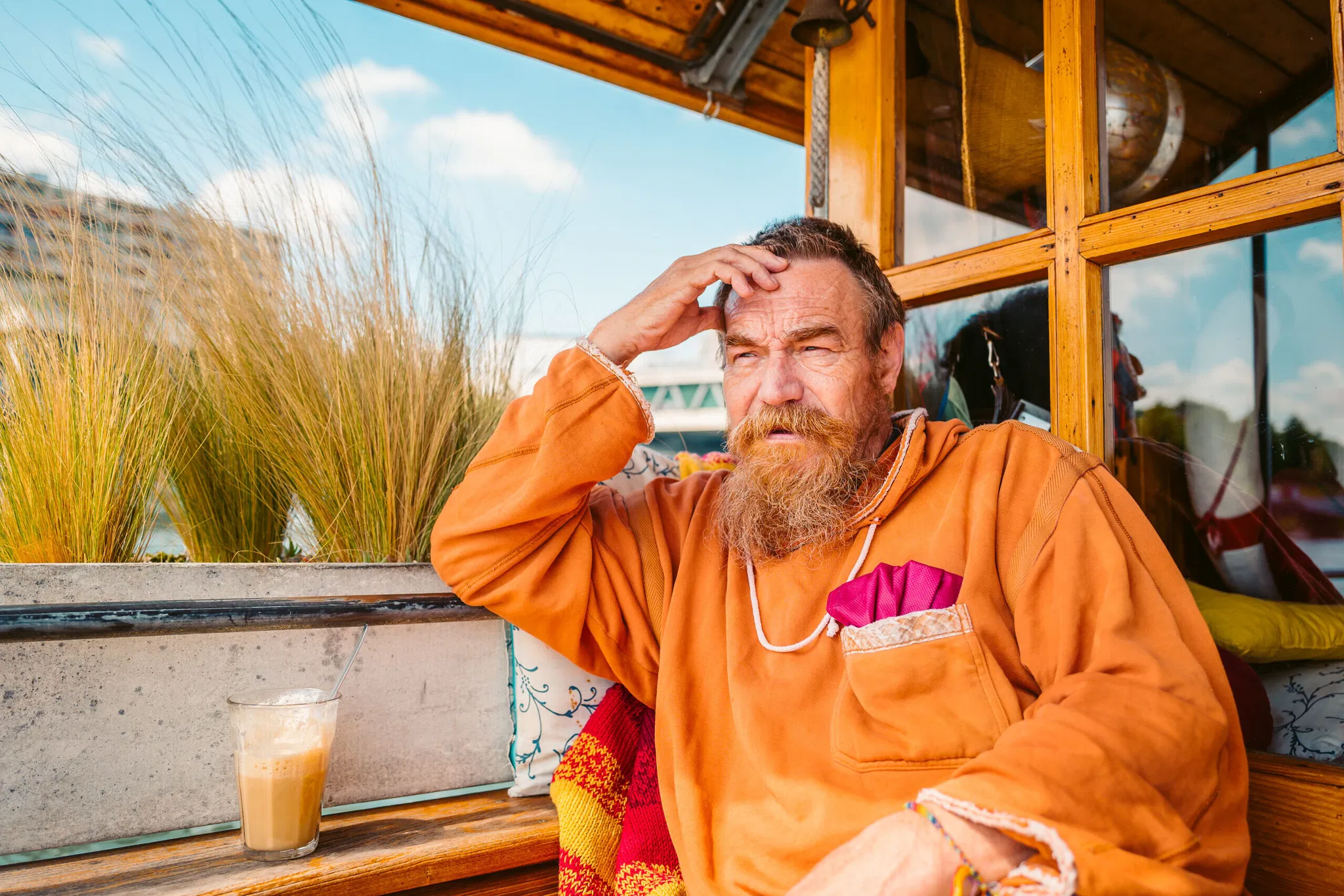
Klingental Ferry (Vogel Gryff) - Urs Zimmerli
Why do you like being on this ferry more than any of the others?
Urs: My father was already the ferryman on this ferry – that’s why it’s my dream ferry too.
What’s the best thing that has ever happened to you on the ferry?
Urs: A few years ago, during the carnival, at four o’clock in the morning, the Bajass clique played the Morgestraich on my ferry. That gave me real goosebumps.
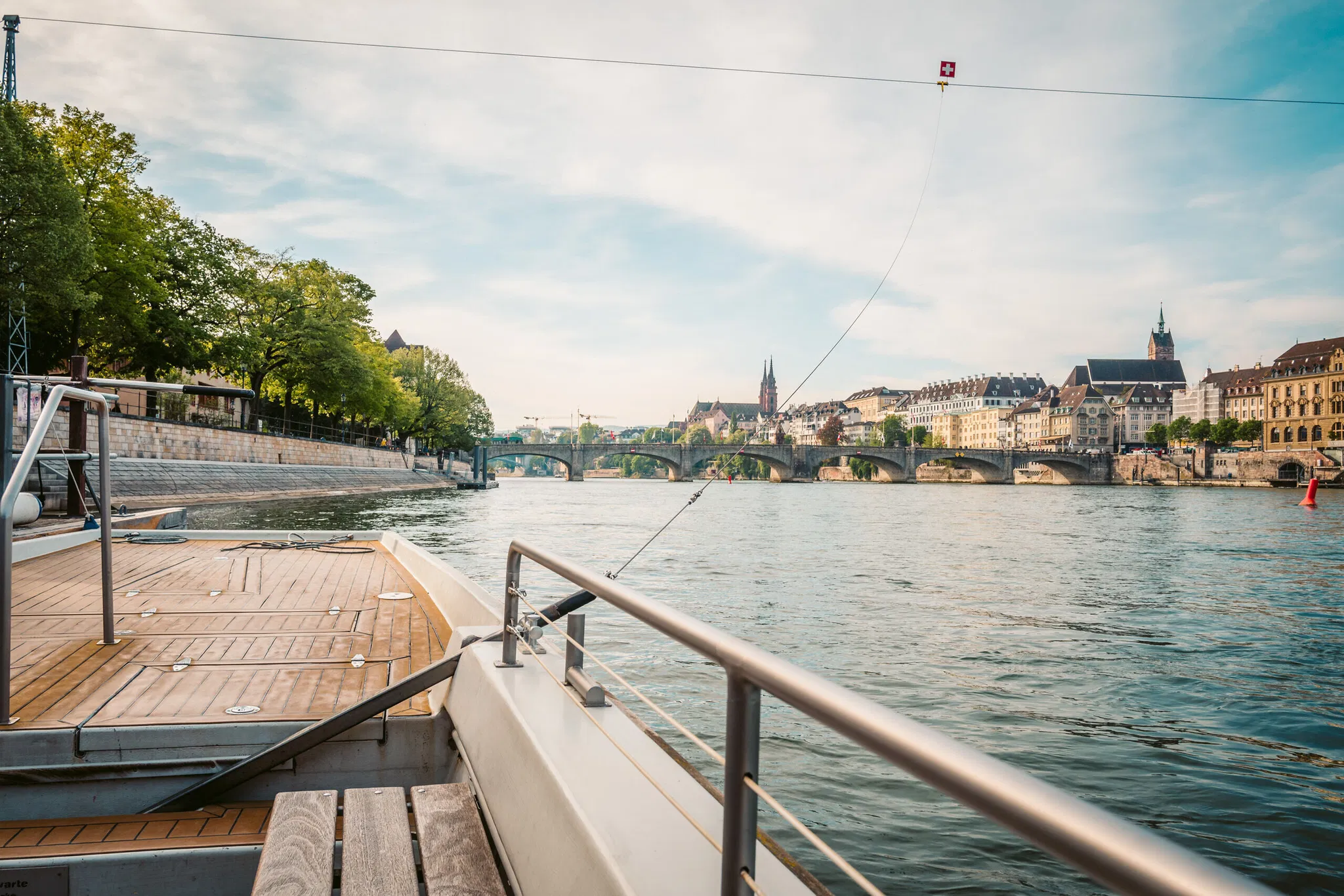
Complete the following sentence: The view of Basel from my ferry is particularly beautiful ...
Urs: … when the sun rises in the morning. Or in the evening, when it sets.
What thoughts come into your head about Basel, when you are completely alone on your ferry?
Urs: How lovely Basel is – and that I have the most beautiful job here.
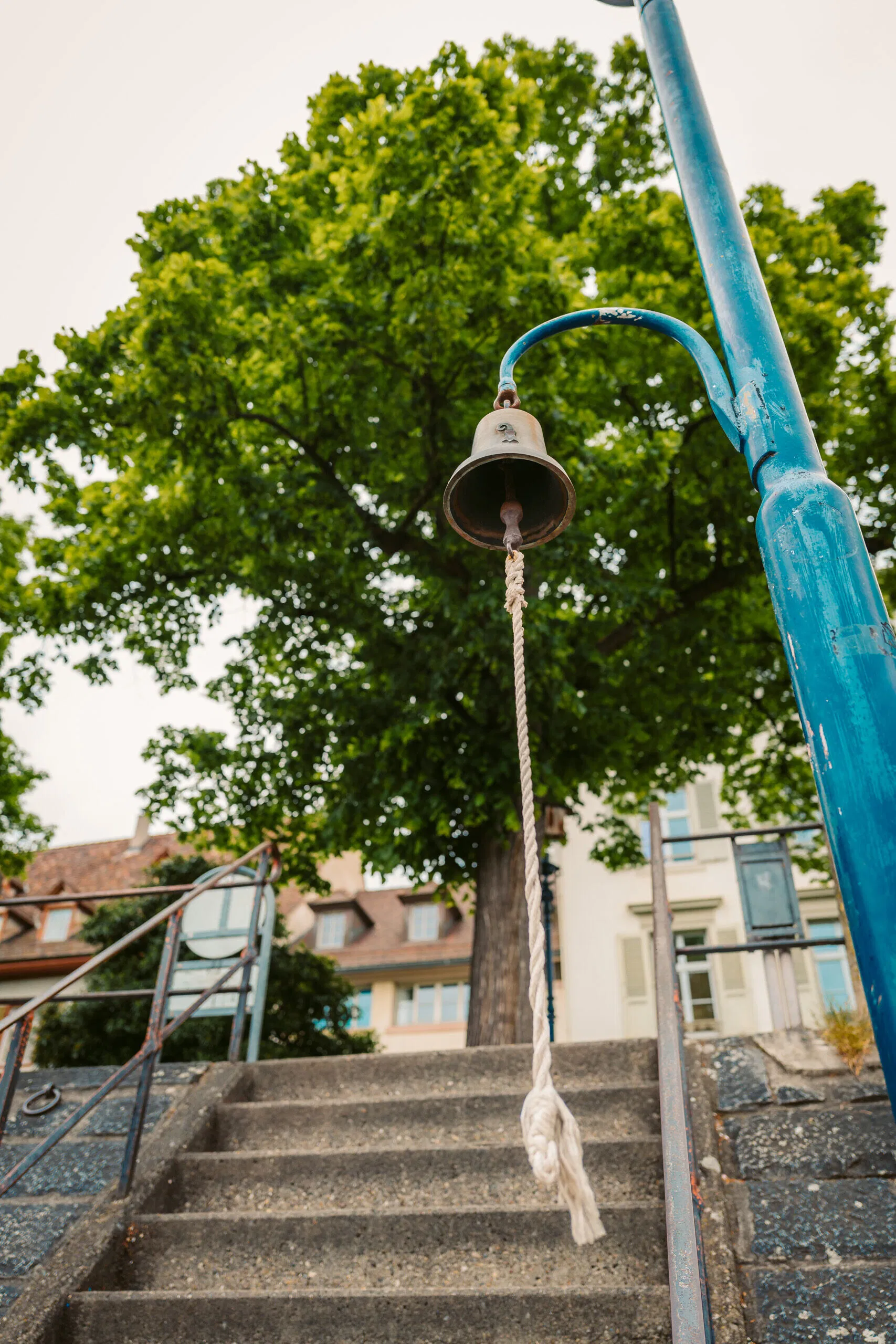
Flying bridges for a good cause
In 1853, the foundations for the tradition of Basel’s ferries were laid by the Birsfelden ferry, which crossed where the river Birs flows into the Rhine (Birskopf). Only one year later in 1854, the first city ferry, the Harzgraben ferry, was inaugurated at the site of what is now the Wettstein bridge. The permit for this ferry was held by the Basel Künstlergesellschaft, an association of artists and art lovers founded to promote and publicise the local art scene and its works. The Harzgraben ferry was so popular and profitable that the Basel Association of Artists decided to arrange a second ferry. So, in 1862, the second flying bridge within the city was inaugurated: the Totentanz ferry – now the Klingental ferry – between the “Totentanz” (danse macabre) on the Grossbasel side and the Kaserne (barracks) on the Kleinbasel side. This allowed the Basel Association of Artists to achieve their goal of establishing an institution for exhibitions and gatherings of the local art scene; the profits from the ferries were used to cons-truct the Basel Kunsthalle (public art gallery).
However, in 1877, the first Basel ferry, the Harzgraben ferry had to be put into storage due to the construction of the Harzgraben bridge – now the Wettstein bridge. A new location was sought and found near Basel Münster, the cathedral – which is still known as the Münster ferry these days. As the population in the various neighbourhoods of Basel continued to grow, so did the wish for more ferries to connect the neighbourhoods on either side of the Rhine. So, in 1894, the St. Alban ferry between the St. Alban and the Schaffhauserrheinweg was added, then in 1895 the Schlachthof ferry between St. Johann and Klybeck – now known as the St. Johann ferry.
The Basel ferries were only christened with inventive names quite some time later. Calling them after the heraldic figures of the Klein Basel Honourable Societies and the Ueli was considered a good idea, and so, in 1944, a long procession along the banks of the Rhine was organised, during which one ferry after the other was solemnly baptised with the names “Vogel Gryff”, “Leu”, “Wild Maa” und “Ueli”. And they are still known by these names by the inveterate people of Basel.
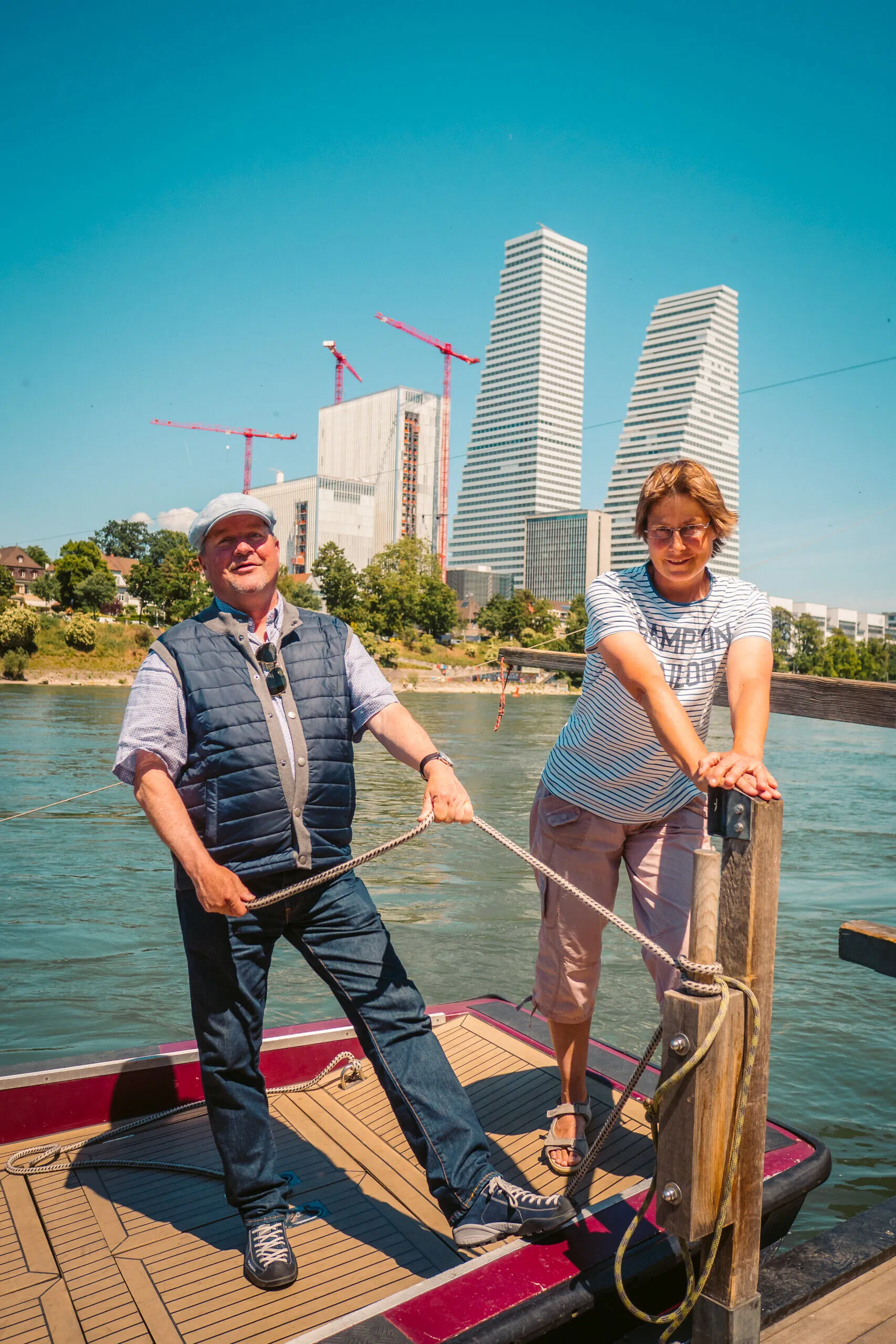
St. Alban Ferry (Wild Maa) - Rosi Tiefenthal & Hambbe Tschudi
What does it take to be a good ferryman/ferrywoman?
Rosi & Hambbe: It takes loyalty to the city of Basel, enjoying the contact and interaction with people from Basel, Switzerland and the whole world. And last but not least, you have to love the water – especially our “stream”.
What makes the daily routine on the ferry so exciting?
Rosi & Hambbe: You never know what to expect. Plenty of great people, and with some of them you can swap exciting stories. And of course, the elements. Dealing with the ever-changing conditions on the Rhine – from low water levels through to flood waters and all the challenges they present.
What’s the best thing that has ever happened to you on the ferry?
Rosi & Hambbe: Our first day together as a duo of leaseholders on 1 January 2021. For a start, Rosi is the first woman who has ever been allowed to take over the lease for one of the four Basel ferries. Secondly, we are the first pair of leaseholders to have taken over a ferry with job-sharing.
Why should the tradition of the Basel ferries be maintained forever?
Rosi & Hambbe: Because the Basel ferries are part of the history of our city and they enrich the city’s character. And the Basel ferries are actually “en vogue” these days – they glide across the Rhine almost silently and they don’t cause any CO2 emissions either. Plus, a ride on the ferry is a moment in everyday life for a lot of people when they can relax and let go a bit.
What thoughts come into your head about Basel, when you are completely alone on your ferry?
Rosi & Hambbe: What a privilege it is to be able to pursue the loveliest vocation in the most beautiful city, our city: to be a ferrywoman or a ferryman!
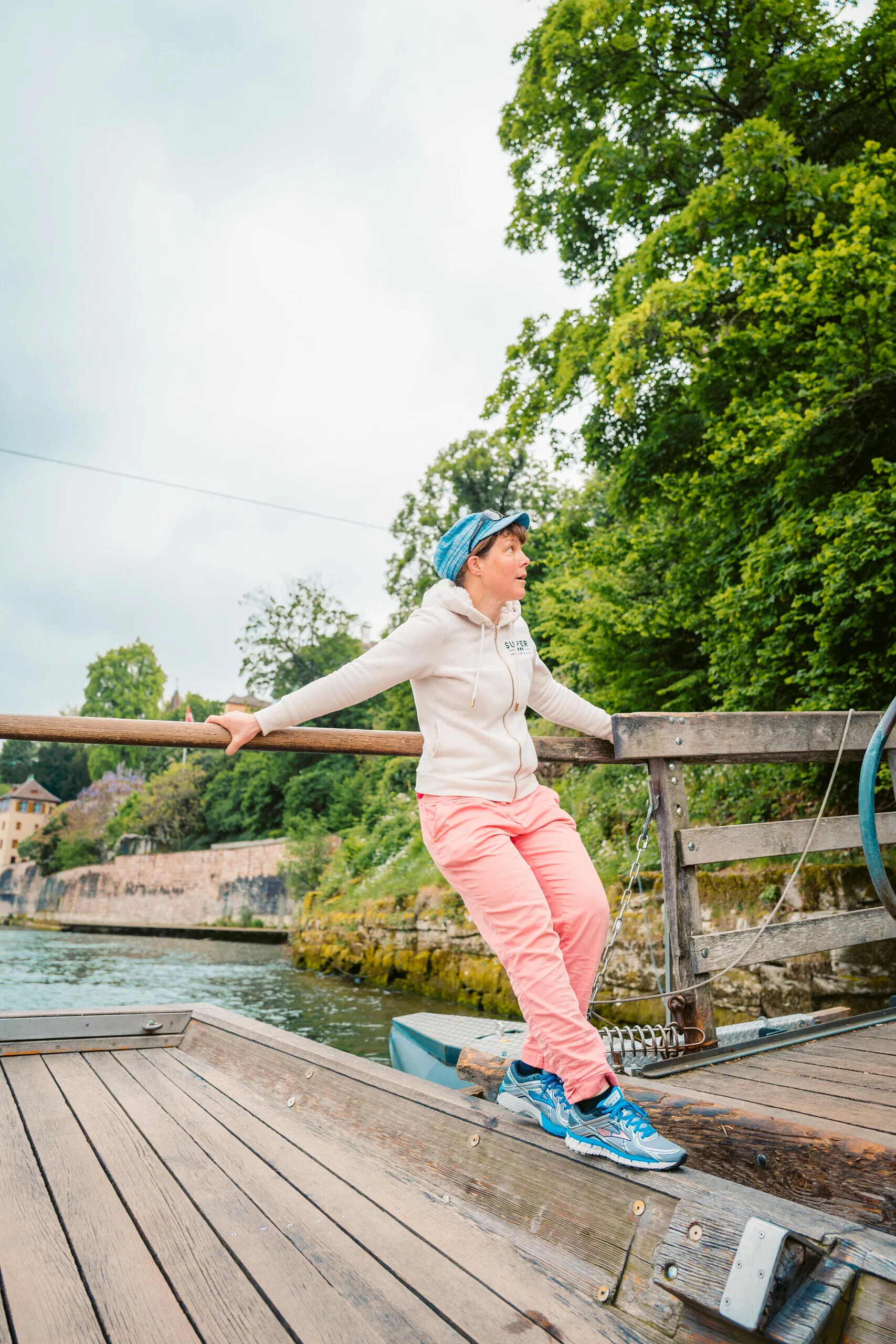
Münster Ferry (Leu) - Sabine Matejicek
What’s the best thing that has ever happened to you on the ferry?
Sabine: Being so close, as a silent observer, at a funeral is a touching moment for me every time. This special moment of transmutation is as much part of a person’s life as their birth – an eternal coming and going, from the source to the estuary, from the estuary to the source. The Rhine shows us the way unambiguously.
Why should the tradition of the Basel ferries be maintained forever?
Sabine: A ride on the ferry gives people a short break. You experience the flowing water from up close, a meeting place and haven of peace in the middle of the city – a welcome gift in these turbulent times.
Complete the following sentence: The view of Basel from my ferry is particularly beautiful …
Sabine: … when a snowstorm is raging.
No floating billboards, thank you!
The Basel ferries have not been profitable for a long time now. The construction of the other bridges across the Rhine and the steady increase in mobility by other means soon led to a massive decrease in turnover. So first the Basel Association of Artists sold the four ferries to the people who were leasing them and then later they became the property of a foundation. At the beginning of the 1970s, when the leaseholder of the Klingental ferry wanted to sell his ferry and retire, it was almost taken over by an international beverage company which meant the ferries were threatened with commercialisation. Which is why – along with ensuring the ferries are open to the general public – that the current “Stiftung Basler Fähren” (Foundation for Basel’s Ferries) was founded, which, together with the “Fähri-Verein Basel” (Basel Ferry Association) ensures that sufficient financial resources are raised to preserve the loss-making ferry service for future generations.