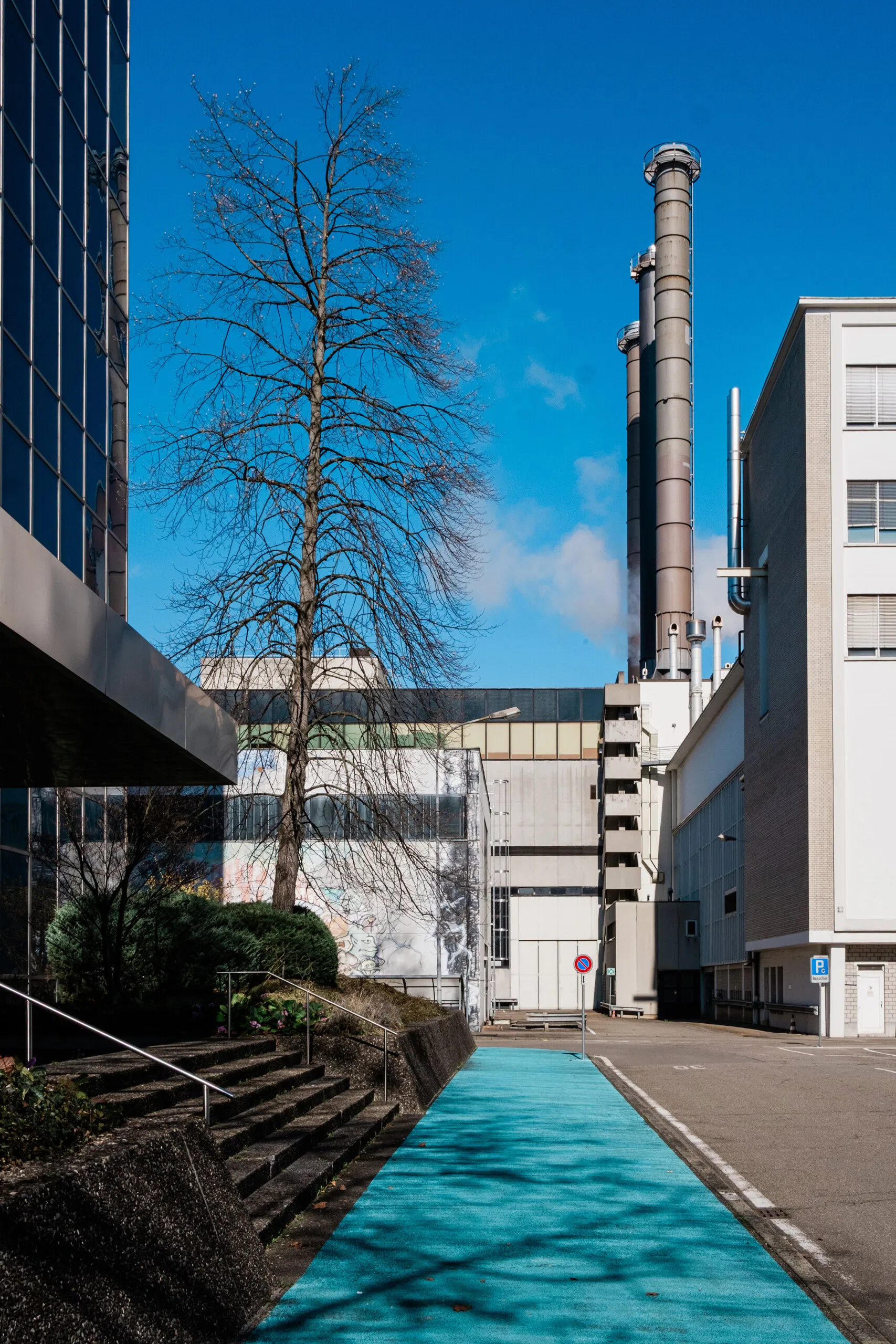
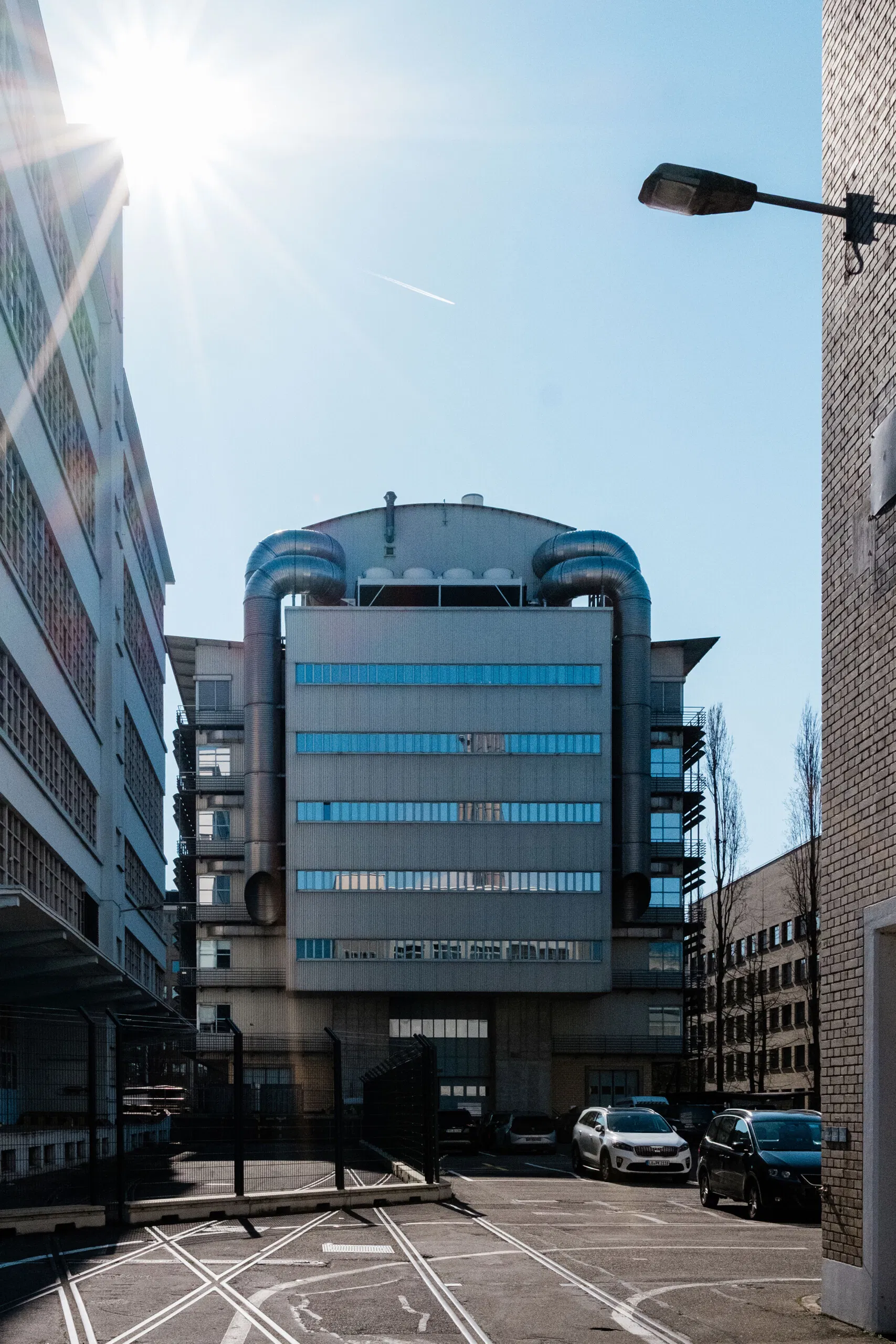
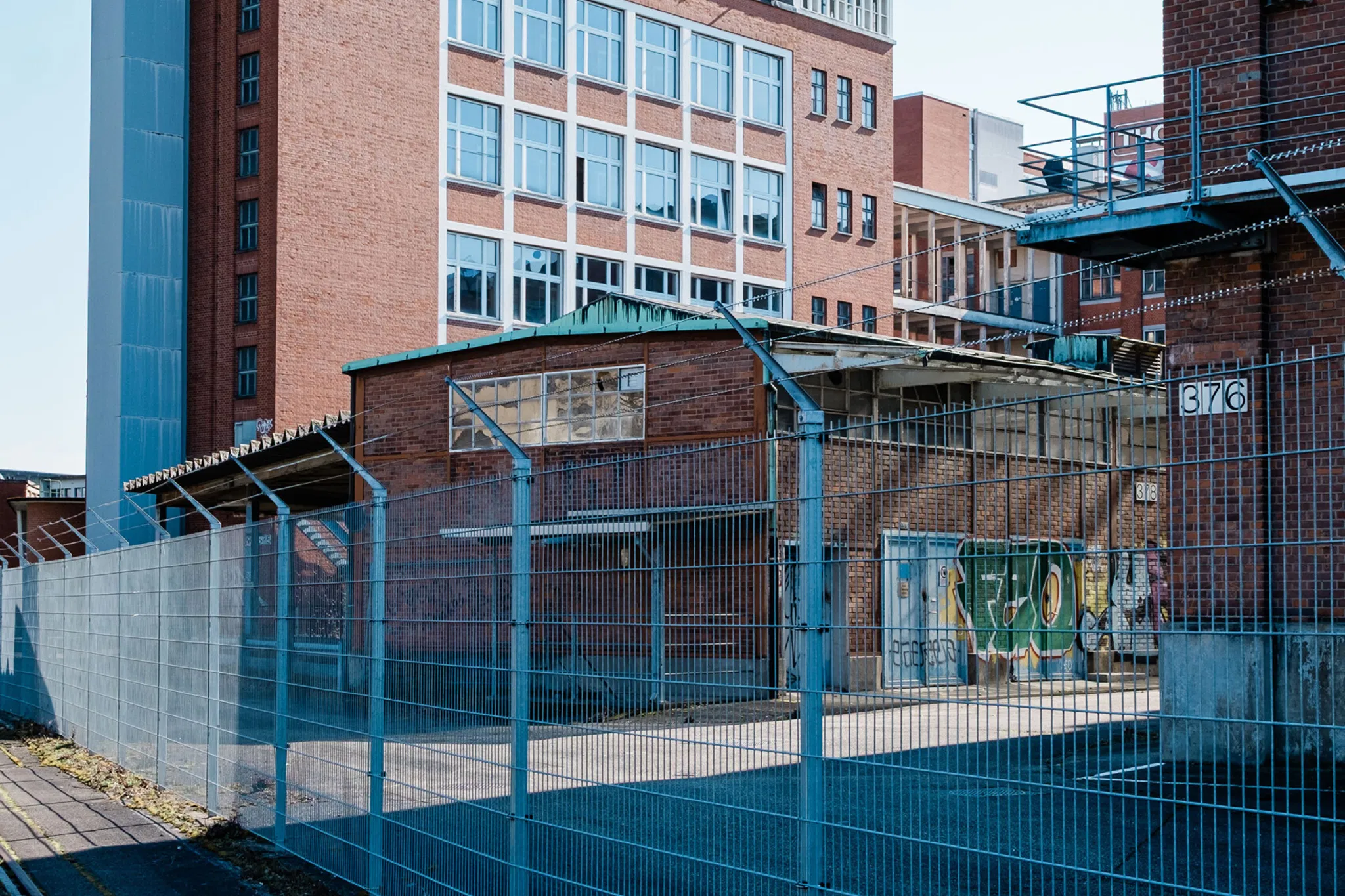
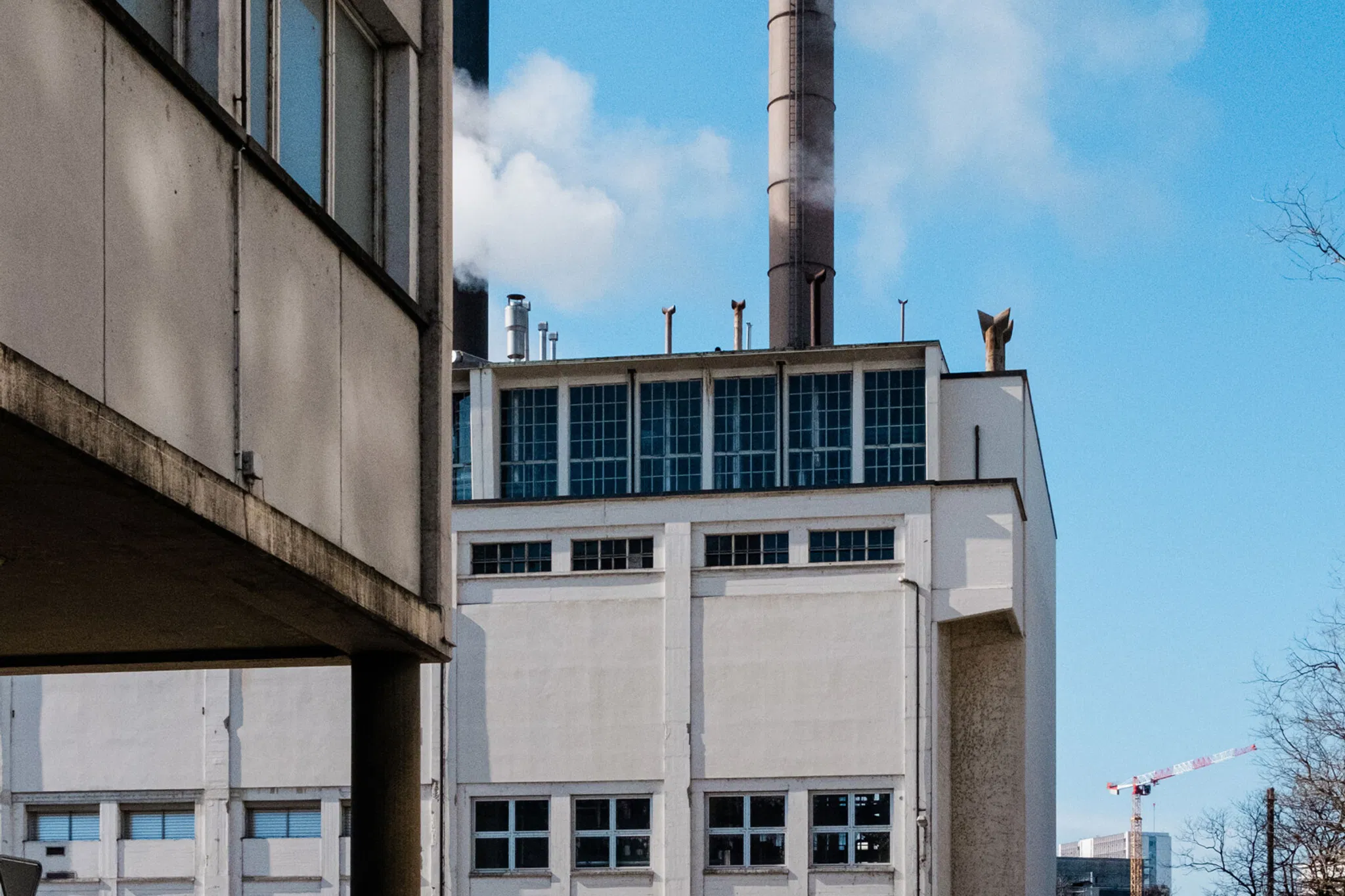
It feels like an archaeological site except that the ruins are still intact and were never sacred. The old industrial site of Ciba-Geigy, Sandoz and later Novartis and BASF is a colossal architectural remnant of a bygone world. Factories where world-famous colours were mixed – the red for Ferrari, for example –, where cancer medicine was developed and bestsellers such as the pain relief ointment Voltaren. At lunchtime, the place used to buzz with activity, with thousands of people in lab coats swarming into the large canteen. Today, the buildings stand monumental and largely empty in the north of Basel.
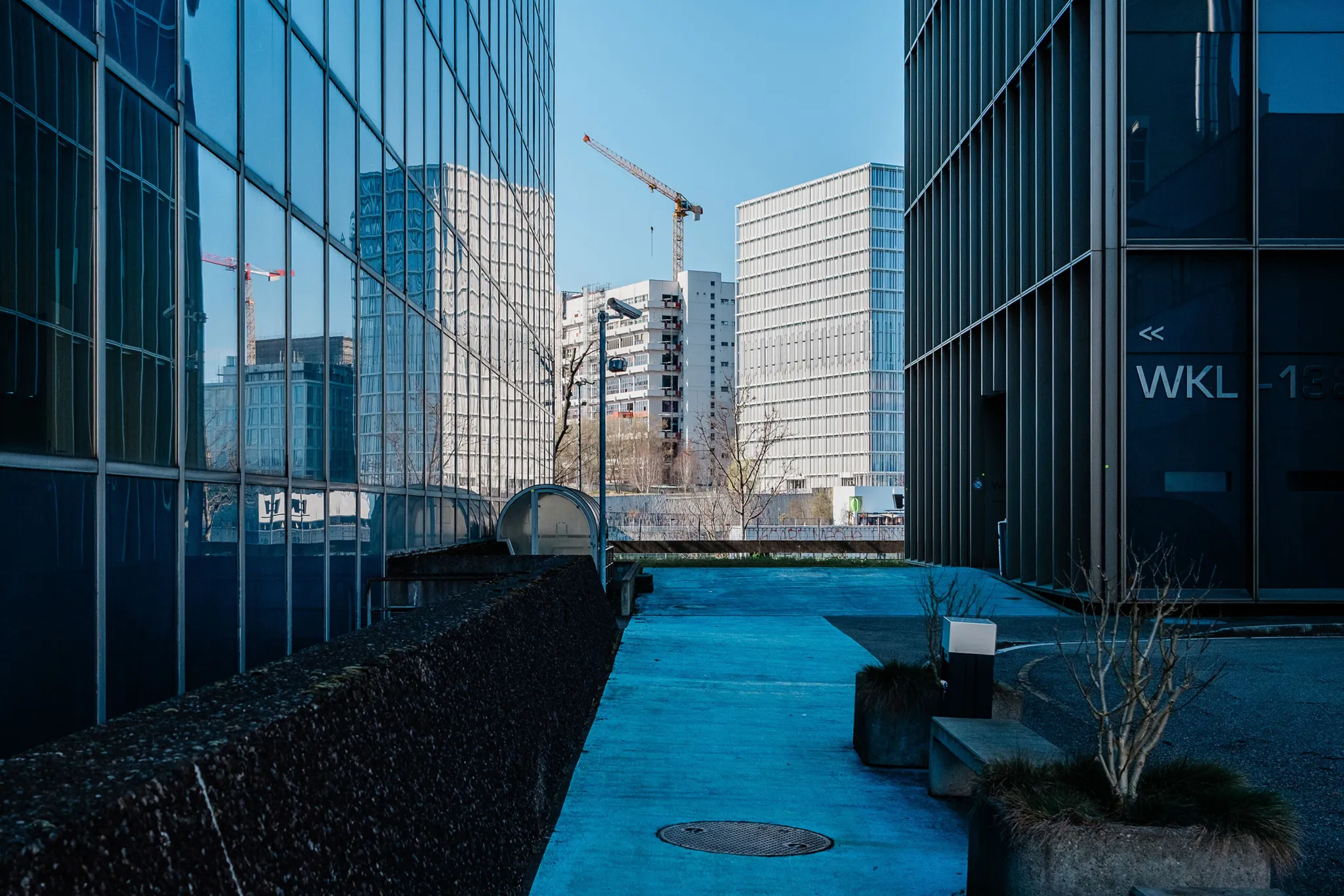
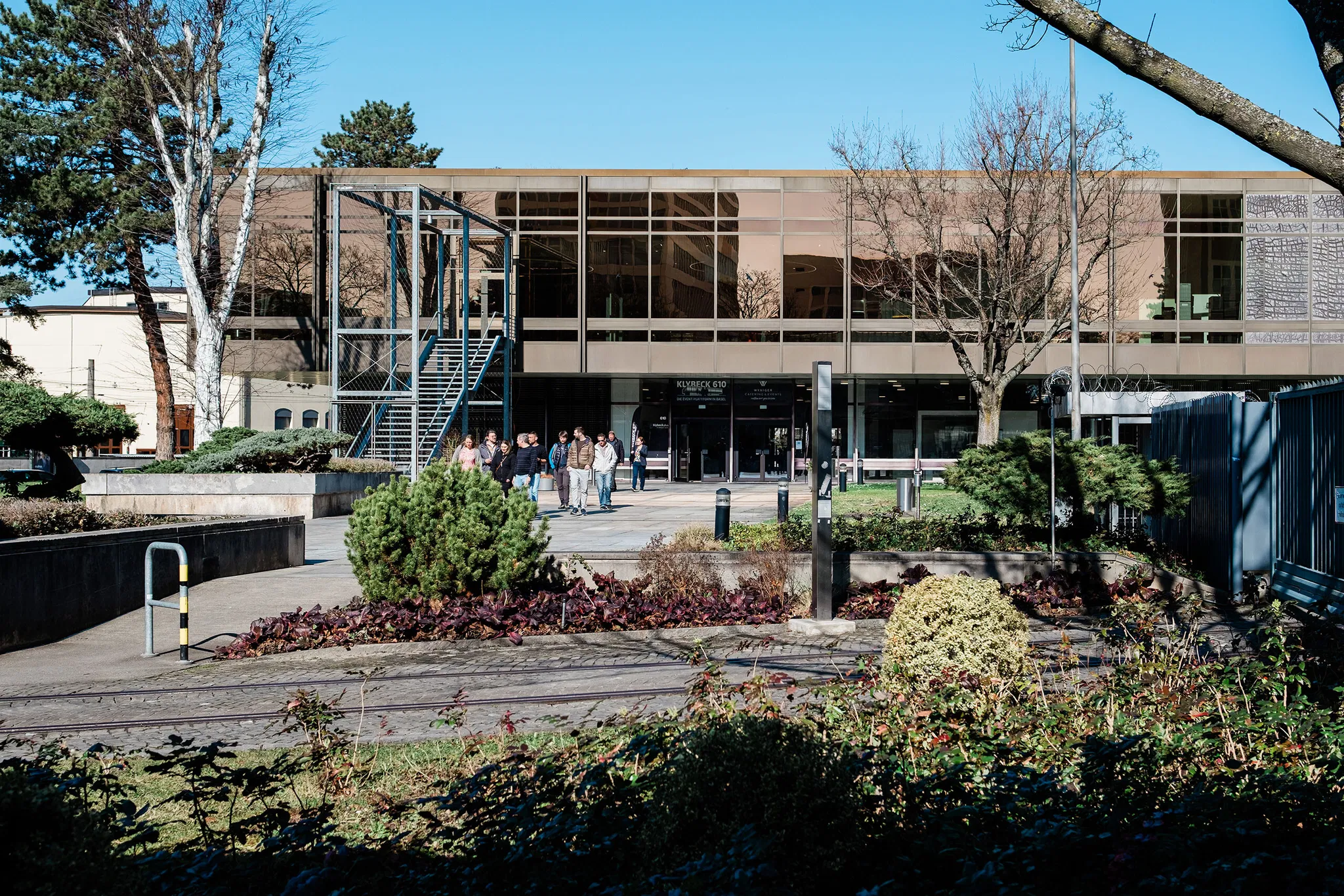
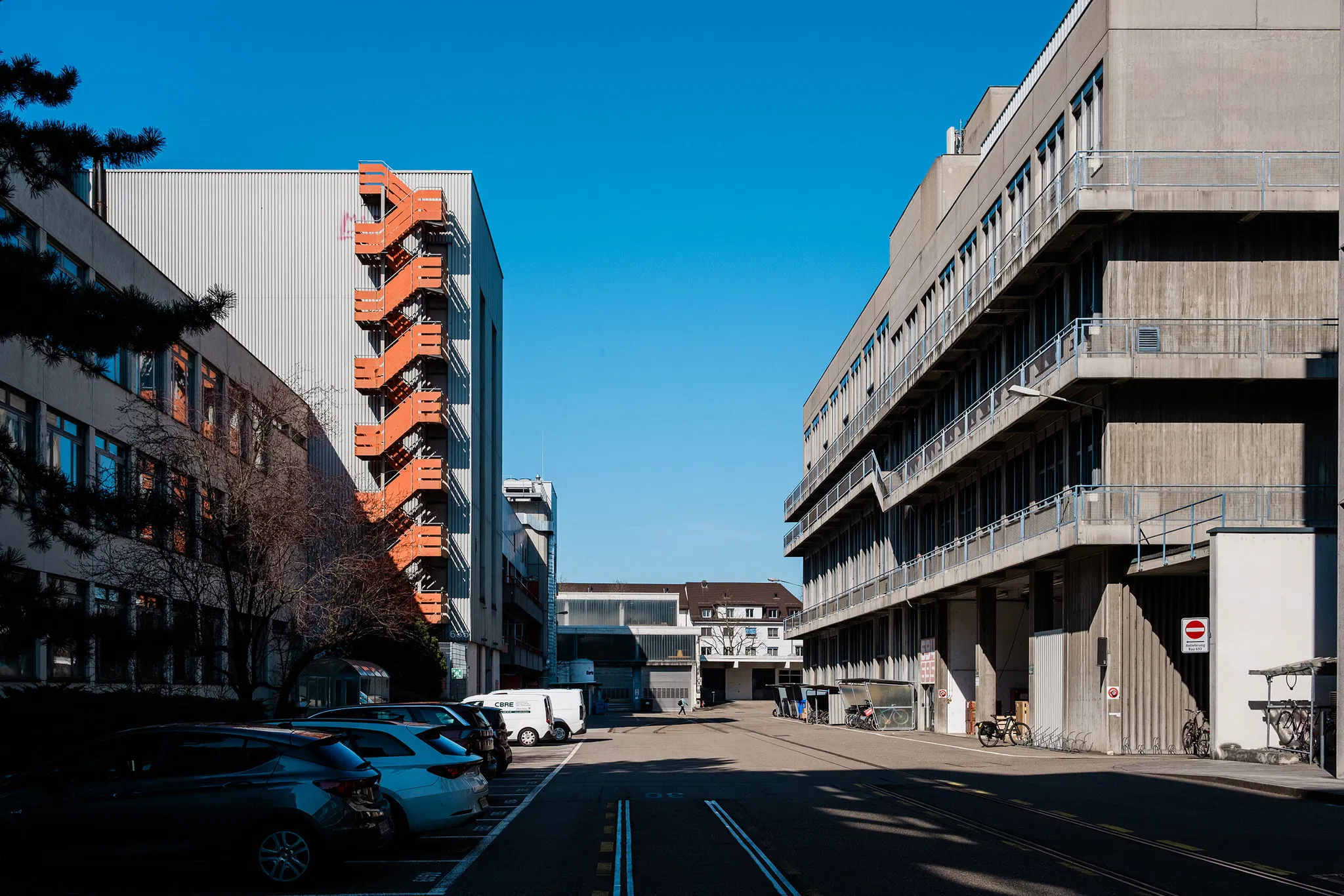
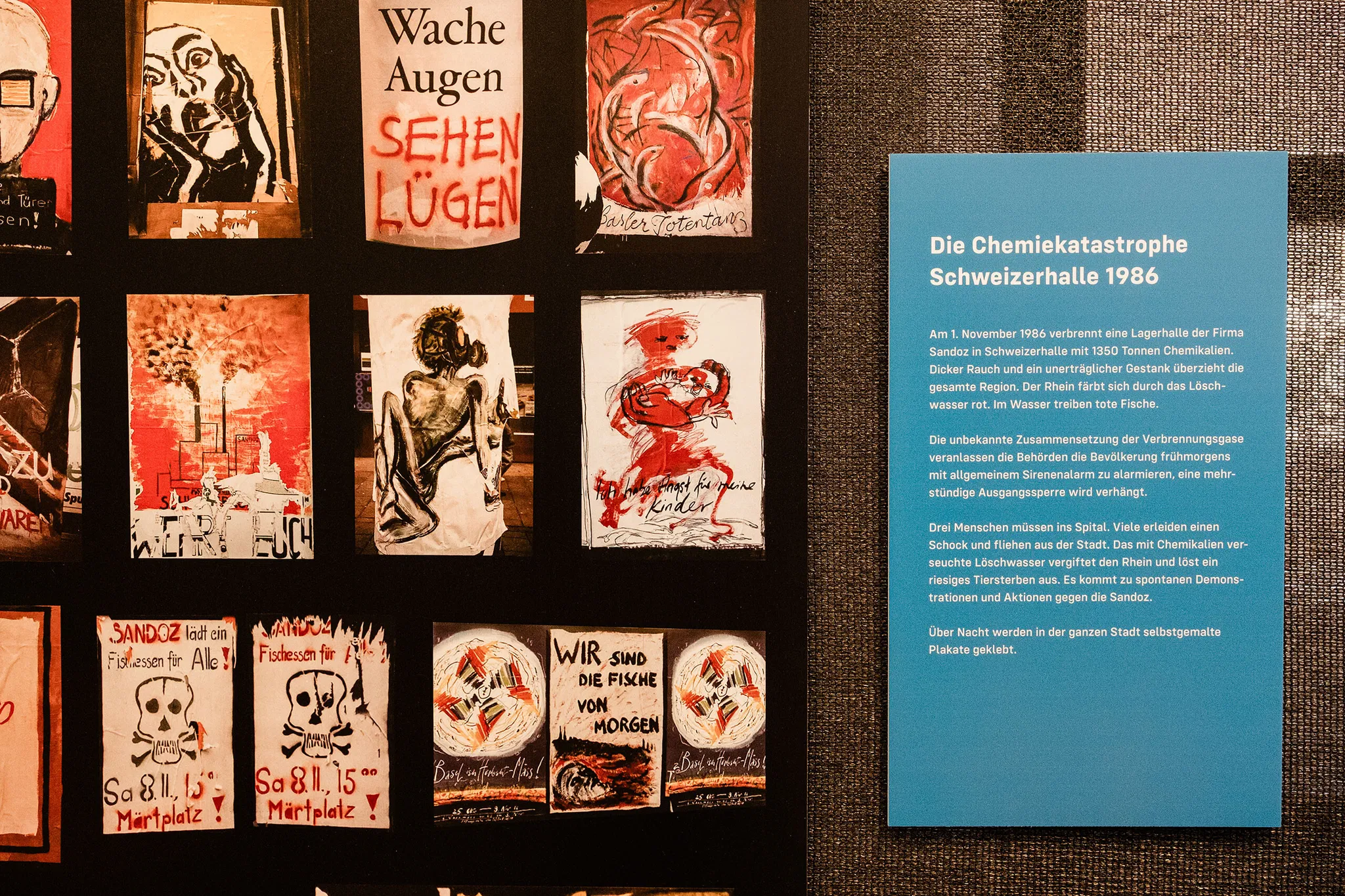
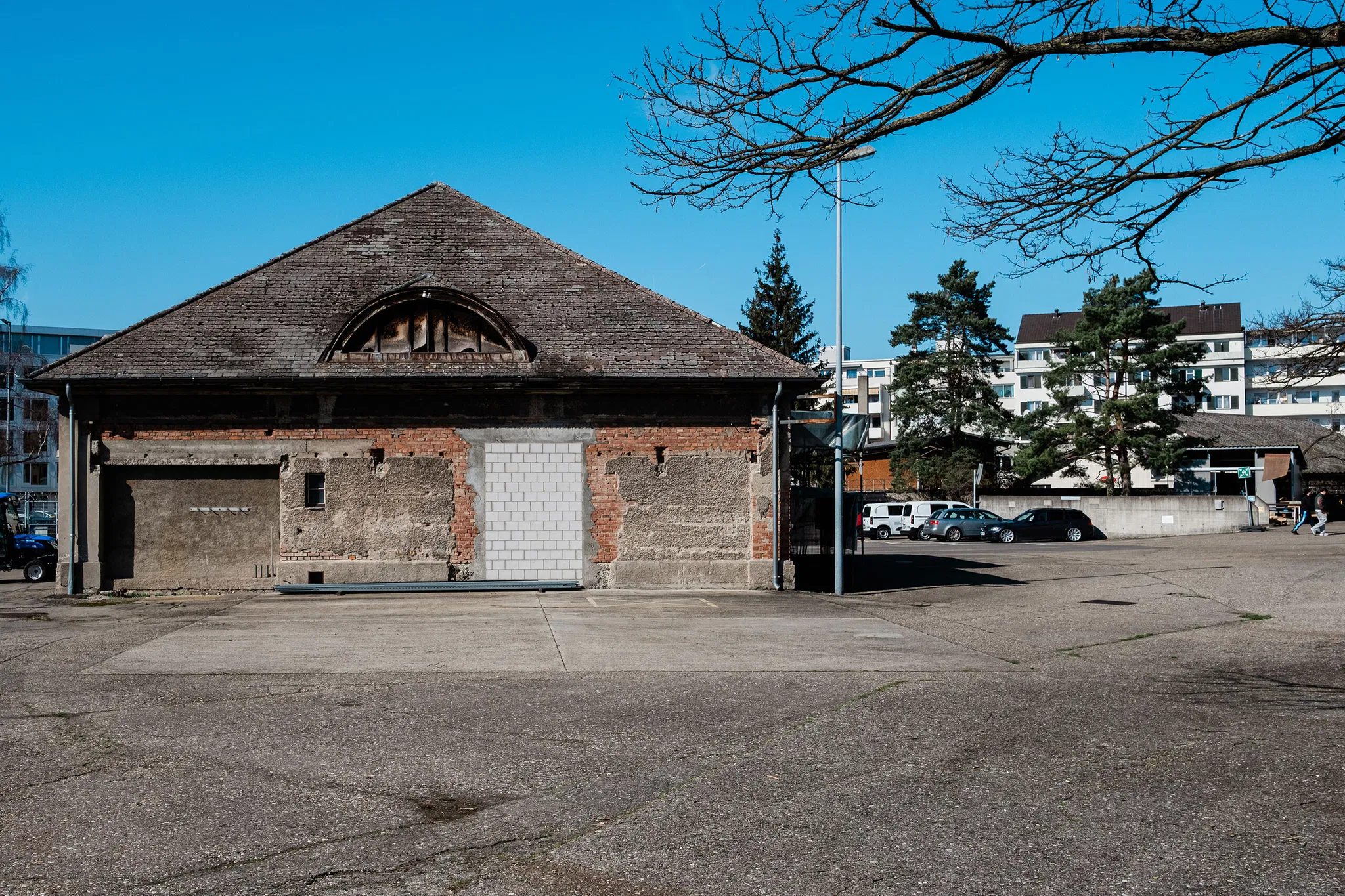
Empty at least compared to the standards of the old days. One building at Klybeckstrasse 200 is home to the Basel Chemistry Museum; a relatively new institution that has moved twice since 2021. This also happened due to the site’s history; often, residues come to light somewhere or closure is required for fire safety reasons elsewhere. The new owners, Swisslife and Rhystadt AG, who are transforming the site into a residential and commercial area under the project name Klybeckplus, have taken it over from Novartis and BASF, including the site’s contamination issues. The question of remediation remains unresolved.
Chemistry was a serious business, and it had to look the part.
This is also a topic within the Chemistry Museum itself. After all, to explore the history of the workers in what was once the city’s most economically lucrative industry, one must also examine what exactly they were working with: chemistry, simply put. And that doesn’t just mean pipetting in the laboratory, but also filling entire vats with ingredients, allowing reactions to take place and, in even earlier times, scraping out or filling entire wooden barrels full of dyes with a shovel.
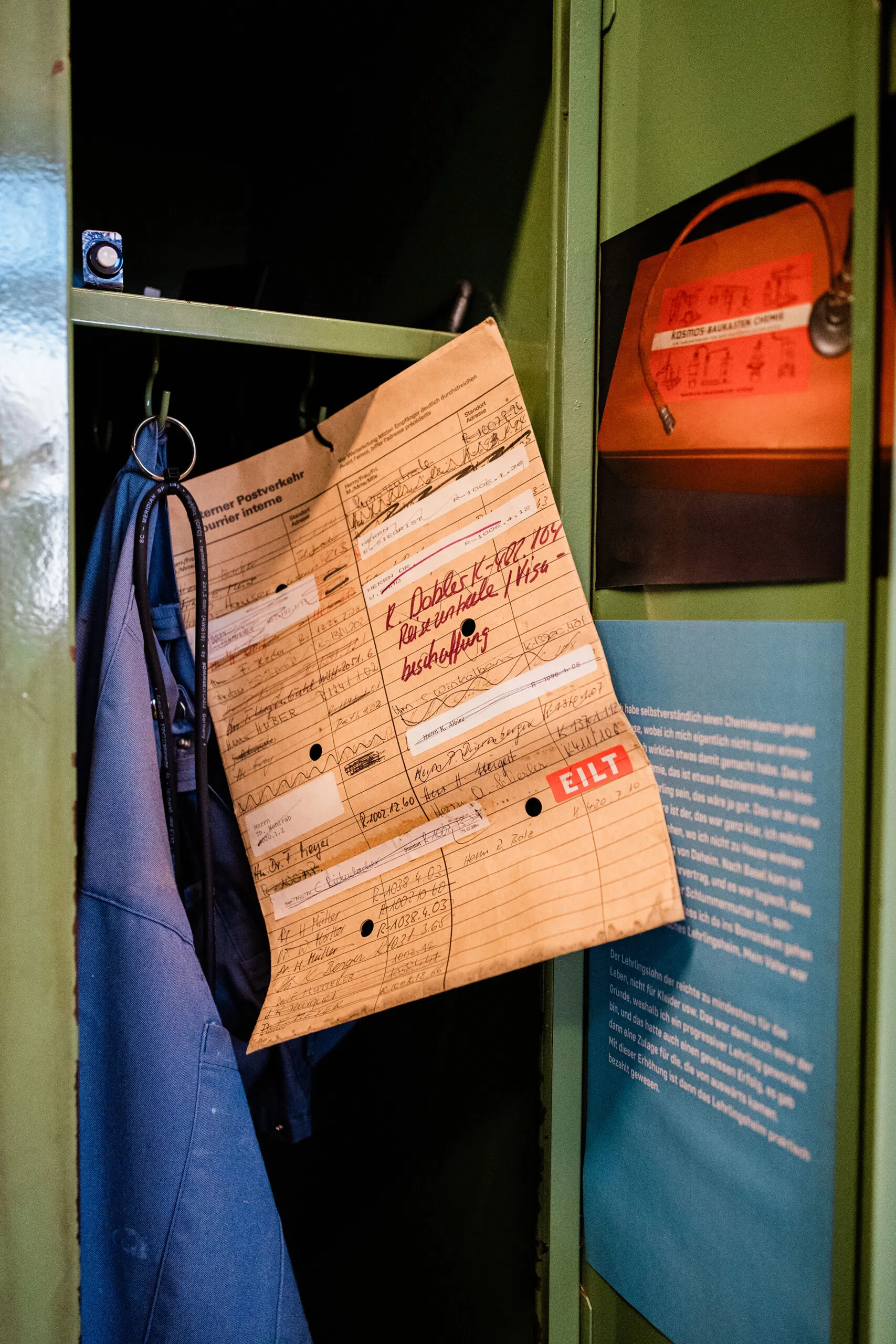
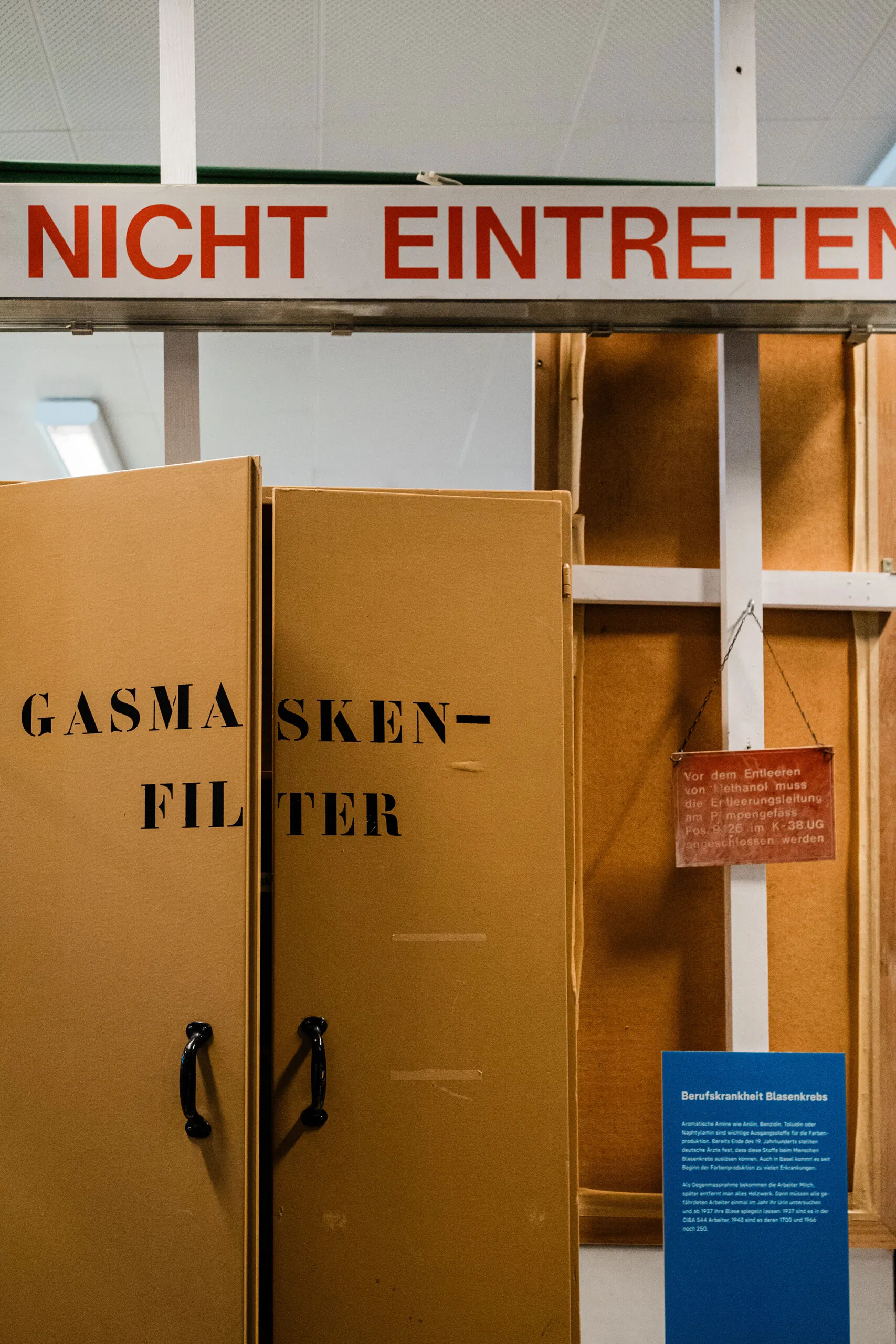
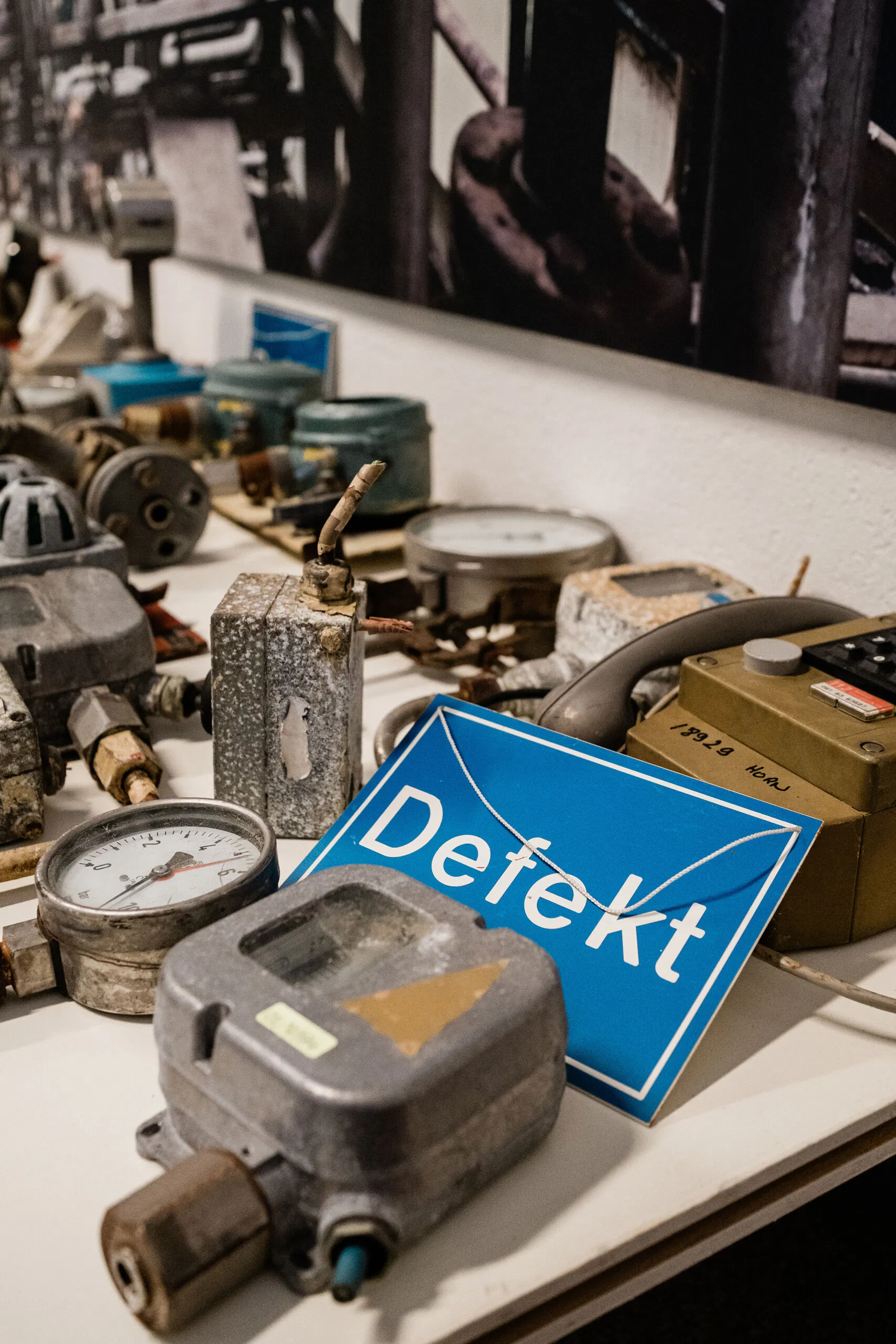
A huge anthill in the north
The museum isn’t particularly large – with its many industrial relics, it is somewhat reminiscent of a local history museum – but at present it should be seen more as a kind of visitor centre or gateway to the history of Klybeck, as an entry to an intellectual journey through time. And in that respect, a comparison with major historical sites is certainly apt. Whilst the architectural remains and other physical heritage are certainly still present, it is the very idea of the many people who were at work there that gives a real sense of the scale. You see them in photographs, sometimes marching busily, sometimes gazing seriously into the camera and only rarely smiling. Chemistry was a serious business, and it had to look the part.
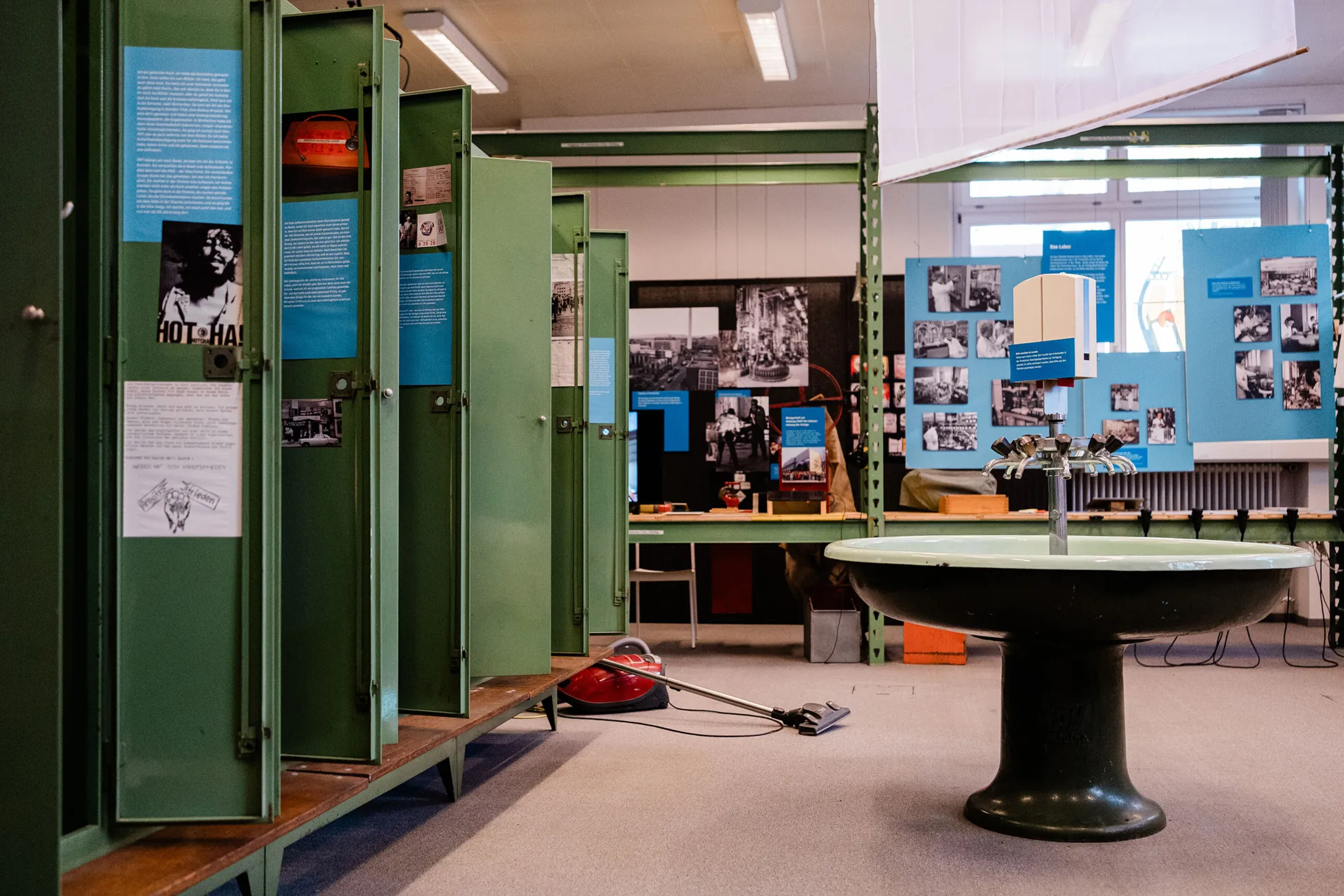
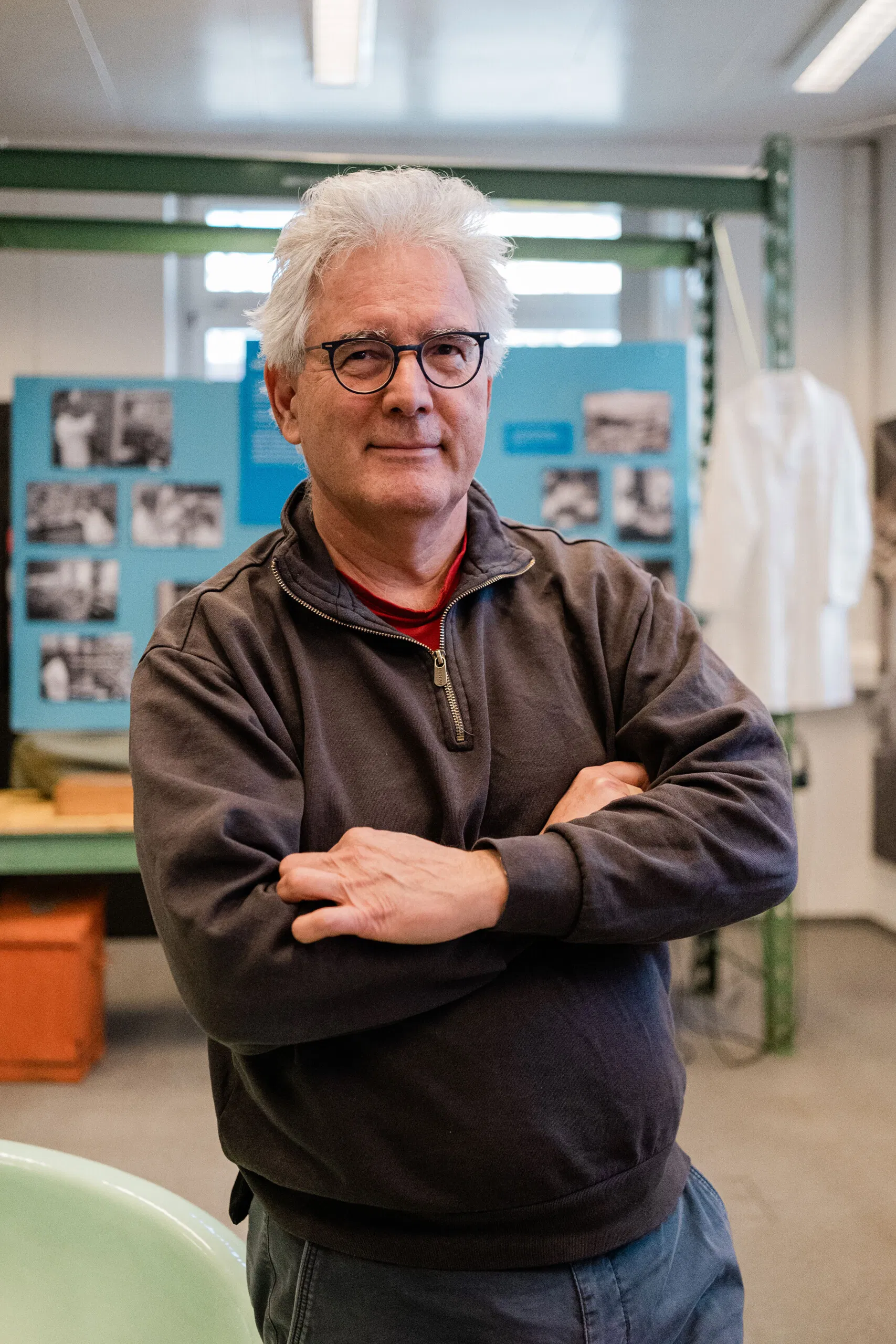
Nicholas Schaffner, who runs the museum on behalf of the association behind it – ‘Industrie- und Migrationsgeschichte der Region Basel’ – points to the metal lockers and the fountain at the entrance: ‘Around 20,000 people once worked on this site.’ And they all had to change, shower and get ready somewhere. Huge changing rooms still exist underground today. Thousands of people arriving for shift work: These are numbers that are hard to imagine nowadays – perhaps in large office complexes, but in factories? Yet the site was still bustling with activity up until the 1990s. It was not until the 2000s that the last factories were closed. Pipetting still continued, but vats and reactors were decommissioned and disappeared, just like the last of the old Basel factory workers.
For a long time, it was by no means a clean job. Until the first collective labour agreement (CLA) for the chemical industry came into force in 1945, it was in fact downright dirty here. The Basel artist Walter Maeglin created artistic memorials to the workers – all of whom were men – at that time. For instance, the portrait of a man who had rubbed his body with clay to avoid coming into too much contact with the dyes. Or a factory painting in which someone had fashioned a makeshift respirator out of a rag. The substances handled back then were quite aggressive. Already in early factory times, the colour fuchsin, for example, was produced in large quantities from tar. The colour, which was roughly the same shade as today’s magenta, happened to be a major export hit for Basel.
The ‘worker aristocracy’ emerged – and then disappeared again
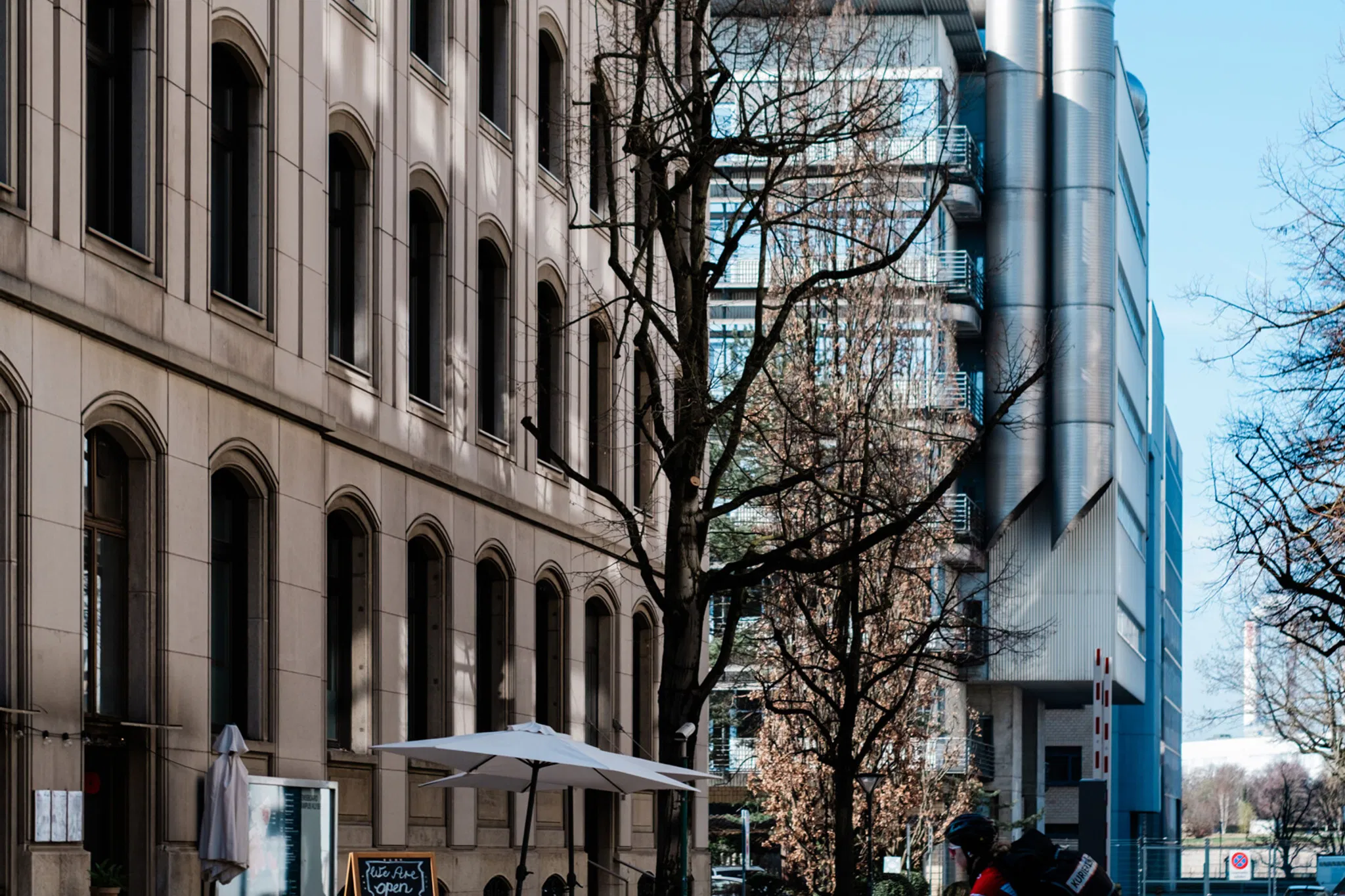
With the introduction of the collective labour agreement, working conditions and social benefits improved dramatically. ‘A sort of working-class elite even emerged,’ says Schaffner: anyone who found work in this flourishing industry was considered privileged. Whilst the industry was already doing well here before the war, things only went upwards after 1945. Switzerland was able to produce chemicals without interruption in the post-war years; unlike in neighbouring countries, factories here remained undamaged and productive. Global demand was enormous, and prosperity grew. In the 1960s, Ciba treated itself to a lavish expansion of the site: among other things, the WKL-125 high-rise was built, alongside the WKL-610 – arguably the most modern and stylish canteen in Switzerland.
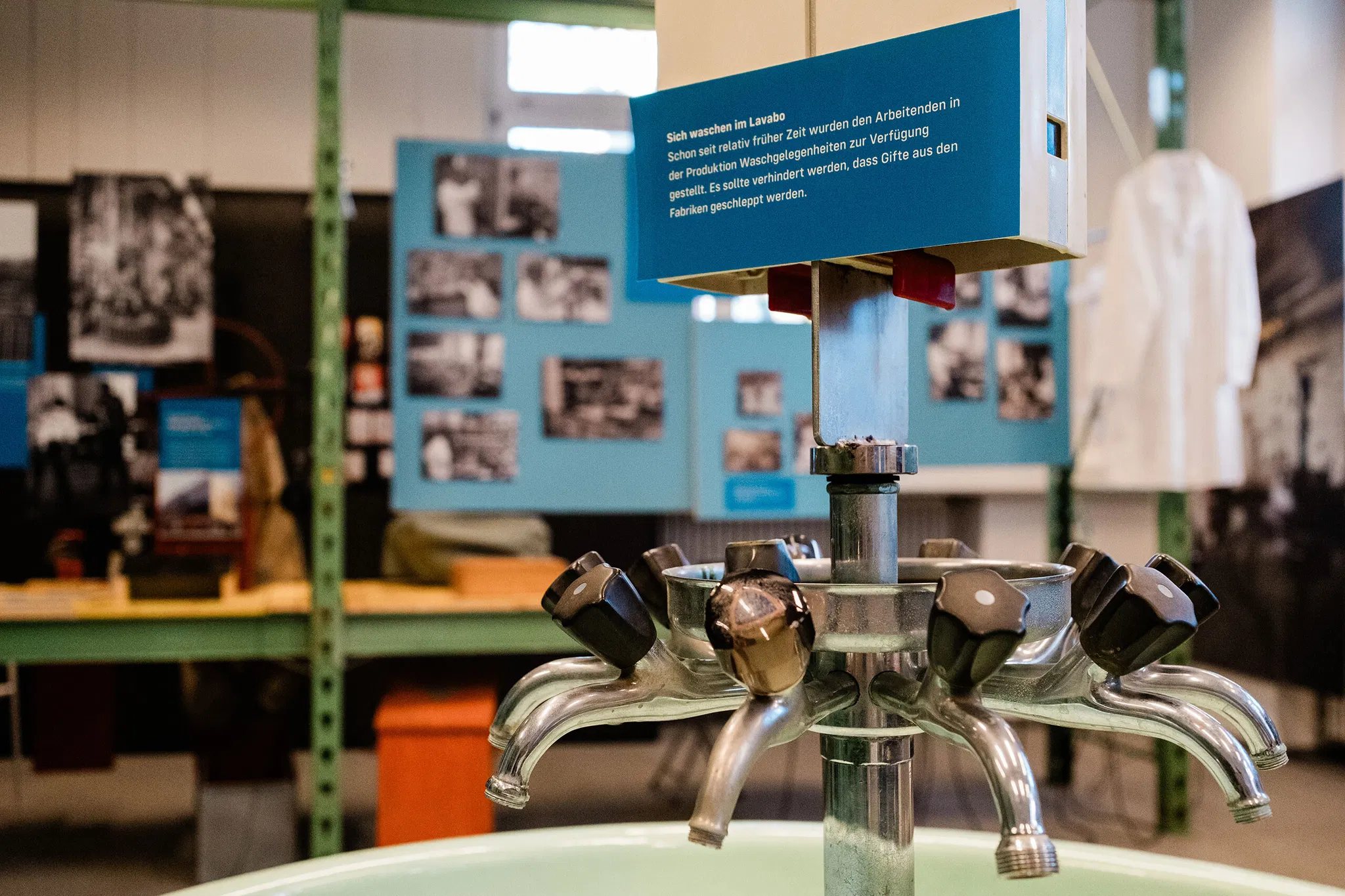
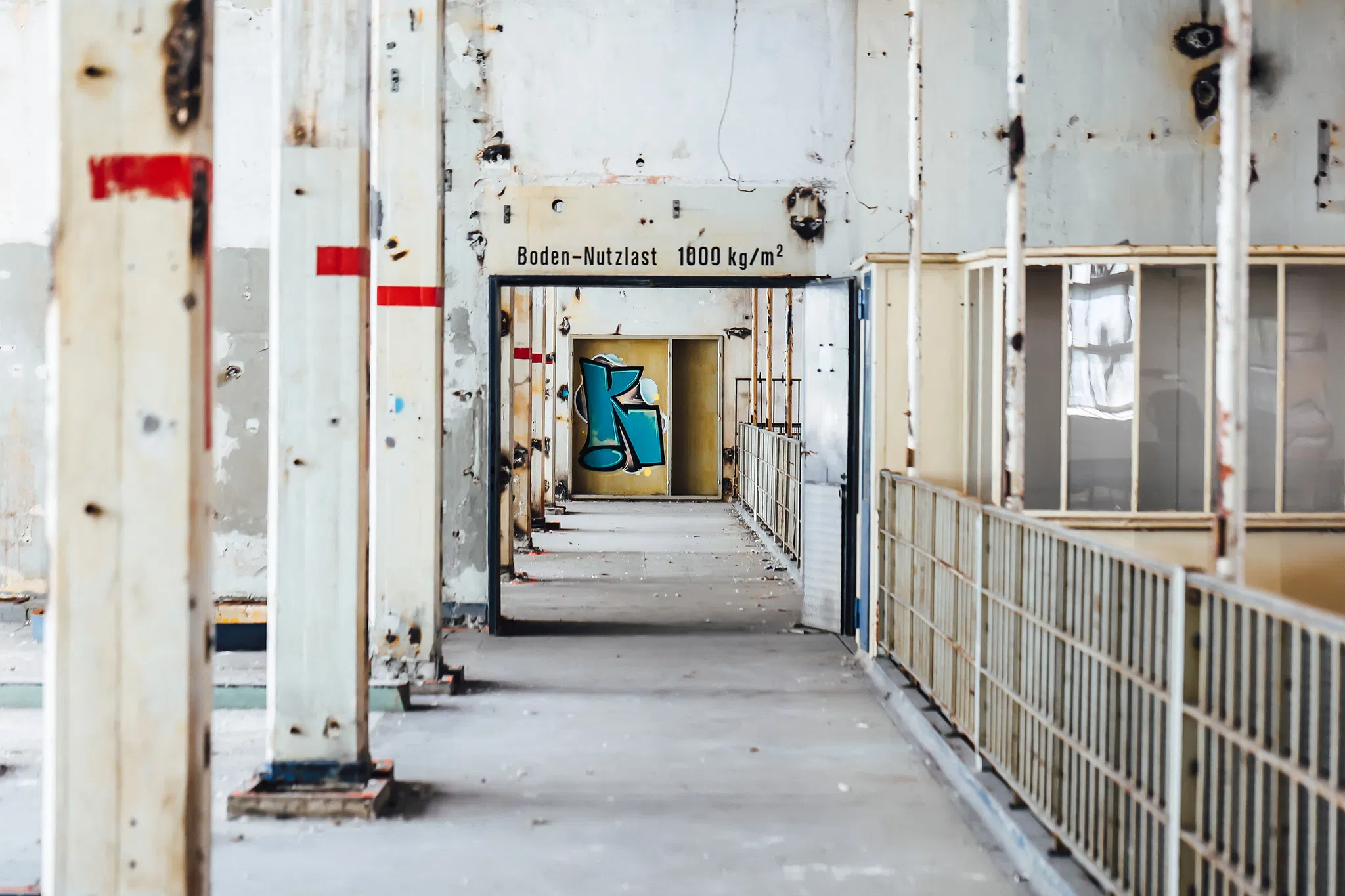
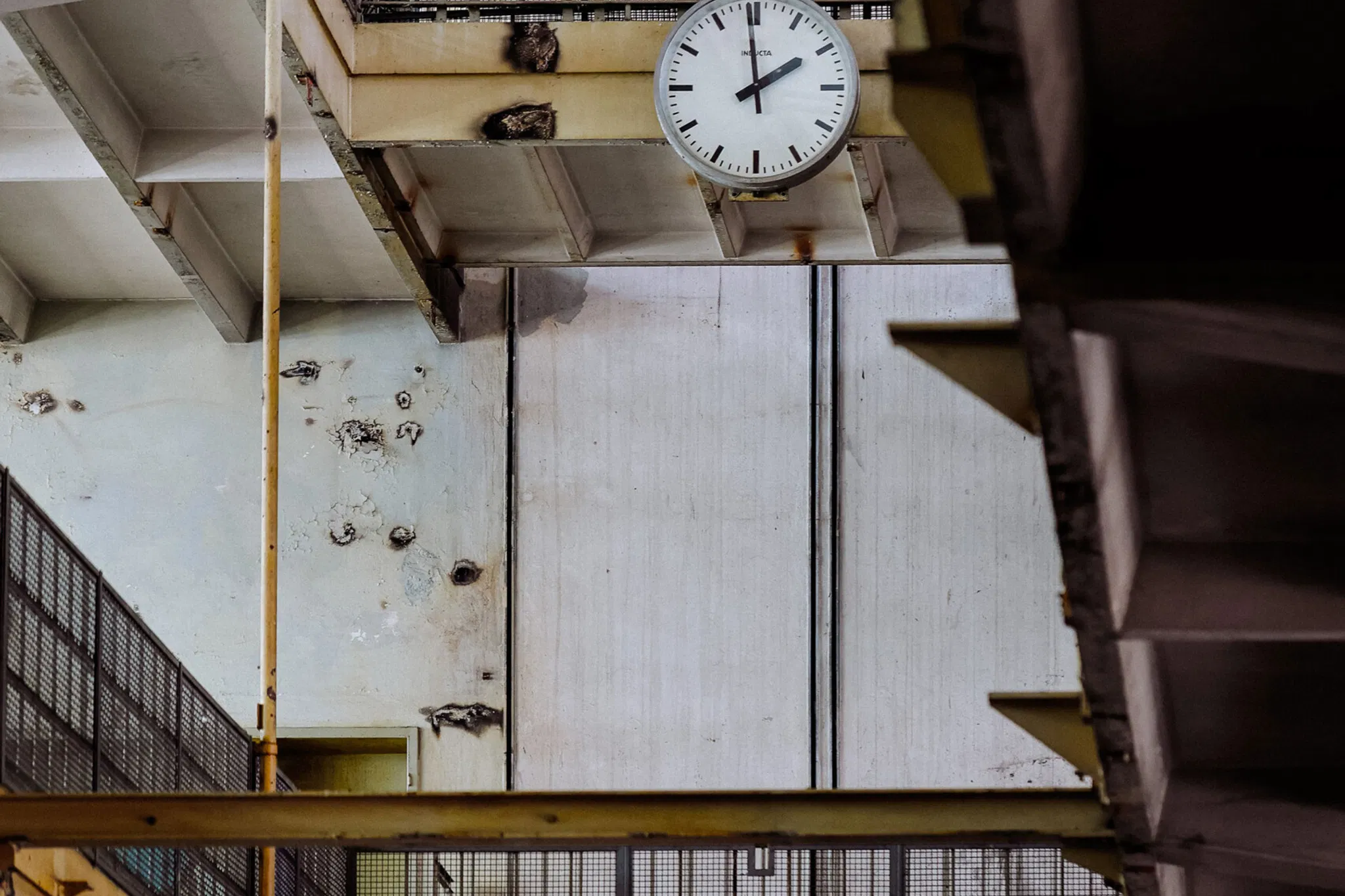
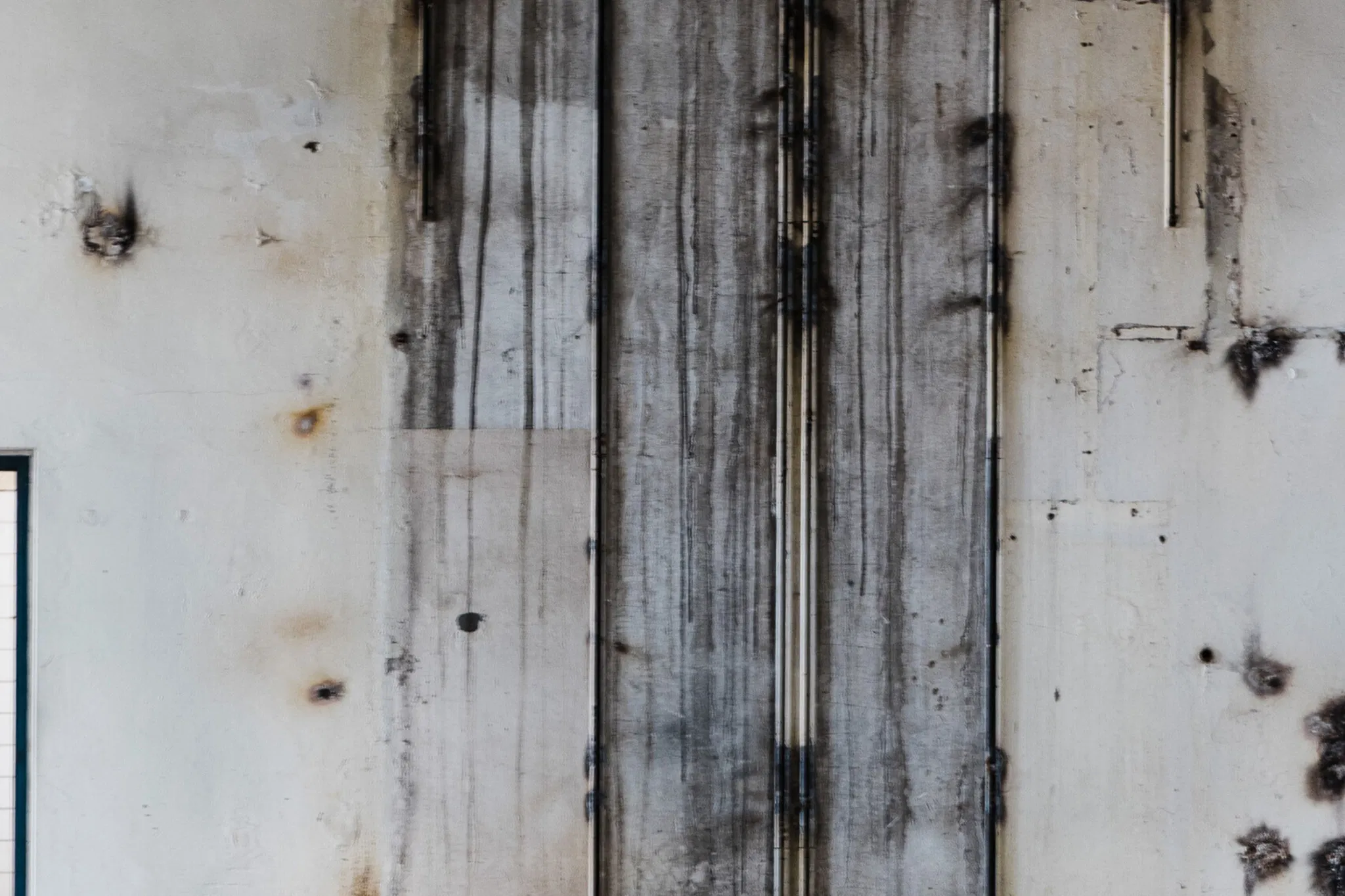
It is and was a world of contrasts: on the one hand, the daily grind of work, with many routines increasingly controlled by machines and early computers; on the other hand, however, there was also a great deal of waiting time. This was because many substances first had to be mixed and then needed time to react. People often passed the time playing sport, such as tennis. Or, and there are documented anecdotes of this too, by lying around in the sun on the lawn. Or with other minor activities. However, anyone who lazed about too much was sometimes transferred as a punishment. For instance, to the warm, damp production halls that reeked of chemicals – for those unaccustomed to it, an ordeal, and there are plenty of anecdotes about that too.
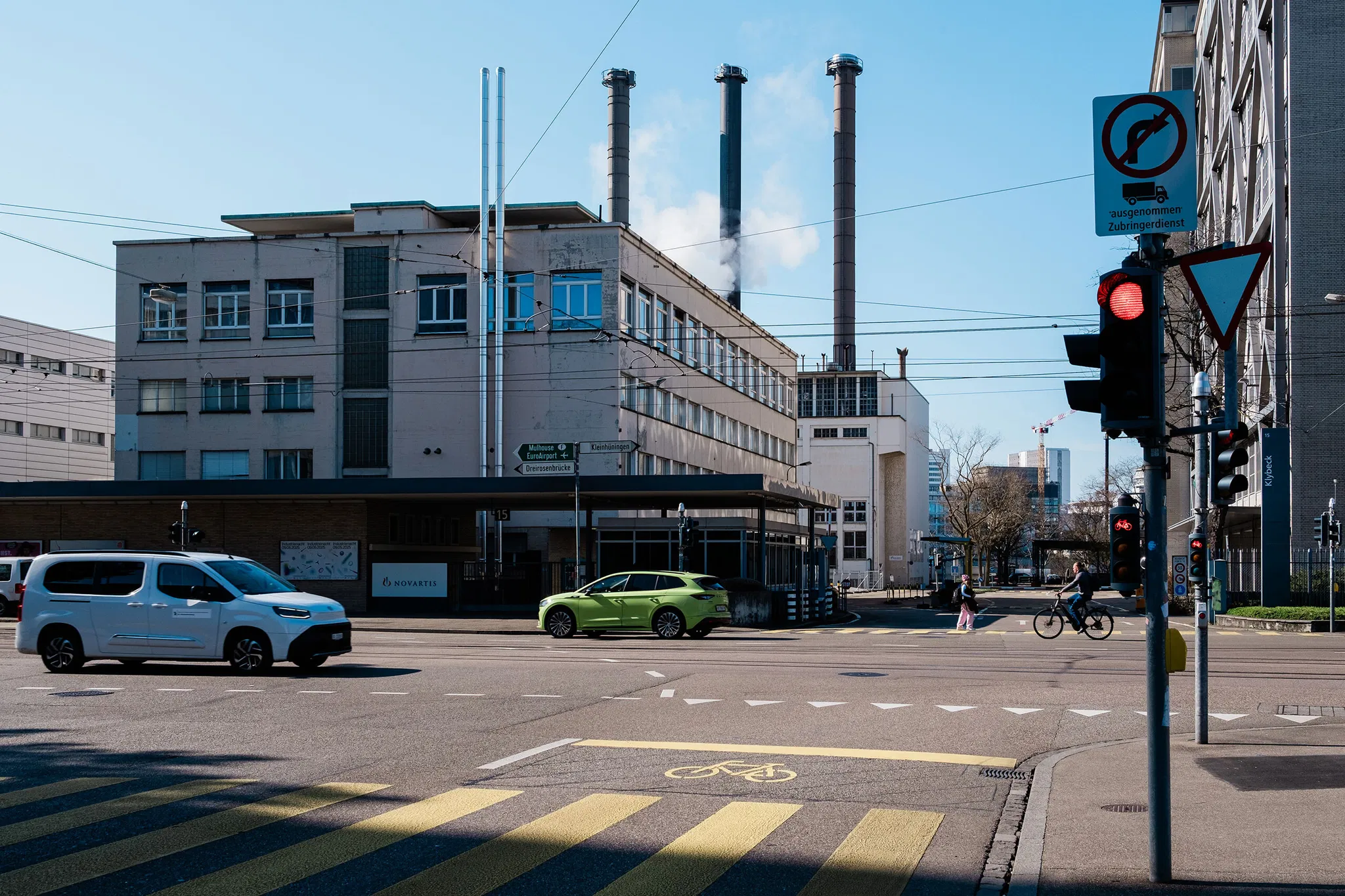
If the Klybeck factory was once a city within a city and a production machine on a global scale, today it is a monument without a people. Stepping out of the Chemical Museum and looking around at the crossroads in front of the former canteen, one feels rather as though one is in a very quiet, rather unattractive suburb. The buildings are still there, but the people are missing. Temporary uses and lettings are bringing some life back, but it is nothing like it used to be. Today, there are still around 2,000 people who spend their daily lives on the site. It is only with the klybeckplus project that a proper town is set to emerge here once more. Until then, Nicholas Schaffner, himself from a family with a history in the chemical industry, guides visitors through a century-old site that still exists and yet is already a thing of the past.
Basel Chemistry Museum
Klybeckstrasse 200, every Wednesday and Saturday from 2 pm to 5 pm
imgrb.ch