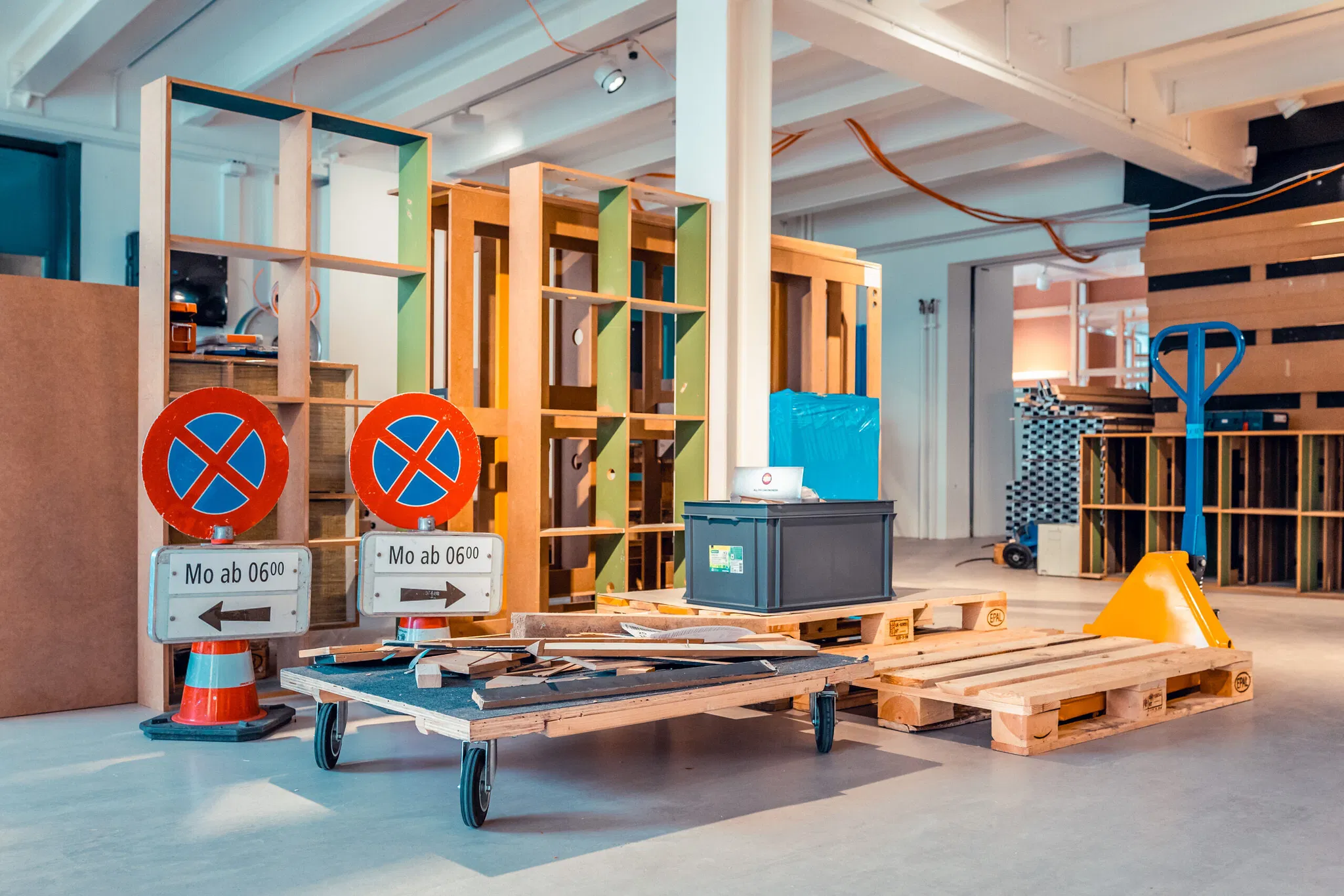
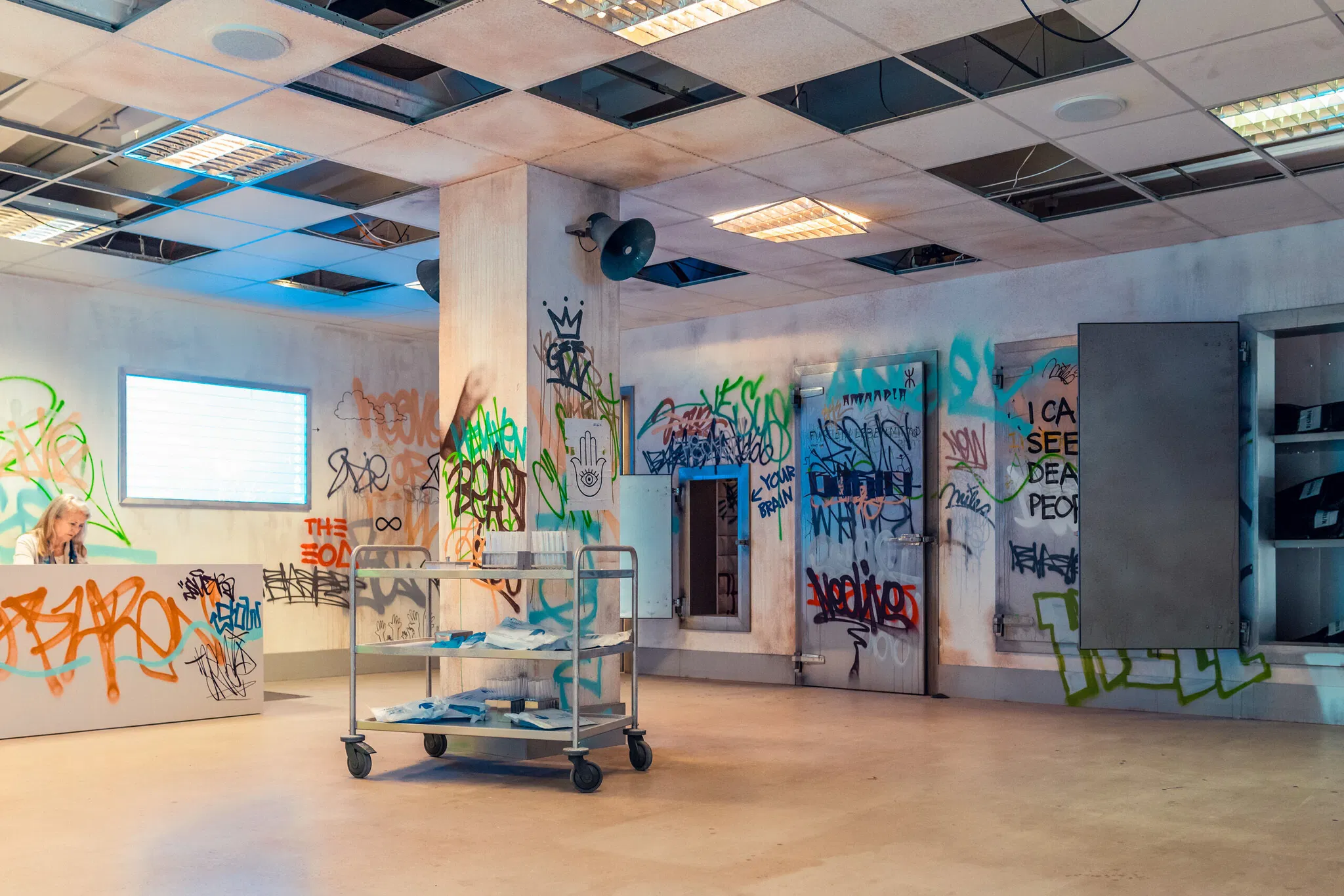
Repainting a wall every now and then, screwing in a few dowels and realigning the spotlights to show off the paintings in new exhibition to their best advantage – well that is not how things work at the ‹Kulturstiftung Basel H. Geiger›. A fresh exhibition here is always preceded by a completely new spatial concept. The exhibition rooms on the ground floor of this building, which was originally a factory producing micromotors, are remodelled three times a year. 500 square metres of space are converted each time. Walls built in. Wallpapered and carpeted. Illuminated and installed. Visitors dive into a completely new world with each new exhibition. All free of charge, it should be noted. Including an elaborately designed background publication. For free. Everything. Open to everyone and anyone. Art for everybody.
This philanthropic concept is all thanks to one special woman – and her extremely wealthy grandfather. Sibylle Piermattei Geiger inherited a fortune at the age of seventy. As the granddaughter of the pharmacist Hermann Geiger, when her family sold Gaba, the company her grandfather had founded to the Colgate-Palmolive Group. With Gaba he had developed and produced, among other things, the toothpastes Elmex and Aronal. Sibylle Geiger herself had never lived the life of a millionairess and didn’t want to start doing so in her old age. So, what to do with all these millions, as she didn’t even have any children to leave them to? Dedicate them to art, of course! Together with her husband, Rocco Piermattei, she established the Fondazione Geiger in Cecina in Tuscany.
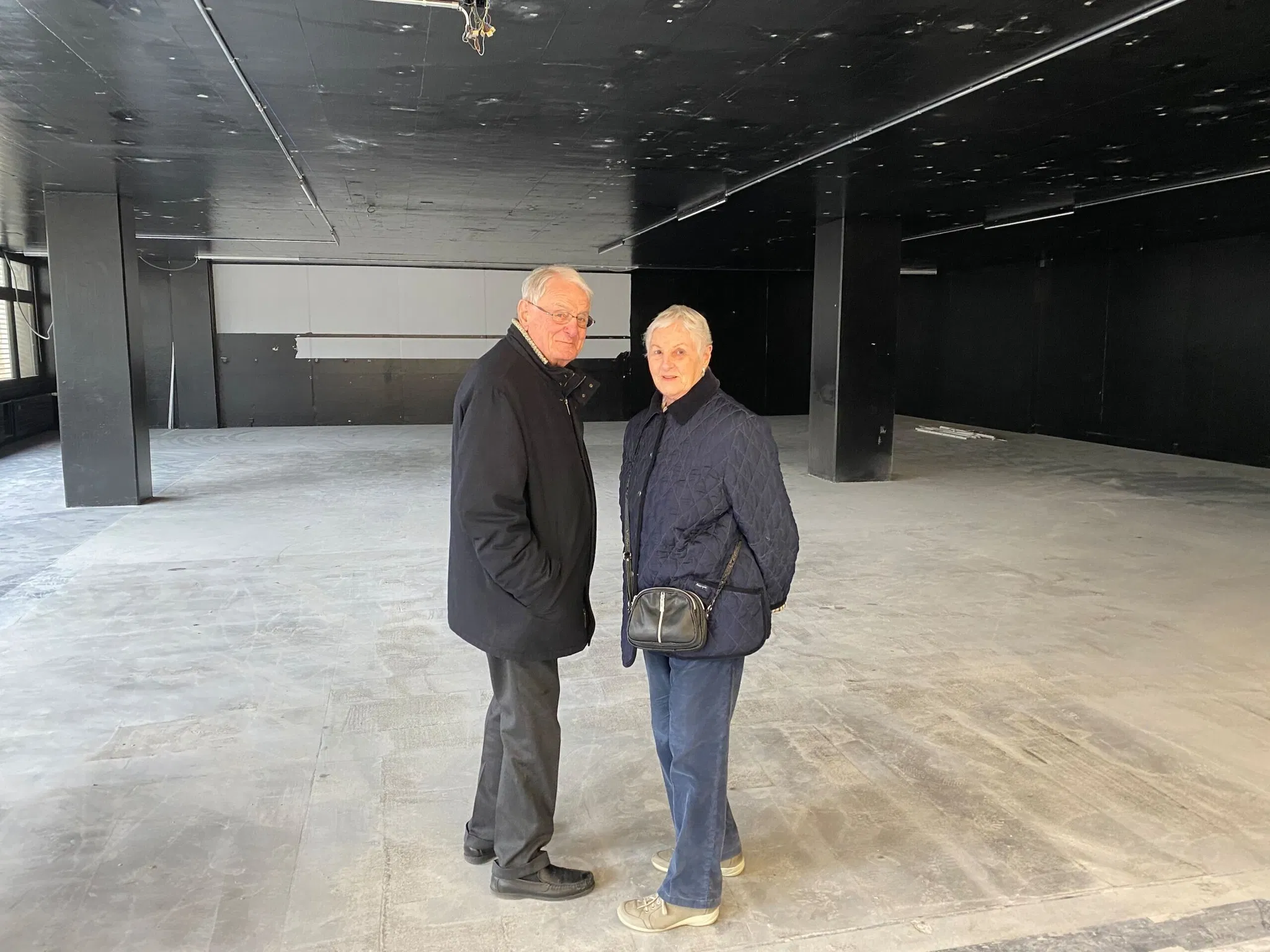
In 2015 Raphael Suter, who was arts editor of Basel’s newspaper at the time, travelled to Cecina to write an article and got to know the patron. A friendship developed from this encounter. Three years later while they were lunching together in Basel, she informed him that she wanted to close her gallery in Italy and establish a foundation in Basel. “And you are going to run it! She told me,” as Raphael Suter recalls. “She gave me complete freedom in my decisions, with just one proviso. Don’t put on any boring exhibitions!” After almost forty years as a journalist and editor, Raphael Suter decided to accept the offer and from that moment on to arrange the presentation of art and culture. “I was very touched by Sibylle’s trust. And I was aware that it was an extraordinary opportunity at my age. Like winning the lottery – crazy!,” he muses. So, in 2018 the ‹Kulturstiftung Basel H. Geiger› was founded. And the first exhibition opened in August 2020
I was touched by Sibylle's trust. And I realized that this was a huge opportunity. Winning the lottery jackpot—that's incredible.
Headstrong, liberal-minded, philanthropic
Sibylle Piermattei Geiger always knew exactly what she wanted. Social conventions were of no interest to her. In the 1940s, against her parents’ will, she attended the Basel School of Arts and Crafts. Then, when she was 19 years old, she went to Paris to study stage and costume design. Later she worked at a variety of opera houses and theatres and carried on a relationship with a set designer who was married and 30 years her senior, which was why her family insisted she return to Basel. “She knew Alberto Giacometti, worked with Herbert von Karajan and in Rome she made costumes for spaghetti Westerns at the Cinecittà studios. She was always frugal. And she never had any money,” Raphael Suter smiles. “But her grandfather, Hermann Geiger, always lovingly supported her.” When her family sold her grandfather’s company, she was suddenly one of the hundred richest people in Switzerland. “That bothered her a lot,” explains Raphael Suter. “She just wanted to carry on with her life. Sibylle was a person who trusted her gut. She had always pursued her dreams despite a lot of opposition. That impressed me deeply.”
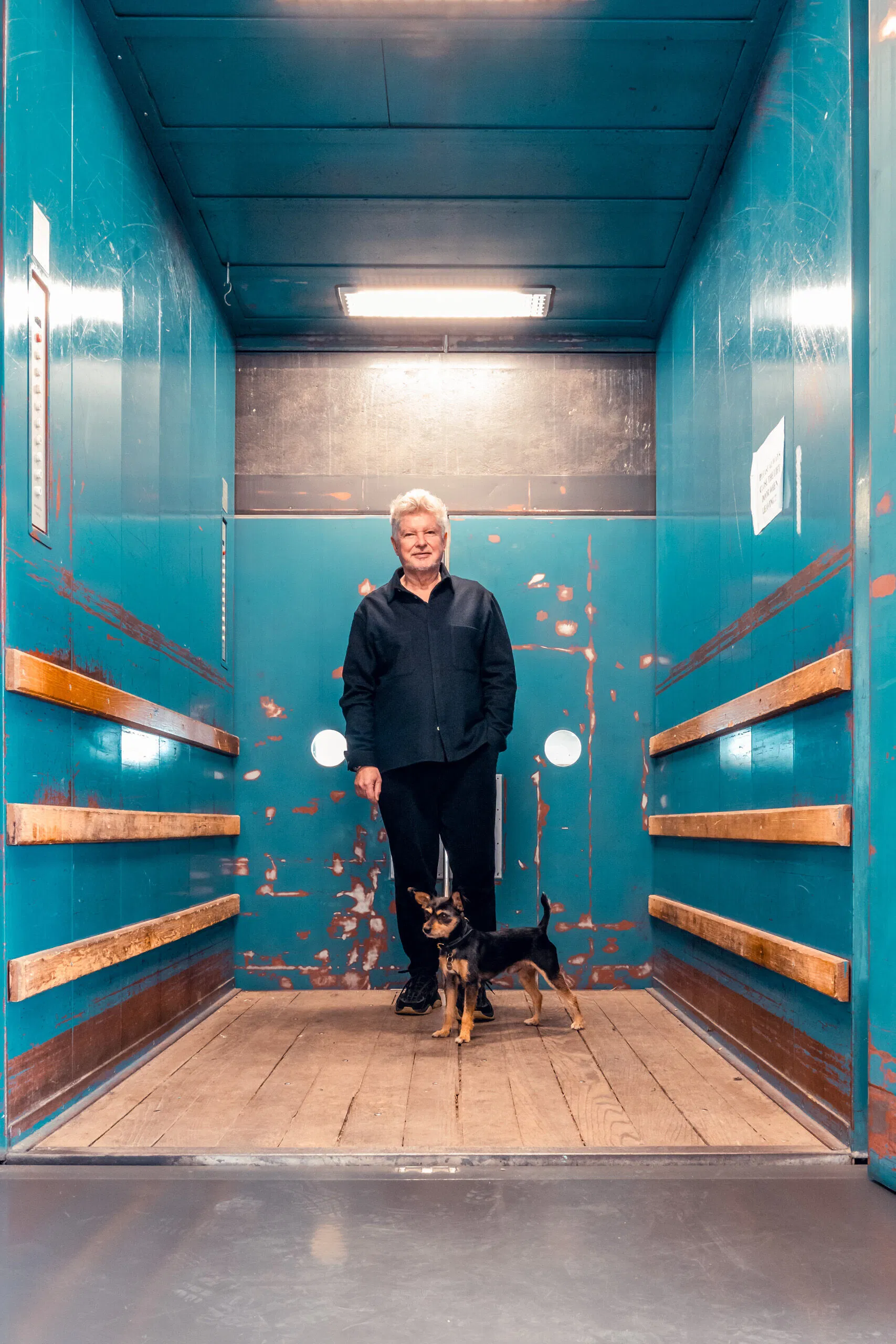
Which was why it was Sibylle Piermattei Geiger’s wish to create a cultural program in Basel that would be open to everyone free of charge and without reservation, to offer people the opportunity to experience art. Raphael Suter puts this in perspective: “Of course, nobody in Basel was waiting for us. Which is why I always thought it important to position the ‹KBH.G› We don’t put on any blockbuster exhibitions with world-famous artists. And we don’t have commercial aspirations so we don’t compete with the galleries. We don’t ‘discover’ newcomers either. We have found our niche, we do things that nobody else does.” He is often asked “What is the driving principle at the ‹KBH.G› “I think the principle is that there isn’t one.”
Anything but boring
The exhibitions at the ‹KBH.G› always arise from the network that Raphael Suter built up when he was working as an arts editor. “But the ideas are never mine,” Raphael admits quite openly. “I contact people to contribute their ideas and concepts.” Which is how the 12 exhibitions since the gallery first opened have come into being, and they could not have been more varied. There were intimate photographs of women’s bodies; the titles of music tracks immortalised in neon installations; originals of posters by Pablo Picasso; ceramics and textiles from Transylvania; and then immersive spaces on topics such as humanity’s ruthless conquest of the entire earth and the problems of aging. You have no idea what to expect when you visit the ‹KBH.G› – all you can be sure of is that it will be exciting.
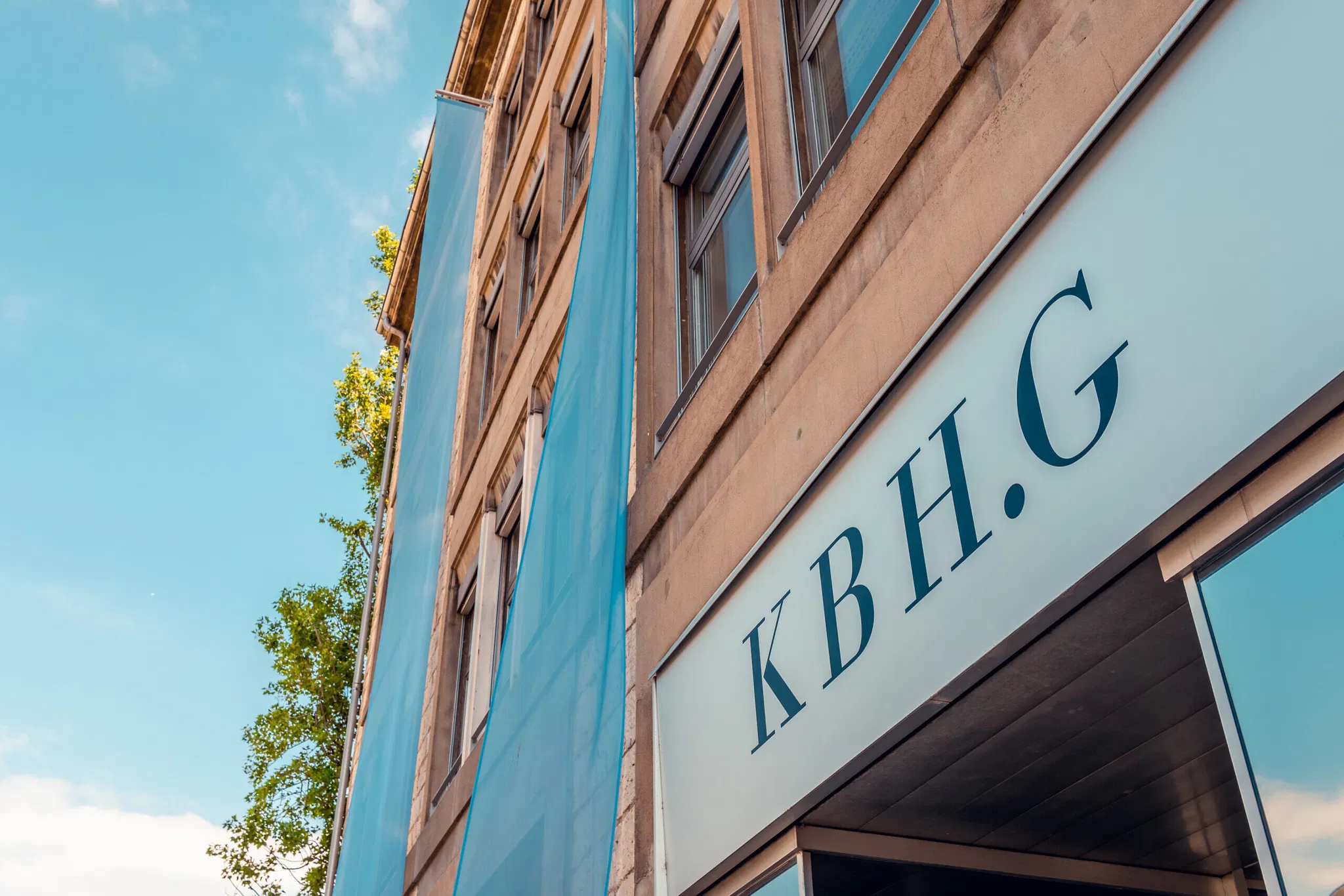
The first exhibition was in 2020; sadly, Sibylle Piermattei Geiger did not live to see it. She died at the age of 89, just a few weeks before the opening. “She did see the premises and helped select the works to be exhibited,” says Raphael Suter, who now runs the foundation entirely in accordance with Sibylle’s wishes. “With each exhibition, I ask myself: Would she be happy with this now? That is very, very important to me. Because her spirit is here. This is her foundation.” Regardless of why someone comes into the ‹KBH.G›, because it is raining outside, out of pure boredom or driven by an interest in art and culture – Raphael Suter doesn’t care. “I am happy about every person who visits us. Because that was how Sibylle wanted it. She wanted a place where everyone feels welcome.”