Monsieur Mahler is the kind of figure you don’t meet every day anymore. His hair, streaked with grey, is carefully combed, his livery fits immaculately, his gaze is lively and alert. His charm is apparent in the first smile as he greets you. You notice straight away (and then again and again) that this man is a host to the core. Monsieur Mahler’s first name is Hervé, but confronted with the dignity of his person, you feel inclined to address him politely as Monsieur – out of respect for his friendly and always obliging manner, but also out of respect for the fact that this man represents the brasserie of the Grand Hotel Les Trois Rois with all its elegance and long history. Indeed, Hervé Mahler embodies what we understand by “Monsieur” in Basel.
Hervé Mahler is not only the man who orchestrates the running of the Brasserie, he is also the Maître d'Hotel of the most prestigious hotel at the bend in the Rhine, the historic Grand Hotel Les Trois Rois at the Blumenrain. Together with the executive chef, Urs Gschwend, and the chef de cuisine, Thomas Schaefer, he ensures that the Brasserie continues to radiate as one of the brightest stars in the region’s gastronomic heavens.
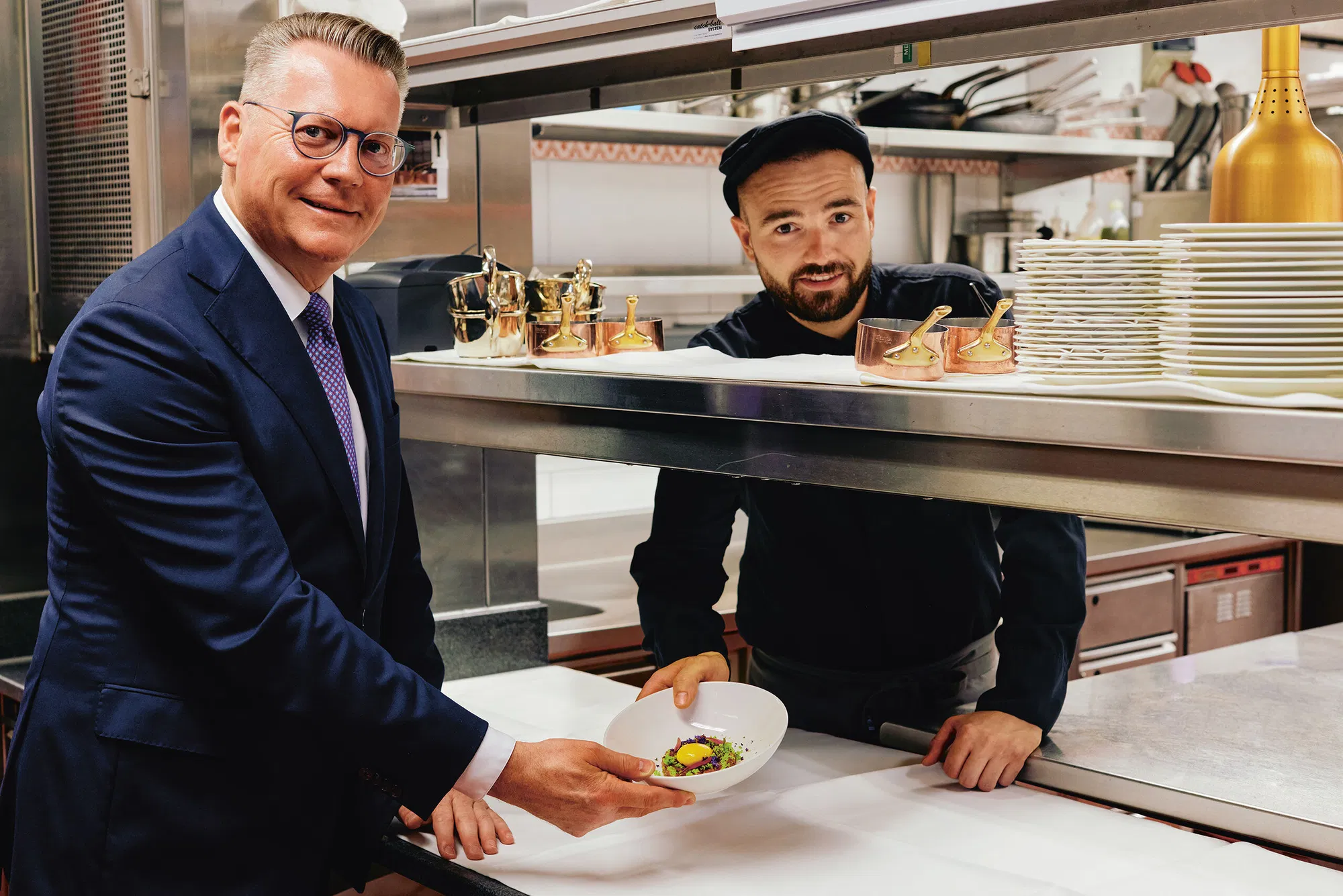
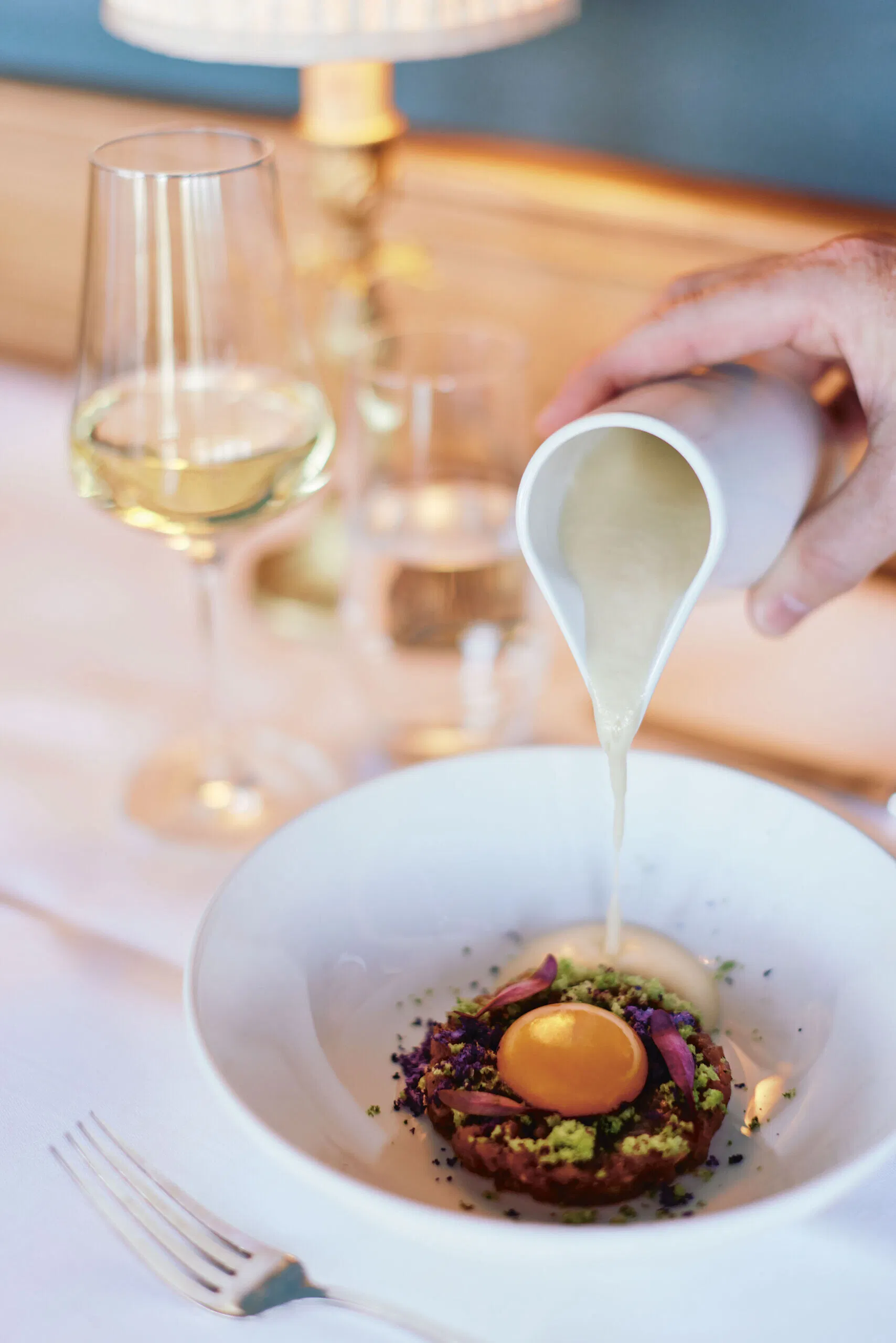
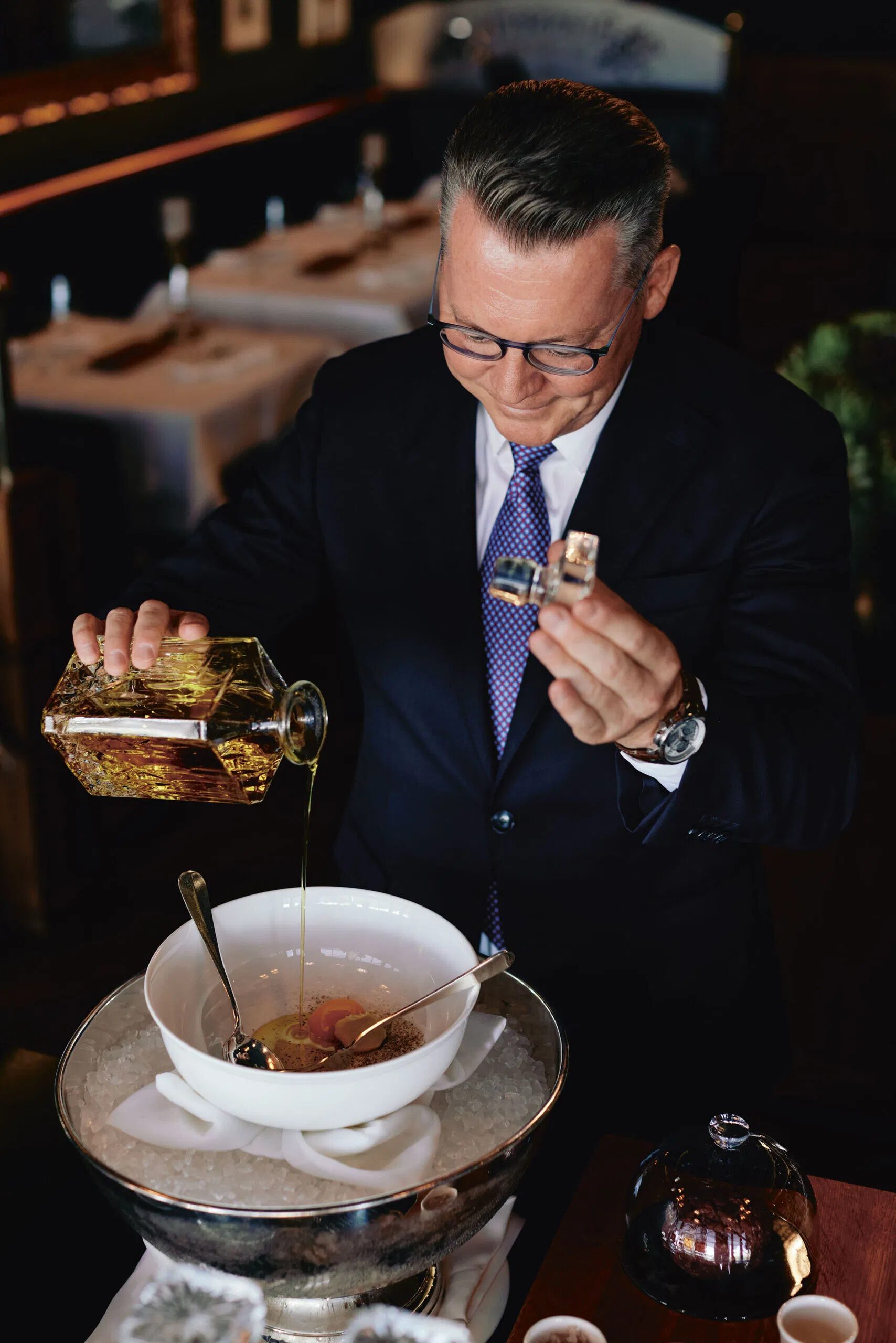
It has been a matter of common knowledge in well-connected circles for some time now, that Maître Mahler, executive chef Gschwend and chef de cuisine Schaefer are the epitome of a perfectly-tuned team. The kitchen and service engage like well-calibrated clockwork, but without ever appearing even remotely mechanical. Nothing distracts from the luscious and deeply pleasurable experience offered by this well-practised brigade. In the end, it is precisely this that is the heart of great craftsmanship. No wonder the Brasserie’s classics are legendary: The tartare de boeuf, which for Hervé Mahler is a top-priority issue, or the bisque de homard, a labour of love by chef Gschwend. Absolute precision in day-to-day work? Of course. Superbly informed, state-of-the-art service? Without doubt. Choice producers and a decidedly regional focus? What else!
We are talking at a table near the entrance to the Brasserie; the lunch guests are only just starting to arrive. The time during the first closure due to the pandemic was used to give the room a new look with new paint and artworks – from Chez Donati it should be noted. The petrol-blue walls radiate a wonderful calm, while soft daylight floods into the room from the large row of windows facing the Rhine. How did their clientele react? “Impressed!”, says the Maître. The works displayed on the walls are often a topic of conversation at the tables, art is important to a lot of the guests and quite a number of them enjoy coming to the brasserie for this very reason. He also appreciated the redesign by the owners, the Straumann family, as a personal sign of their esteem, as an expression of the trust that has always been – and still is – placed in him by the management.
Quality requires consistency. The guest—the person!—is at the center of everything we do; their needs and well-being always come first for us.
Hervé Mahler has been working for the Les Trois Rois for 16 continuous years now. The Brasserie is his baby, and as he himself says: “Quality requires continuity. The guests – human beings! – are the focal point; for us, their needs, their well-being always come first.” This is not a cliché, it is Hervé Mahler’s motto. Fundamentally important is that each person is treated individually, and that every new situation is adapted to: “If a guest has a problem, we attend to it immediately.” Really recognising and understanding your customers’ needs, that is the high art of the profession. Added to that is the fact that Hervé Mahler himself embodies the motif of the Grand Hotel: “Rich in history, young at heart.” Originally from Strasbourg, his employment took him to the South of France, to England, Germany and then to Switzerland.
In 1998 he started his first two years of employment at the Grand Hotel Les Trois Rois. Then he moved to Zurich for a while. 2006 was the year his fate was sealed. The Grand Hotel Les Trois Rois asked whether he would come back to Basel for the reopening of the brasserie? Yes, but in fact he had only been planning to stay for one year – the rest is history. Hervé Mahler fell in love with the region, settled down here, started a family and in the meanwhile he himself has become an institution. His regular guests know this, but new visitors realise it very quickly too, as they are greeted just as warmly and attentively as long-standing friends and family of the brasserie.
There is currently something else on Hervé Mahler’s mind, besides the well-being of his guests and maintaining the high reputation of this locality. The measures taken to deal with the pandemic left their mark here too. Now it is a matter of building things up again. And because a maître d'hotel takes care of far more things than a guest realises – or should realise – this also constitutes a not-insignificant part of Hervé Mahler’s work. He is ultimately responsible for the staff and training, so he holds all the strings in his hands. “The situation is actually quite difficult”, says Hervé Mahler. “Good people will always find a job in gastronomy. The scene has a very good network. But we are definitely noticing that we are lacking fresh young talent.” That is why there is so much emphasis on training at the moment. Several campaigns have already been launched and a significant proportion of those addressed are newcomers from other branches because it is ambitious, motivated lateral recruits who are in particularly high demand.
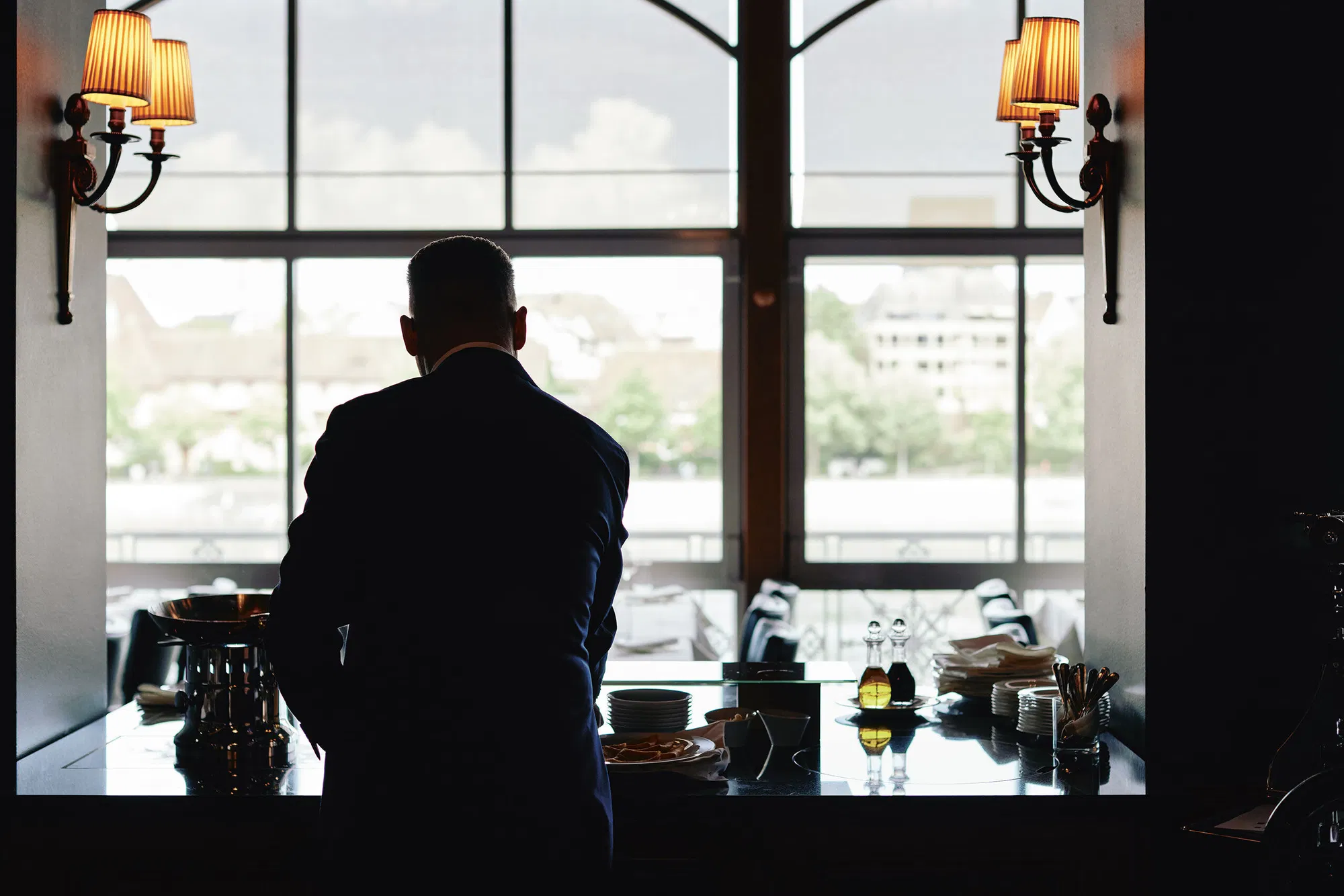
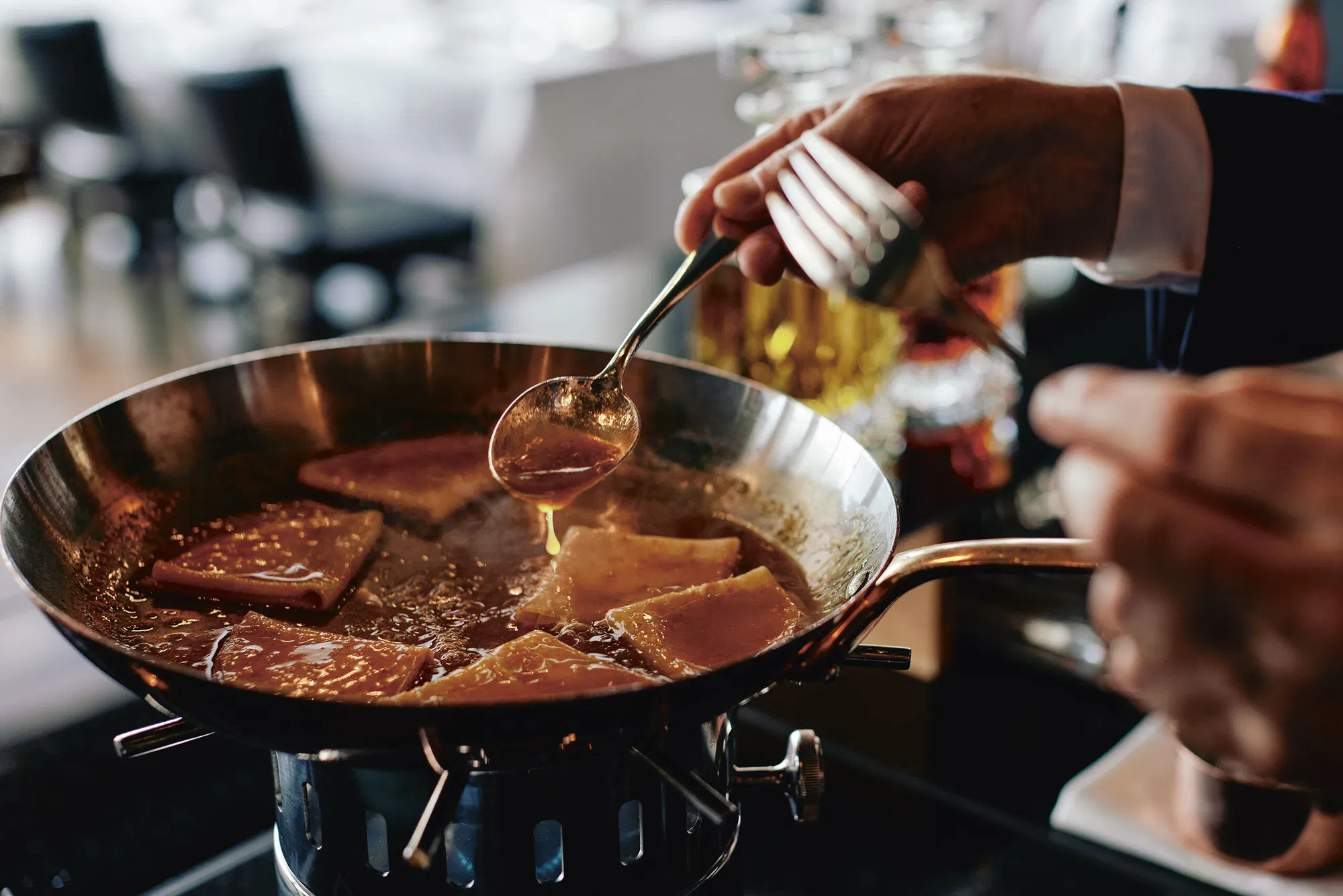
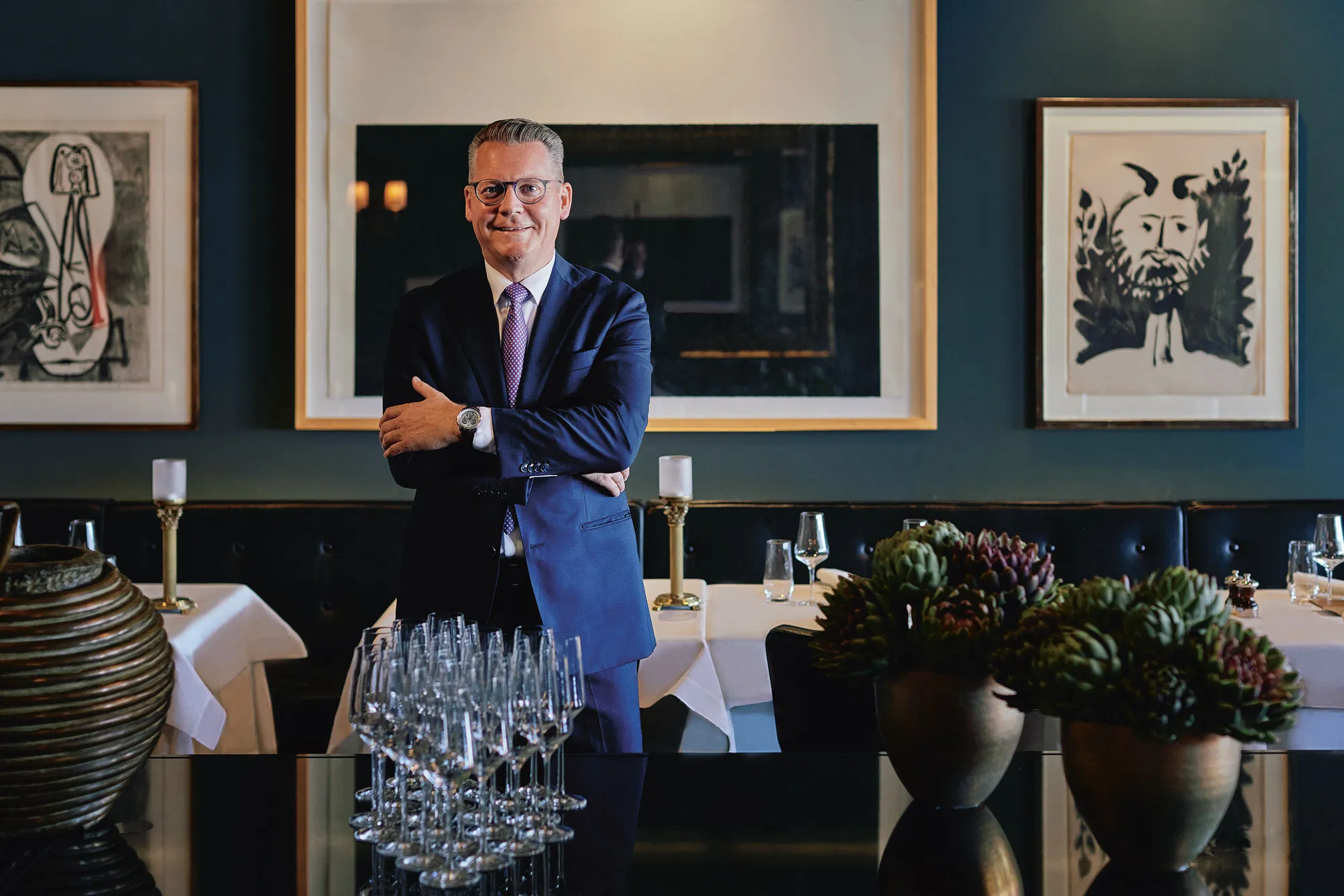
Of course, the job of being the host requires sacrifices. It is a demanding position, it’s about maintaining relationships, noticing requirements, making decisions quickly, knowing the establishment and the business inside out. Even Hervé Mahler still takes an unpaid break each day. That’s to say: he is there in the morning to ensure the lunch service works, then he takes a long unpaid break, to later restart the workday in preparation for the dinner guests. Sometimes the days are long, very long, but also rewarding. Anyone who can hold their own in this business has what it takes to be an outstanding host. Or as Hervé Mahler says: “To invest a great deal and then not be there when it really counts, of course that doesn’t work.” His career is proof that the investment pays off. For some time already, his sphere of influence has not been limited to just the brasserie, as the maître d’hotel – a highly respected position – he is also responsible for areas such as events and catering.
Anyone who completes an apprenticeship with Hervé Mahler is perfectly prepared for the world of fine dining: “We always formulate our goals and then create the conditions necessary to achieve them. One goal, for example, is anyone completing an internship will be able to operate a station independently within 6 months.” This is not so common and says something for the philosophy of encouraging and challenging, which is predominant in every aspect of Hervé Mahler’s style of management. He is very highly regarded and respected as a training instructor; the staff know that they have a prudent boss in their maître. The fact that the brasserie still has employees who have been working here for between six and ten years in such a fast-moving industry, is especially thanks to this Maître. It is well-known throughout the scene that anyone who has trained with Hervé Mahler knows what they are doing. And as the Maître himself pointed out: Anyone with some aptitude, will always find a job in this branch. Always.
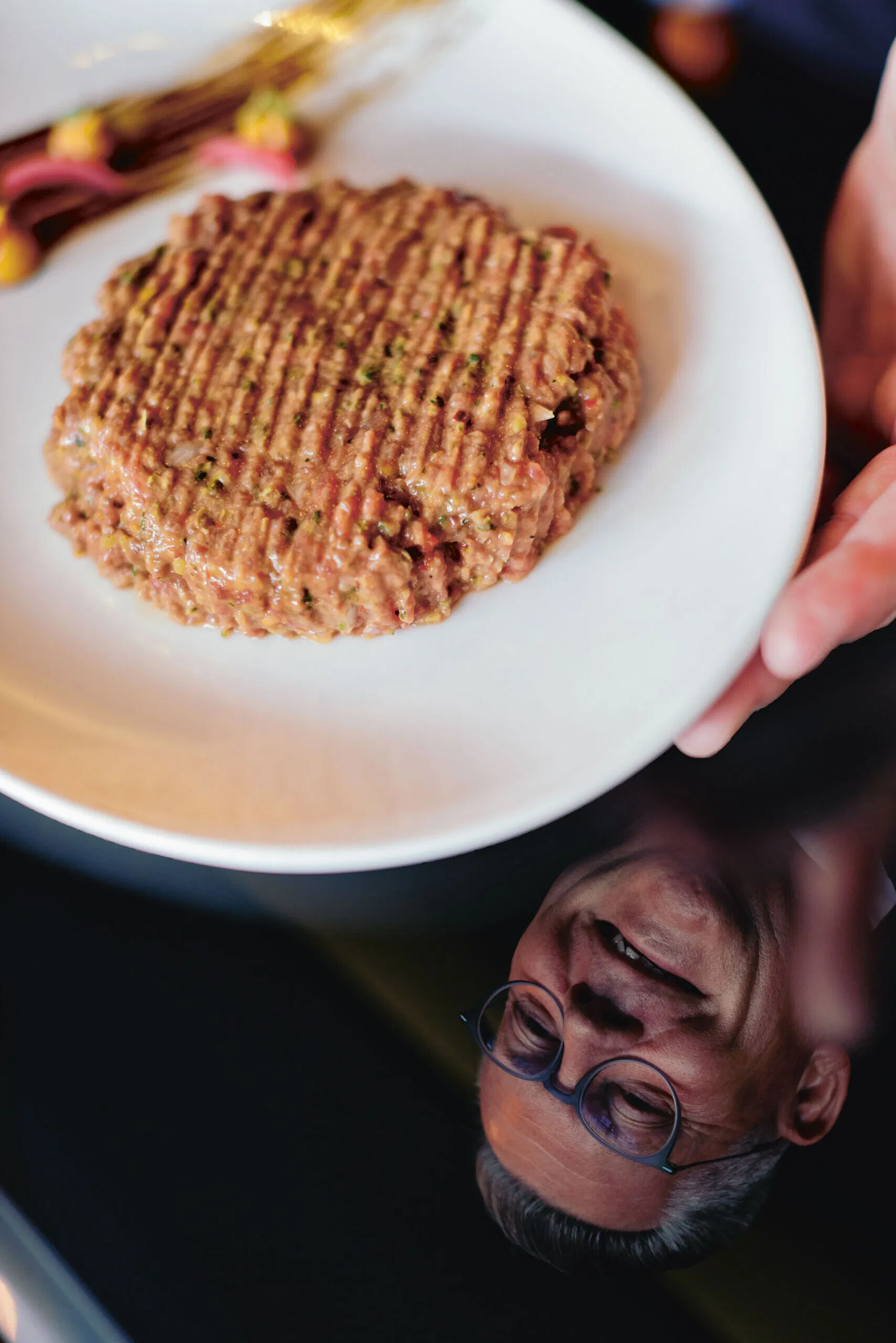
In this class of gastronomy, it is like this at every level, and Hervé Mahler is an exemplary role model: If you establish something, then you have to take care of it afterwards as well. You have to bow to the spirit of the times, of course, but you should not simply be enslaved by fashions, you have to develop your own idiom and your own style. As a person, professionally, gastronomically. This is how the team at the Brasserie Les Trois Rois succeeds time and again: keeping the young, healthy and ambitious heart of this hotel, with its long tradition and a history richer than almost any other, beating.